Saturday, August 31, 2024

The Position on Salvation


Sermon for the fourteenth Sunday after Trinity

Position is everything 
in life, they say.

If this is true,
then it's worth watching 
the position of the ten lepers
who ask for healing
as Our Lord enters their town.

Because of their condition 
they stand at a prudent distance 
from Jesus.

That is the done thing.

We're used to that
even in this day and age.

When COVID lockdowns happen,
business is conducted at a distance.

So the lepers are acting
in a socially acceptable fashion
when approaching Jesus.

That's their starting position.

Then they are told
to show themselves to the priests
who have the responsibility 
to declare them clean
or not.

And now we see them set off.

Their distance from Jesus 
is increasing 
but necessary for them
to be declared clean.

It is then
that salvation comes to them.

Salvation in the sense 
of being salved, cured, healed.

Nine continue on their way
recognising the cure
but still walking away from Jesus
more concerned 
with being declared clean
and being restored to society.

Their cries of relief
are heard
but they must go to the priests
to praise God.

But the tenth,
the Samaritan,
a man who has no position
in the eyes of the Jewish society,
turns back to Christ.

His position 
becomes prostration 
at the feet of Jesus,
no longer far off 
but in a closeness
that would be obscene
if he were still a leper.

But it is here,
at the feet of Christ 
that glory is given to God.

It's not that the nine others 
aren't giving glory to God
in the temple,
it's that this one leper
recognises the grace of God
in his healing
and recognises that the source
of this grace is not far off
but here, right here,
standing and waiting for his thanks
with blessing upon blessing
in His holy and venerable hands.

[PAUSE]

This is a key moment 
in that it points directly
to Jesus as God,
not a prophet,
not a messenger,
not an angel
but Christ Our God.

Further,
it shows that,
while we come to Church
to find and worship God,
He is always near us.

Our Church will always
make His presence clear
to the world,
but,
for us Christians
who seek first 
the Kingdom of God
and His righteousness,
He is always nearer than we think
to receive our praise and thanksgiving,
and our prayers and supplications.

[PAUSE]

The Christian religion
preaches the truth
that God is always with us
which is why Our Lord Jesus Christ 
is the One Whom Isaiah calls
Emmanuel - God with us.

Seven centuries before 
the Incarnation,
Jesus is near Isaiah 
just as He is near 
Abraham, Isaac and Jacob
centuries even before that.

[PAUSE]

And now,
many centuries after,
Jesus is present here for us
to be worshipped 
and adored.

He has given us
the sacrifice of the Mass
not only to make His presence 
visible to us
but for us to take away with us
in the depths of our hearts.

Our tenth leper 
shows us 
that we can always 
give glory to God
at the feet of Christ 
where we are 
and that doing so 
brings us ever closer to Him
and to our Eternal joy.


Monday, August 26, 2024

Saturday, August 24, 2024

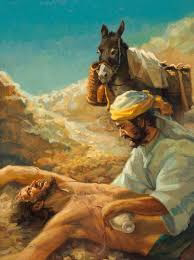
Oiling the Samaritan


Sermon for the thirteenth Sunday after Trinity 

One of the reasons
that many of us give
for not wanting to live
a long time ago
is the poor quality
of healthcare.

We don't want to live
with leeches
or knives used for bleeding 
or the horrible way
In which those suffering 
from mental diseases
were treated.

Indeed,
if we were lying bleeding 
by the side of the road,
would we want someone 
to pour oil and wine
onto our wounds?

[PAUSE]

"Ah!" you might say,
"the ancients often know
better remedies for illness
than we do now."

It's a good point
given how artificial 
much of our treatment 
appears.

Indeed, we have found
that olive oil can be used 
as an anti-inflammatory 
and disinfectant.

We have found that wine
can stimulate blood flow
and has other properties
that help the healing process.

But they have their limitations.

You wouldn't want 
to use them 
if the wound is infected.

But for a temporary solution 
to a wound
you could do a lot worse 
than pour oil and wine on it.

[PAUSE]

For the Samaritan
binding the wounds
of the poor traveller,
a temporary solution 
is all you need.

Once you get him 
to the inn 
and pay for his care,
then those wounds 
will be washed
and treated carefully 
and heal
ready for the Samaritan's return.

But oil and wine
will do for now.

[PAUSE]

Does this mean
that, in order to be
a good neighbour 
we need to be carrying around
oil and wine just in case?

Well that might do 
for the likes of Jamie Oliver
having balsamic vinegar,
turmeric and quince zest
in his back pocket,
but for us
that seems unlikely.

Remember,
Our Lord is expecting 
us to have mercy,
not whip up sour dough
at a moment's notice.

But one thing 
that is good to know
is that the Greek word for mercy
- and you know it 
when we sing 
Kyrie eleison -
is related to the pouring on
of oil.

Each time
we show mercy
we are pouring oil 
onto wounds
or onto troubled water.

We anoint with oil 
as a cleansing and purifying 
substance.

It eases stiff necks
and softens proud hearts.

This is why we are told 
to use oil
in our sacraments.

As the oil cleanses us outwardly, 
inwardly we are cleansed 
by the Holy Ghost Himself.

We show mercy
when we seek 
to calm a situation 
and dispel evil thinking,
cruel intentions 
and defuse anger.

Just as the Samaritan 
seeks to cleanse the wounds 
of the poor embattled traveller,
so do we seek 
to cleanse the wounds of Sin
not by condemnation 
but by forgiveness, truth, beauty 
and love.

[PAUSE]

We use oil 
at Baptism,
Confirmation,
Ordination,
and Unction
so that the Holy Ghost 
may bring us His peace in our lives.

He is the oil
that will ease our path
back to Heaven.


Monday, August 19, 2024

What does a Canon Theologian do?

I have recently been given the honour of being appointed Canon Theologian to the Ordinary for our diocese. It’s a great honour because of the trust that has been bestowed upon me. We must never forget that every degree that we earn and every title we are given has been given to us by Almighty God for His service. Doctorates may look and sound grand but they are given as proof that the holder is capable of independent learning and research and will continue to do so.

This is especially true in Theology which many seem to think is a purely academic discipline. However, since “theology” literally means discourse about God and bears the word logos as a root, a true theologian cannot do theology without being in conversation with God, not treating Him like a lab rat or meteorological phenomenon.

All Christians are called to be theologians because. the Christian life is centred around prayer and prayer is communication with God, not always with words. We all have to wrestle with God and ensuring that the object of our worship is the One True God and not some extension of our wishful thinking.

My first duty, then, as Canon Theologian is to my bishop in assisting him in examining matters theological that arise in the running of the Diocese. This mainly involves commenting on various ecumenical dialogues and questions that arise from engaging with others. My next duty is to my confraternity of priests in providing resources and commentary in their own Continuing Ministerial Development. My third duty is a commitment to the theological education of the Diocese. This includes representing the Victoria College of Music and Johann Pestalozzi Christian University in which I hold faculty positions to the Diocese and the Diocese to the College and University  This allows me to assist in the training and formation of our ordinands and the formal learning of members of my Diocese.

You can see, then, what an honour it is for me as I am being asked to participate in the dialogue between individuals in my Diocese and their Maker. It is also a great responsibility as, if I mislead them, I am responsible for that misleading, and I know that the repercussions of failture to do the job to the best of my ability are great.

I would be very, very grateful for your prayers as I take up this office because I can only fulfil it with the help of God and this requires me to keep my own faith in order with Him. I look forward to seeing where this will lead and pray that whatever part I play in the Diocese, it may be a blessing to the Diocese and an act of worship to the Triune God Whom I love.

Anglican Catholic thoughts on Apostolicae Curae


A few thoughts on that famous Papal Bull.

Sunday, August 18, 2024

Assuming Power


Sermon for the Sunday in the octave of the Assumption preached at the Cathedral Church of St Augustine of Canterbury 

You have every reason to think  
that the church had got  
the wrong Mary.  

Today we celebrate  
the Sunday in the octave  
of the Assumption of Our Lady,  
the Blessed Virgin Mary,  
Our Lord's Mother.  

But the Gospel reading concerns  
Martha and Mary  
- that's Mary Magdalene,  
not Our Lady.

There are so many Marys,  
so maybe the writers of the Missal  
got confused.  

But it's the same in the Breviary,  
the Roman Missal  
and the Sarum Missal.  
Clearly the Church  
has something to say  
about Our Lady's Assumption  
through how Our Lord  
treats Martha and Mary.

The cynical might say  
that it’s because  
the Assumption of Our Lady  
is not in the Bible  
that we've had to make-do.  
Indeed,  
there are many people  
who say,  
for that reason alone,  
it didn’t happen  
and that we are fools to believe it.

[PAUSE]

But there are facts  
that cannot be ignored.  
There are no relics of her body  
anywhere.  
Given how  
the Church has carefully curated  
the bodies of all the saints,  
how is it possible  
that Our Lady's body  
is missing from reliquaries  
the world over.

It's also the that,  
after a brief mention in the Acts,  
she simply disappears.  
She probably goes  
with St John to Ephesus  
since Jesus tells him  
from the cross
to look after her.
 
But there is no record of her.  
Some people think  
she is the woman  
clothed in the Sun  
in the Revelation,  
and it's hard not to draw  
that conclusion,
even though it can have
other meanings.
But there are no Acts of Mary;  
no indication of a ministry of any kind.  
There is certainly  
no record of her celebrating the Mass.
Even if she is the Mother of God,
she is not a priest.
She does nothing!

[PAUSE]

And now we see  
why the Church has given us  
this episode of the Gospel.  
St Mary Magdalene  
sits quietly  
at the feet of Our Lord  
and listens to Him  
while Martha is concerned  
with the affairs of this life.

St Mary Magdalene  
reflects Our Lady  
by devoting her attention  
solely to Jesus.  
There is nothing that  
she needs to do  
other than think of Him.  
And what a life Our Lady reflects on!
No one else has  
carried God in her womb.  
No one else has  
nursed Him,  
bathed Him,  
clothed Him,  
helped Him learn  
to walk and talk.  
No one else has  
seen their child grow  
into a man who  
commands the power  
of Almighty God Himself
and yet never forgets His mother.

She probably gives  
St Matthew and St Luke  
information about Our Lord's birth  
for the Gospels  
and we are told that  
she treasures up the memories  
of Our Lord
in her heart.

It's not that God has  
no use for her after  
He ascends into Heaven.  
It's that her ministry  
is a ministry of being,  
not doing.  
To be a mother  
is a ministry of relationship,  
of just being present  
having brought a child  
into the world.  
Just as a small child  
is comforted by his mother  
simply being there.  
So are we comforted  
by the presence of Our Lady.  
Wherever she is, He is.

[PAUSE]

This is the power  
of Our lady's Assumption.  

She is taken into Heaven  
in a unique way  
because she is unique.  
In being assumed,  
Our Lady shows us  
the love of Our Lord  
for His mother  
by keeping His own commandment  
to honour His Father and His mother.
Her ministry to us  
is to be His mother:  
she need do nothing else.  
She founds no Church  
because she presents her son  
to every Church that loves her.  
She writes no Gospel,  
because the Lord has  
written His Gospel on her very being.  
She does not die  
the glorious death of a martyr,  
because the crucifixion of her Son  
already makes her a martyr.  

She leaves behind  
no relic of her body  
because her Son wants us  
to see her incorrupt  
and remind us  
that we too will be incorruptible.

[PAUSE]

She leaves behind  
no relic of her body,  
but what of other relics?  
Her veil perhaps?  
Here, in this building,  
we have a reminder  
not only of Our Lady's existence,  
but also of her presence.  
And Our Lady's existence  
points to Our Lord's existence.  
Our Lady's presence  
points to Our Lord's presence.  

It means we can be sure,  
every time we enter this holy place,  
that we are in the company  
of Our Lady and Our Lord.

[PAUSE]

The Church reminds us  
of Mary and Martha  
on the feast of the Assumption  
so that we remember  
to be Christians  
and to live as Christians  
at the feet of Christ  
rather than be ruled  
by the cares of this world.  
God is with us  
as He is with his Mother.  
Nothing else  
has any greater  
claim on our lives.

Nothing else  
will give us any  
greater joy  
than being with  
them both in Eternity.

Monday, August 12, 2024

Paying the price


When transactional thinking obscures us to our worth in Christ.

Pre-Reformation Anglicanism

I've made several statements now about the way in which the Anglican Catholic Church calls itself Anglican and, in many of my arguments, I've used that phrase from the Magna Carta namely ecclesia Anglicana. The objection that I've received is that "Anglican" in its modern sense is an invention of the 18th and 19th Centuries and means the Protestant faith of the Church of England. The ecclesia Anglicana which is always to be free was meant to be the Church of England under the Pope to be free from the interference of Kings and Barons and politics. It's a point I've often made myself that Magna Carta does not legislate a Church free from the Papacy.

However, as an Anglican Catholic, I am duty bound not to play "pick and choose" with my faith. For this reason, Anglican Catholics go back to what the word "Catholic" means in the Creeds. This means the definition given by St Ignatius, St Cyril of Jerusalem and St Vincent of Lérins. This is typical of Anglican Catholic thinking - go back to the Undivided Church of the First Millennium as the authority.

So what about "Anglican"? Well, we do the same - go back to its meaning of "Anglicana" meaning English. Does this mean that we must become Roman Catholic again in order to return to the meaning of Anglicana as mentioned in the Magna Carta?

Obviously, this brings us to the central question for Anglican Catholics: should there have been a Reformation? Should Anglican Catholics necessarily view the Reformation in England negatively?

There are, of course, great positives. The position of the Pope as de facto monarch claiming supremacy over the crowned heads of Europe is clearly a consequence of medieval politics and not of Christian Doctrine. The Papal Bull Unam Sanctam makes clear how Pope Boniface VIII saw the position of the Papacy in the light of monarchs such as Edward I of England seeking to limit the influence of the Pope in domestic affairs. The formal insertion of the filioque clause into the Nicene Creed by Benedict VIII in 1014 was at the behest of Henry II of Germany and demonstrates the clear belief that the Pope had the authority to correct Oecumenical Councils. The sad thing is that if the Pope had not become inveigled in Carolingian politics and achieved the status of a monarch of the Papal States, an Oecumenical Council could have been called to deal with this issue. Even then the Council of Ephesus had made the Creed inviolable so, as Leo III had said, the conclusion of an eighth truly Oecumenical Council needs not have been inserted in the Creed, just as many other orthodox Christian doctrines are not credal.

As Fr Aidan Nichols OP notes in his book The Panther and the Hind (p3ff), the relationship between England and Roman has not been as firm as many would think, though it's worth noting that many countries in Europe have taken Papal supremacy with a pinch of salt. One can see that in the coercion of Popes by force or by charm throughout the Medieval period. In England, the statutes of Provisors, Praemunire, and Mortmain were created to limit the political influence of the Pope. While many lay the reason for the English Reformation happening at all at the feet of Henry VIII, they do so not only ignoring the role of Pope Clement VII, Holy Roman Emperor Charles V and Francis I of France but also the impact of the political instability caused by the Wars of the Roses. 

Given also that Henry VIII essentially wanted to make political changes to the Church rather than doctrinal by replacing the Pope with the Crown, (see his Six Articles) it's easy to see that it is the effect of the continental Reformation under his son Edward VI that propagates the Reformed Christianity in this country.

Of course, Anglican Catholics rejoice in many benefits from the rejection of Papal Supremacy and the focus on the needs of the Nation.

1) the reclamation of the word "Catholic ' in its original sense, together with the possibility of a return to the Holy Synod and openness to Oecumenical Councils and dialogue with other Catholics such as the Eastern Orthodox Churches;

2) the Bible and the Liturgy in the vernacular for the education and edification of the individual allowing for the possibility of a return to the high level personal piety exemplified in the thirteenth and fourteenth centuries (see Fr Martin Thornton's book English Spirituality) but now available for every social class through programmes of education;

3) the provision of a simpler, more available regimen of daily prayer in the Book of Common Prayer which introduces the reader to the discipline, education and devotion in his own language through the words of Holy Scripture and invites further study;

4) the removal of some doctrinal accretions caused by a "development of doctrine" rather than patristic witness, such as Purgatory as a place of punishment from which sinners can be rescued by indulgences, as well as recognising that not all doctrine is necessary for salvation, e.g. the Immaculate Conception and Assumption of Our Lady;

5) the retention of bishops, priests and deacons and the Apostolic Succession but on wider, more patristic terms than the tortured and, as history shows (Fr Paul Bradshaw, Ordination Rites of the Ancient Churches of East and West) tenuous foundations of the Scholastic understanding of ordination, so that the priest becomes more than just a machine for churning out the Sacrament but one learned and pastoral to engage with his flock;

6) the re-emphasis on the One Eternal sacrifice of the Mass rather than sacrifices of Masses thus rescuing the Mass from being a sacrifice to help souls in Purgatory but rather reinforcing the mystical communion of all Christians in union with that one perfect sacrifice - a position always held by the Orthodox and reaffirmed by the Roman Catholic Church in the light of the Reformation;

7) the promotion of rôle of the individual in his salvation by "loosening the apron strings" and ceasing overly to mandate the sacraments allowing for greater sincerity in approaching the sacrament of Confession allowing for the formation of a healthy conscience without coercion and fear of sanction.

Notice that the accusation of "pick and choose" often levelled at us by some does not apply to these statements because they are all either questions of piety, politics or patristcs. We are seeking the practice of the Early Church. Furthermore, each of these can be seen very clearly in the Pre-Reformation Church of England. Again, Fr Thornton's book is very clear on the influence of the School of St Victor on English Spirituality. The Use of Sarum is also much more focussed on the spiritual disposition of the priest than the Roman (and hence English and Anglican) Missals and it must be remembered that for all his Calvinism (albeit nuanced), Cranmer was quite deliberate at incorporating much of the Sarum Use into the Book of Common Prayer thereby creating a point of continuity with the "Old Religion".

Of course, with the Edwardian reformers, the doctrinal changes, especially those that come to be included in the Articles introduce German Protestantism into the Church of England. This has meant the loss of certain patristic teachings and practices such as:

1) the practice of praying for the dead as an act of continued love which is in evidence in the Fathers and separate from any question of Purgatory;

2) the recognition that, although Purgatory itself is not patristic, there is a "third state" other than Heaven and Hell of which very little can be known;

3) Sacramental Realism and ex opere operato, especially the Real Objective and Physical Presence of Our Lord Jesus Christ in the Host as affirmed by the Church Fathers and which the doctrine of Transubstantiation, far from being "repugnant to to the plain word of Scripture," describes albeit nonexclusively;

4) the intercession of the saints as beings who are alive in Eternity and are like Christ because they see Him as He is, thus able to hear prayer and offer prayer;

5) the veneration of Our Lady and the devotions associated with her in recognition of the limits that veneration possessed but denying none that she is honestly due as one who is living in Eternity with her Son;

6) the use of the Ave Maria noticeably absent from the BCP:

7) the veneration of ikons as sanctioned in the Seventh Oecumenical Council.

8) the ancient sense of phronema, i.e. the sense of possessing the Mind of Christ through the unifying work of the Holy Ghost acquired through active participation in the Church's activities such as fasting, novenas, pilgrimages, veneration of ikons, relics, shrines, processions, and Eucharistic devotions;

9) the monasteries and communities for the Religious adhering to the ancient rules of life in order to present a visible presence of the work of God to the secular society.

These are the losses which are largely concomitant with the acquisitions from the German Protestants, namely:

1) the authority of the individual to interpret Scripture thereby leaving the Church open to schisms and heresies propagated mainly by eisegetical reasoning as noted by St Irenaeus and St Jerome;

2) the legalistic framework built upon the atonement inherited from Roman Catholicism, to the exclusion of other models of atonement held by the Fathers, leading to see it as an act of appeasing an angry God rather than a loving Father who runs to meet the penitent;

3) justification being separated from Baptism and ceasing to be a process of formation through synergy, thereby removing the individual's voluntary active participation in his own growth in faith in God as a member of His Church;

4) theologies which rob the Church of her awareness of transcendental realities, teleology, and which ultimately lead to acceptance of such absurdities as Christian atheism.

Protestantism is intrinsically fissiparous and there is no such thing as the Protestant theology which many Roman Catholic polemicists try to debunk in vain. What is different about Anglicanism is that it presents a way back to genuine Catholic faith as held by the Fathers. A canon of a Synod in 1571 states:

Let Preachers above all things be careful that they never teach aught in a sermon to be religiously held and believed by the people, except that which is agreeable to the doctrine of the Old and New Testaments, and which has been collected from the same doctrine by the Catholic Fathers and ancient Bishops.

This, together with the preface to the ordinal in which this rational of "diligently readinge holye scripture and auncient aucthours" shows the Anglican commitment always to look back to the Undivided Church. It is precisely this approach to which Anglican Catholics are also committed, shaping our theology from the rock from which it was hewn. The Anglicans have four of the Oecumenical Councils and yet cite six in the Formularies. Anglican Catholics have seven and that is a difference and also a fidelity to the same principle.

Bruce Kaye also writes of an "Anglicanism" before the Reformation (The Oxford Handbook of Anglican Studies) being exemplified in Bede's history, the lives of Alfred the Great and Sir John Fortescue and the continuity of faith and practice across the Norman Conquest. Together with Fr Thornton's studies and the existence of Church Papists, the Caroline Divines, the Laudians and the Nonjurors who demonstrate that the Catholic faith can survive somewhat underground in a Protestant milieu, we have a clear picture of a spirit that inhabits the Church of England from its inception and continues, albeit bound by continental Protestantism, across the Reformation. As Fr George Tavard SJ notes (Holy Writ, Holy Church): 

The Anglican Church... tried to maintain the Catholic notion of perfect union between Church and Scripture. The statement of Johann Gropper, that the Church's authority is not distinct from that of Scripture, but rather they are one, corresponds to the Anglican view of the Early Church, as it corresponds to the catholic conception of the Church at all times.

Fr Arthur Middledton also notes (Fathers and Anglicans p13):

This ecclesial context of Anglican divinity understands the Church as bearing witness to the truth not merely from written documents, but from its own living, unceasing experience, from its catholic fullness. This has its roots in continuity with the primitive church, where the mind of Christ and the mind of the Church are mutually interrelated.

While it is true that Anglicanism is indeed Protestant in its Formularies, it still contains the method for its own Reformation to extract and reinforce the Catholic Faith within its midst. This is sorely needed given the lapse into heterodoxy of the Church of England and the Episcopal Church over the past fifty years. It is not enough to reform back to the sixteenth century as this just sets the clock back 500 years with those same seeds of heterodoxy will grow again. 

Anglican Catholics have always existed within the Church of England and only recently have separated from it in order to pursue this Anglican spirit, not by adherence to the Anglican Formularies of the sixteenth century which are largely Calvinist in substance, thus injecting into English Spirituality a legalism and personal impotence in monergy which detracts from the Orthodox sense of phronema - the Mind of Christ - which was in evidence in the piety of the 14th Century.

It is in this Anglican spirit that Anglican Catholicism holds its name, not in Article and Homily but in reading the Book of Common Prayer with Catholic eyes supplying that which is lacking and correcting whatever is amiss. Our debt to Cranmer is there is something to work with, even if imperfectly hewn and erroneous in places. His commitment to the authority of the Undivided Church is in keeping with the whole Catholic Church, and has at least given Anglican Catholics the language by which we can articulate the Anglican Spirit that we continue through the Romans, Celts, Angles and Saxons, Normans, Reformers and Tractarians to the present day and, God willing as part of His wider Catholic and Orthodox Church unto the age of ages. Amen.


Saturday, August 10, 2024

Justice in the making


Sermon for the eleventh Sunday after Trinity

You see the difference 
very clearly.

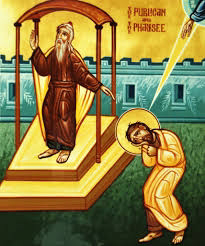
The Pharisee 
parades his deeds.

The Publican 
admits his need 
for forgiveness.

The Pharisee 
is humbled
by the justification 
of the Publican.

But what does this mean?

What does it mean
to be justified?

[PAUSE]

Too often
we think of things
in terms of Law:
guilt and innocence,
convicted and acquitted,
condemned and redeemed.

The trouble is,
with human justice,
it doesn't go very far.

If a man kills a little girl,
he goes to gaol,
but the consequences 
of that act continue.

The law cannot free that man
from his crime.

Even if the girl's parents 
forgive him
that death will always 
be with him.

This is true,
even of St Paul
who, as Saul,
is complicit in
the murder of St Stephen 
and the persecution 
of the first Christians.

Yet, we are all very ready
to put St Paul's sins aside
in favour of recognising 
his life's work 
building up the Church 
spreading the Gospel 
and giving up his freedom
and his life 
for the love of God.

But all this 
does not change the fact
that St Stephen is dead
and the persecution has happened.

[PAUSE]

This is where we
begin to see what 
"justified by faith" means.

If justification were 
just God banging a gavel
and saying to St Paul 
or to the man who killed
the little girl,
"I declare you innocent!" 
we know something would be wrong.

Even if the killer 
were honestly,
completely 
and utterly sorry,
for God to say,
"you are now innocent"
seems a gross affront
to the girl
and those who nourn her.

And if God says,
"I declare that my Son 
is guilty and not you"
is even worse.

For then God 
punishes the innocent 
for the sake of the guilty
even if the innocent 
is God Himself.

To think of justification 
only in terms
of law, crime, punishment 
and acquittal
renders it empty
of any power
to deal with evil.

There is something more.

[PAUSE]

All a judge can do,
is say, "you're innocent."

With God,
things are different.

God can say,
"Let there be light!"
and there is light.

God can say,
"Be thou clean!"
and you are clean.

God's words
create things,
restore things,
make things real
give things substance.

God's words 
can make a person innocent.

Don't ask how 
because we can't 
see that happening 
except in glimpses.

We catch a glimpse 
with St Paul
because,
somehow,
we can set aside St Paul's 
persecution of the Church
in the light of his conversion.

Somehow,
beyond our understanding 
and limitation 
of human justice,
St Paul is made right
and those he harmed
are in glory with God
in exquisite joy,
missing nothing 
filled with grace
and love.

What God gives 
to justify a human being
is Himself,
for if to justify something
makes that thing good,
then God must be present
because God is what it means
to be good.

It is the presence of God
that heals the wounds of sin
because sin is separation 
from God.

St Paul's faith
is the first point
of his justification
and through his works
he continues to grow
in justification 
because he brings more
people to God.

Justification is about
growing a greater awareness 
of God's goodness 
in our lives
and bringing Him 
into the injustices in the world.

[PAUSE]

The Pharisee 
justifies himself 
and keeps God out of the situation.

The Publican 
acknowledges
the need for God
and invites Him in
by pleading for mercy.

He knows he has a need
for God.

And so God provides 
the Publican 
with righteousness
in order to live
a better life.

St James says that
we cannot have faith 
without doing good works.

We need to work 
at our faith 
by exercising our choice
to do good things
and avoid sin.

To do good things is
how we repent
by turning away from the bad.

We see the Publican
begin his journey 
of repentance anew
and receiving the healing
of his life that he needs
in order to grow closer 
to God.

This is our faith, too,
and, by recognising the need
for God's healing
and asking for His mercy
we shall be made right with Him
and all the evil we do
will be undone by Him
for the salvation of all who love Him.

Saturday, August 03, 2024

Happy Weeping


Sermon for the tenth Sunday after Trinity 

Again,
It has been a week 
that has challenged 
any sense
of being positive 
about being human.

We have seen the Christian faith
mocked at the Olympics 
followed by people telling us
that it wasn't intended 
to be
despite direct evidence 
to the contrary 
from those involved.

We have seen the blasphemy 
of little girls being stabbed
while enjoying a dance class
followed by riots.

We are outraged
and we weep
and feel impotent.

All this just gets to you
once in a while, 
doesn't it?

[PAUSE]

We see Our Lord 
weeping over Jerusalem.

He keeps because 
He knows what is going to happen 
and cannot change it.

It is at this point 
the voices cry:

"Then He cannot be God,
for God can do anything!"

They make a point.

How can God weep
if He is unaffected 
by emotions?

How can He fail
to prevent the fall of Jerusalem 
if He can see it coming?

[PAUSE]

What we see here is
another reason why Our Lord 
became a human being.

Our Salvation 
depends upon
the Our Lord
taking Human Nature
up into His Divine Nature.

The gap between 
being human 
and being Divine 
is infinite.

So God bridges the gap
Himself 
by taking what it is to be human
into the divine person 
of Jesus.

In so doing,
Our Lord sanctifies
all aspects 
of what it is to be human.

He weeps
because weep.

He is tempted 
because we are tempted.

He is scared
because we get scared.

The person of 
Our Lord Jesus Christ 
is affected by what we do
because He has our nature.

But more than that.

[PAUSE]

We have free will.

We make our decisions freely
and God forces us to do nothing
because God is Love
and Love does not insist
on its own way.

But God makes His decisions 
from Eternity.

This means 
that He sees 
past, present and future 
all at once.

He responds to 
our decisions 
- even the ones 
we haven't made yet -
from Eternity.

But God will not
change our decisions 
in order to make 
His will happen.

It means
we have a hand in
our own salvation 
because we have a hand
in our creation
and, indeed,
all of Creation itself.

[PAUSE]

We cannot change
the decisions of others
even if those decisions lead
to blasphemy and to murder,
but we can still stand against them.

If we have a hand in Creation
then we have a duty 
to play that hand well,
and to call out evil when we see it.

Our Lord calls out evil
when he sees it trying to block
the way to God in the temple 
through manipulating 
the money changers
and the animal sellers.

So we should call out evil
when we see it.

Not that we should call people evil
for we are all creatures of God
and this good in His eyes,
but that we should not
be complacent when we see 
something wrong.

It means we have to pray
and learn how to confront evil
in a way that God would want us to.

But we should take comfort 
from feeling outraged,
from feeling impotent,
from feeling devastated 
because Our Lord
has sanctified these feelings for us.

It just remains for is
to acknowledge 
and do that which
is Godly,
filled with grace
and pointing towards joy.

For if God is with us
at our darkest,
then, by loving Him,
we shall be with Him
in His joy.


Saturday, July 27, 2024

Welcoming Mammon


Sermon for the ninth Sunday after Trinity 

Our Lord sometimes says
things that sound
startling.

Are we really 
to make friends
of worldly people
in order to cover
our own backs?

Are the people of the world
really wiser in their generation 
than the children of light?

After all, 
the children of light
know the way to Heaven.

Many of the people
of the world 
reject the way to Heaven
which
to our ears
just doesn't seem wise.

And yet,
the Lord 
the wisest of all 
says that it will be
the people of this world 
who will welcome us
into everlasting habitations.

It sounds like 
the people of the world 
get to Heaven. 
before Christians do

It sounds
as if being a Christian 
doesn't make much difference.

[PAUSE]

The Lord says that
prostitutes and tax collectors
will get into Heaven
before the Scribes 
and Pharisees.

We should, therefore,
neither be surprised 
nor upset 
that people who
we don't expect to be entering Heaven
get there before we do.

But notice
they don't just get to Heaven 
before us
they welcome us
into everlasting habitations.

They want us to be there.
They are please to see us.

So it's really worth
looking at the words of Jesus
carefully 
to see how this unjust steward
is an example to us.

[PAUSE]

What do we see?

It's clear that 
the Lord is comparing us
to the unjust steward.

As fallen human beings
our lives must fail
and we face the prospect of dying.

We will no longer be allowed
to be steward.

What can we do then?

Where will we go when we die?

Can we work our way into Heaven?

No. We know we cannot earn salvation 
because there is nothing that we
can do of ourselves 
to reach Heaven.

It's like trying to 
walk to the Moon.

Do we beg others to let us into Heaven?

No, our sins will be laid bare
and we will be ashamed.

But what we do have 
is the means
of helping others
to have their sins forgiven.

We have Christ the Word.

The people come to us
presenting their debts to God
and, as the Church,
we seek to absolve them of their sins.

The Christian
is called to forgive,
absolve,
mitigate,
cover the sins of others 
by works of charity.

We know that we are saved
by grace through faith in Christ
not through adhering to rules
which are often called works of the law.

We are saved through faith in Christ
and by actively feeding that faith
allowing it to grow in us
by encouraging that faith in others.

Our Lord's parable 
Is telling us
that the route to Heaven
is through love and charity
for other people.

God is love 
and so our acts of charity
are always performed
alongside our faith in God
and in hope of the resurrection 
that He promises us.

The more we love others
and seek to relieve 
their burden of living,
the misery of their sin,
the wounds of the Devil's hatred 
the more we shall receive 
a welcome in Heaven
as more people get there 
to rejoice in the presence
of the same Christ
Whom we have carried with us
in our lives and actions.

[PAUSE]

Mammon holds up 
a mirror to our faces.

It shows us how 
we will be received in Heaven
by how we show Christ
to those
for whom Mammon
is their master.

If they see Christ in us
then they have an opportunity 
to turn and accept Him
as the Master.

[PAUSE]

Our Lord's words
about the unjust steward 
show us our part
in the drama of
Salvation 
for everyone,
that we can all participate 
in the salvation of others
and thus in our own.

It shows
that Salvation 
is not an individual affair,
it's about all of us together
the Body of Christ
His Church.

That's why Our Lord's words
about the unjust steward
are such a welcoming message.

Saturday, July 20, 2024

Ravening Blackberries


Sermon for the eighth Sunday after Trinity 

The bramble bushes
are dropping their flowers
and from their buds
you can just make out
little green fruit
that you hope 
will become a nice crop of blackberries.

The bramble bush
is quite a pest
it can choke a garden
and is very difficult to get rid of
especially when it can
inflict nasty scratches.

But it can bear good fruit,
lovely, juicy blackberries.

A good year can yield 
blackberry jam,
blackberry juice
and blackberries and cream.

Perhaps it makes
the pestilential nature
of the bramble bush
worthwhile.

Of course,
if it doesn't bear fruit,
or the fruit is sour,
or if there is some
unpleasant substance in the soil
that the bramble soaks up
then the whole bush
is dug up and burnt.

By the bramble's fruit
shall ye know it.

[PAUSE]

Our Lord is very clear
about treating the prophets
who come in his name
the same way.

Clergy need to be prepared 
to show their good fruit
to people in order
to assure their congregation 
that they are truly in it
for God.

Too often
we see some smiling
man in a suit
proclaim the Lord Jesus
only to divert the donations 
he receives 
Into his comfortable lifestyle.

These folk get exposed 
and found out.

And that is when 
we must use our intelligence 
to stay away from them.

[PAUSE]

Even this warning is proof
of Jesus' love for us.

He doesn't want us
to be mindless,
unthinking,
allowing ourselves 
to be blown about
by any wind of doctrine.

A prophet worth the name 
will remember this,
remember the entrusted duty
to preach the Word of God.

Prophets, preachers,
teachers and clergy
must be sincere.

Our Lord is clear
that our true motives
will always find a way
of revealing themselves.

The fruit that we bear
is the fruit of our sincerity
as we proclaim 
the Word of God.

[PAUSE]

This Word of God 
will not be predictions
of the End of the World
because Jesus told us
that we will not ever know
when the end is coming.

Prophets who declare
that they know when 
the End is coming
are contradicting 
Our Lord.

Their fruit is confusion
and comes from their
intellectual pride.

[PAUSE]

The Word of God is attractive 
but not poisonous.

Sometimes it is hard
because it shows us things 
to put right in ourselves
and we know that.

But the Word of God 
will remind you 
of the love of God
and help you
to stand on your own two feet.

A prophet who makes you
dependent on their approval
rather than on the approval of God
is trying to control you.

Their fruit is intoxication
and comes from their 
desire to control others
rather than love them.

There is a reason why 
intoxication 
comes from the word toxic.

[PAUSE]

The Word of God
will not be showy or loud.

Prophets who perform miracles 
and make their message 
about the miracles
are craving your worship.

Our Lord preferrs
to do His miracles 
quietly
in the company of His friends
behind closed doors.

His message 
is more important 
than His miracles 
because He doesn't 
crave your worship
but rather needs you to know
that worshipping Him
will bring you all the joy
that you could ever desire.

Prophets who crave your attention 
are trying to be false gods.

Their fruits are idolatry and pride
and come from a deep insecurity 
and lack of faith in God.

[PAUSE]

And the list goes on.

But we can take comfort
in that true prophets
work for the good 
of the people
they are called to serve,
who recognise
the value God places in people
and seeks to bring to them
the best fruit from God Himself.

Their fruit is love.

Saturday, July 13, 2024

Ordering food


You can hear them now.

"So let me get this straight.
They come to Him,
listen to Him for hours
and they still get hungry?

Why go through the business
of multiplying loaves and fishes?

Why not just stop them 
from being hungry
in the first place?"

[PAUSE]

It's an objection
we hear many give
as their reason for 
why they do not believe 
in God.

Indeed, David Attenborough 
says that he can't believe 
in a God that created parasites 
that would infest small children.

It's all very well 
that Our Lord
walks among us 
and helps those 
suffering from hunger,
illness and even death.

But why didn't he
stop hunger, illness and death
to begin with?

[PAUSE]

As Christians,
we have to accept 
that any answer we give
will not address the whole
problem of our pain.

What we do have to accept 
is the responsibility that we hear
for the way that things are.

For example,
if everyone looked after each other
and only consumed what they needed
and did not hoard things up,
there would be no need of money,
there would be no starving millions
there would be no people living in places 
where they might get 
infected by parasites.

If everyone loved each other
and trusted each other
and valued the trust 
others have in them,
the world would be a better place.

[PAUSE]

God's order of creation works
but we suffer 
when we corrupt it ourselves.

And we corrupted it 
from the beginning 
when we took the fruit 
at the instigation
of the Wicked Serpent.

Once we add
the chaos of our own selfishness 
into the order of God's Creation 
then it is no wonder that
there is poverty, illness and death.

[PAUSE]

But then, God loves us
and He wants us to be free
so it is out of Love 
that He allows us
to live in the consequences 
of our freedom
and yet He Himself
enters in to the chaos
we have caused 
to show us that
if we love Him
if we trust Him
if we follow and obey Him
we can find our way back 
to a universe 
that is ordered to joy
not just despite our free will
but because of our free will.

God gives grace to us all
to endure and learn from
the follies of this life.

He does not forget the hungry
but perhaps we should not
forget the hungry either 
and feed them 
because we love them.

He does not change 
the habits of parasites
but perhaps 
we need to find ways
if living our lives
so that no child lives
in places or conditions 
where they can be infected 
by parasites.

Perhaps we need to use
what God has given us
to treat all those who are ill.

Perhaps we need to live lives
so that we can prevent 
painful sufferings and
painful deaths.

[PAUSE]

While this sounds
like we're the ones to blame
for the disorder in the world 
we should remember that
we are affected by the disorder 
we inherit from those
who came before.

This is not a blame game.

God isn't here to condemn us
for not giving enough to the poor
or to charities that care for the sick.

Guilt is not something 
God wants for us.

So instead He feeds us
He shows us that His love
for us never stops
bur rather we should 
learn to love each other
as best we can,
limited though we may be 
in this fallen world.

We do what we can.

That's okay.

But we do it
with prayer 
and pleading 
for the bread of life 
to help us
and to nourish those
who are hungry.

If we just keep praying 
keep loving 
keep serving God
to the best of our 
abilities 
then we will have done
what we can.

We will have given
our paltry loaves 
and our scrawny little fish 
into those pierced hands 
and God will do the rest.

God will always 
order good food
for His children.

Sometimes we just need 
to go and collect it.