Monday, August 19, 2024
What does a Canon Theologian do?
I have recently been given the honour of being appointed Canon Theologian to the Ordinary for our diocese. It’s a great honour because of the trust that has been bestowed upon me. We must never forget that every degree that we earn and every title we are given has been given to us by Almighty God for His service. Doctorates may look and sound grand but they are given as proof that the holder is capable of independent learning and research and will continue to do so.
This is especially true in Theology which many seem to think is a purely academic discipline. However, since “theology” literally means discourse about God and bears the word logos as a root, a true theologian cannot do theology without being in conversation with God, not treating Him like a lab rat or meteorological phenomenon.
All Christians are called to be theologians because. the Christian life is centred around prayer and prayer is communication with God, not always with words. We all have to wrestle with God and ensuring that the object of our worship is the One True God and not some extension of our wishful thinking.
My first duty, then, as Canon Theologian is to my bishop in assisting him in examining matters theological that arise in the running of the Diocese. This mainly involves commenting on various ecumenical dialogues and questions that arise from engaging with others. My next duty is to my confraternity of priests in providing resources and commentary in their own Continuing Ministerial Development. My third duty is a commitment to the theological education of the Diocese. This includes representing the Victoria College of Music and Johann Pestalozzi Christian University in which I hold faculty positions to the Diocese and the Diocese to the College and University This allows me to assist in the training and formation of our ordinands and the formal learning of members of my Diocese.
You can see, then, what an honour it is for me as I am being asked to participate in the dialogue between individuals in my Diocese and their Maker. It is also a great responsibility as, if I mislead them, I am responsible for that misleading, and I know that the repercussions of failture to do the job to the best of my ability are great.
I would be very, very grateful for your prayers as I take up this office because I can only fulfil it with the help of God and this requires me to keep my own faith in order with Him. I look forward to seeing where this will lead and pray that whatever part I play in the Diocese, it may be a blessing to the Diocese and an act of worship to the Triune God Whom I love.
Sunday, August 18, 2024
Assuming Power
Sermon for the Sunday in the octave of the Assumption preached at the Cathedral Church of St Augustine of Canterbury
You have every reason to think
that the church had got
the wrong Mary.
Today we celebrate
the Sunday in the octave
of the Assumption of Our Lady,
the Blessed Virgin Mary,
Our Lord's Mother.
But the Gospel reading concerns
Martha and Mary
- that's Mary Magdalene,
not Our Lady.
There are so many Marys,
so maybe the writers of the Missal
got confused.
But it's the same in the Breviary,
the Roman Missal
and the Sarum Missal.
Clearly the Church
has something to say
about Our Lady's Assumption
through how Our Lord
treats Martha and Mary.
The cynical might say
that it’s because
the Assumption of Our Lady
is not in the Bible
that we've had to make-do.
Indeed,
there are many people
who say,
for that reason alone,
it didn’t happen
and that we are fools to believe it.
[PAUSE]
But there are facts
that cannot be ignored.
There are no relics of her body
anywhere.
Given how
the Church has carefully curated
the bodies of all the saints,
how is it possible
that Our Lady's body
is missing from reliquaries
the world over.
It's also the that,
after a brief mention in the Acts,
she simply disappears.
She probably goes
with St John to Ephesus
since Jesus tells him
from the cross
to look after her.
But there is no record of her.
Some people think
she is the woman
clothed in the Sun
in the Revelation,
and it's hard not to draw
that conclusion,
even though it can have
other meanings.
But there are no Acts of Mary;
no indication of a ministry of any kind.
There is certainly
no record of her celebrating the Mass.
Even if she is the Mother of God,
she is not a priest.
She does nothing!
[PAUSE]
And now we see
why the Church has given us
this episode of the Gospel.
St Mary Magdalene
sits quietly
at the feet of Our Lord
and listens to Him
while Martha is concerned
with the affairs of this life.
St Mary Magdalene
reflects Our Lady
by devoting her attention
solely to Jesus.
There is nothing that
she needs to do
other than think of Him.
And what a life Our Lady reflects on!
No one else has
carried God in her womb.
No one else has
nursed Him,
bathed Him,
clothed Him,
helped Him learn
to walk and talk.
No one else has
seen their child grow
into a man who
commands the power
of Almighty God Himself
and yet never forgets His mother.
She probably gives
St Matthew and St Luke
information about Our Lord's birth
for the Gospels
and we are told that
she treasures up the memories
of Our Lord
in her heart.
It's not that God has
no use for her after
He ascends into Heaven.
It's that her ministry
is a ministry of being,
not doing.
To be a mother
is a ministry of relationship,
of just being present
having brought a child
into the world.
Just as a small child
is comforted by his mother
simply being there.
So are we comforted
by the presence of Our Lady.
Wherever she is, He is.
[PAUSE]
This is the power
of Our lady's Assumption.
She is taken into Heaven
in a unique way
because she is unique.
In being assumed,
Our Lady shows us
the love of Our Lord
for His mother
by keeping His own commandment
to honour His Father and His mother.
Her ministry to us
is to be His mother:
she need do nothing else.
She founds no Church
because she presents her son
to every Church that loves her.
She writes no Gospel,
because the Lord has
written His Gospel on her very being.
She does not die
the glorious death of a martyr,
because the crucifixion of her Son
already makes her a martyr.
She leaves behind
no relic of her body
because her Son wants us
to see her incorrupt
and remind us
that we too will be incorruptible.
[PAUSE]
She leaves behind
no relic of her body,
but what of other relics?
Her veil perhaps?
Here, in this building,
we have a reminder
not only of Our Lady's existence,
but also of her presence.
And Our Lady's existence
points to Our Lord's existence.
Our Lady's presence
points to Our Lord's presence.
It means we can be sure,
every time we enter this holy place,
that we are in the company
of Our Lady and Our Lord.
[PAUSE]
The Church reminds us
of Mary and Martha
on the feast of the Assumption
so that we remember
to be Christians
and to live as Christians
at the feet of Christ
rather than be ruled
by the cares of this world.
God is with us
as He is with his Mother.
Nothing else
has any greater
claim on our lives.
Nothing else
will give us any
greater joy
than being with
them both in Eternity.
Monday, August 12, 2024
Pre-Reformation Anglicanism
I've made several statements now about the way in which the Anglican Catholic Church calls itself Anglican and, in many of my arguments, I've used that phrase from the Magna Carta namely ecclesia Anglicana. The objection that I've received is that "Anglican" in its modern sense is an invention of the 18th and 19th Centuries and means the Protestant faith of the Church of England. The ecclesia Anglicana which is always to be free was meant to be the Church of England under the Pope to be free from the interference of Kings and Barons and politics. It's a point I've often made myself that Magna Carta does not legislate a Church free from the Papacy.
However, as an Anglican Catholic, I am duty bound not to play "pick and choose" with my faith. For this reason, Anglican Catholics go back to what the word "Catholic" means in the Creeds. This means the definition given by St Ignatius, St Cyril of Jerusalem and St Vincent of Lérins. This is typical of Anglican Catholic thinking - go back to the Undivided Church of the First Millennium as the authority.
So what about "Anglican"? Well, we do the same - go back to its meaning of "Anglicana" meaning English. Does this mean that we must become Roman Catholic again in order to return to the meaning of Anglicana as mentioned in the Magna Carta?
Obviously, this brings us to the central question for Anglican Catholics: should there have been a Reformation? Should Anglican Catholics necessarily view the Reformation in England negatively?
There are, of course, great positives. The position of the Pope as de facto monarch claiming supremacy over the crowned heads of Europe is clearly a consequence of medieval politics and not of Christian Doctrine. The Papal Bull Unam Sanctam makes clear how Pope Boniface VIII saw the position of the Papacy in the light of monarchs such as Edward I of England seeking to limit the influence of the Pope in domestic affairs. The formal insertion of the filioque clause into the Nicene Creed by Benedict VIII in 1014 was at the behest of Henry II of Germany and demonstrates the clear belief that the Pope had the authority to correct Oecumenical Councils. The sad thing is that if the Pope had not become inveigled in Carolingian politics and achieved the status of a monarch of the Papal States, an Oecumenical Council could have been called to deal with this issue. Even then the Council of Ephesus had made the Creed inviolable so, as Leo III had said, the conclusion of an eighth truly Oecumenical Council needs not have been inserted in the Creed, just as many other orthodox Christian doctrines are not credal.
As Fr Aidan Nichols OP notes in his book The Panther and the Hind (p3ff), the relationship between England and Roman has not been as firm as many would think, though it's worth noting that many countries in Europe have taken Papal supremacy with a pinch of salt. One can see that in the coercion of Popes by force or by charm throughout the Medieval period. In England, the statutes of Provisors, Praemunire, and Mortmain were created to limit the political influence of the Pope. While many lay the reason for the English Reformation happening at all at the feet of Henry VIII, they do so not only ignoring the role of Pope Clement VII, Holy Roman Emperor Charles V and Francis I of France but also the impact of the political instability caused by the Wars of the Roses.
Given also that Henry VIII essentially wanted to make political changes to the Church rather than doctrinal by replacing the Pope with the Crown, (see his Six Articles) it's easy to see that it is the effect of the continental Reformation under his son Edward VI that propagates the Reformed Christianity in this country.
Of course, Anglican Catholics rejoice in many benefits from the rejection of Papal Supremacy and the focus on the needs of the Nation.
1) the reclamation of the word "Catholic ' in its original sense, together with the possibility of a return to the Holy Synod and openness to Oecumenical Councils and dialogue with other Catholics such as the Eastern Orthodox Churches;
2) the Bible and the Liturgy in the vernacular for the education and edification of the individual allowing for the possibility of a return to the high level personal piety exemplified in the thirteenth and fourteenth centuries (see Fr Martin Thornton's book English Spirituality) but now available for every social class through programmes of education;
3) the provision of a simpler, more available regimen of daily prayer in the Book of Common Prayer which introduces the reader to the discipline, education and devotion in his own language through the words of Holy Scripture and invites further study;
4) the removal of some doctrinal accretions caused by a "development of doctrine" rather than patristic witness, such as Purgatory as a place of punishment from which sinners can be rescued by indulgences, as well as recognising that not all doctrine is necessary for salvation, e.g. the Immaculate Conception and Assumption of Our Lady;
5) the retention of bishops, priests and deacons and the Apostolic Succession but on wider, more patristic terms than the tortured and, as history shows (Fr Paul Bradshaw, Ordination Rites of the Ancient Churches of East and West) tenuous foundations of the Scholastic understanding of ordination, so that the priest becomes more than just a machine for churning out the Sacrament but one learned and pastoral to engage with his flock;
6) the re-emphasis on the One Eternal sacrifice of the Mass rather than sacrifices of Masses thus rescuing the Mass from being a sacrifice to help souls in Purgatory but rather reinforcing the mystical communion of all Christians in union with that one perfect sacrifice - a position always held by the Orthodox and reaffirmed by the Roman Catholic Church in the light of the Reformation;
7) the promotion of rôle of the individual in his salvation by "loosening the apron strings" and ceasing overly to mandate the sacraments allowing for greater sincerity in approaching the sacrament of Confession allowing for the formation of a healthy conscience without coercion and fear of sanction.
Notice that the accusation of "pick and choose" often levelled at us by some does not apply to these statements because they are all either questions of piety, politics or patristcs. We are seeking the practice of the Early Church. Furthermore, each of these can be seen very clearly in the Pre-Reformation Church of England. Again, Fr Thornton's book is very clear on the influence of the School of St Victor on English Spirituality. The Use of Sarum is also much more focussed on the spiritual disposition of the priest than the Roman (and hence English and Anglican) Missals and it must be remembered that for all his Calvinism (albeit nuanced), Cranmer was quite deliberate at incorporating much of the Sarum Use into the Book of Common Prayer thereby creating a point of continuity with the "Old Religion".
Of course, with the Edwardian reformers, the doctrinal changes, especially those that come to be included in the Articles introduce German Protestantism into the Church of England. This has meant the loss of certain patristic teachings and practices such as:
1) the practice of praying for the dead as an act of continued love which is in evidence in the Fathers and separate from any question of Purgatory;
2) the recognition that, although Purgatory itself is not patristic, there is a "third state" other than Heaven and Hell of which very little can be known;
3) Sacramental Realism and ex opere operato, especially the Real Objective and Physical Presence of Our Lord Jesus Christ in the Host as affirmed by the Church Fathers and which the doctrine of Transubstantiation, far from being "repugnant to to the plain word of Scripture," describes albeit nonexclusively;
4) the intercession of the saints as beings who are alive in Eternity and are like Christ because they see Him as He is, thus able to hear prayer and offer prayer;
5) the veneration of Our Lady and the devotions associated with her in recognition of the limits that veneration possessed but denying none that she is honestly due as one who is living in Eternity with her Son;
6) the use of the Ave Maria noticeably absent from the BCP:
7) the veneration of ikons as sanctioned in the Seventh Oecumenical Council.
8) the ancient sense of phronema, i.e. the sense of possessing the Mind of Christ through the unifying work of the Holy Ghost acquired through active participation in the Church's activities such as fasting, novenas, pilgrimages, veneration of ikons, relics, shrines, processions, and Eucharistic devotions;
9) the monasteries and communities for the Religious adhering to the ancient rules of life in order to present a visible presence of the work of God to the secular society.
These are the losses which are largely concomitant with the acquisitions from the German Protestants, namely:
1) the authority of the individual to interpret Scripture thereby leaving the Church open to schisms and heresies propagated mainly by eisegetical reasoning as noted by St Irenaeus and St Jerome;
2) the legalistic framework built upon the atonement inherited from Roman Catholicism, to the exclusion of other models of atonement held by the Fathers, leading to see it as an act of appeasing an angry God rather than a loving Father who runs to meet the penitent;
3) justification being separated from Baptism and ceasing to be a process of formation through synergy, thereby removing the individual's voluntary active participation in his own growth in faith in God as a member of His Church;
4) theologies which rob the Church of her awareness of transcendental realities, teleology, and which ultimately lead to acceptance of such absurdities as Christian atheism.
Protestantism is intrinsically fissiparous and there is no such thing as the Protestant theology which many Roman Catholic polemicists try to debunk in vain. What is different about Anglicanism is that it presents a way back to genuine Catholic faith as held by the Fathers. A canon of a Synod in 1571 states:
Let Preachers above all things be careful that they never teach aught in a sermon to be religiously held and believed by the people, except that which is agreeable to the doctrine of the Old and New Testaments, and which has been collected from the same doctrine by the Catholic Fathers and ancient Bishops.
This, together with the preface to the ordinal in which this rational of "diligently readinge holye scripture and auncient aucthours" shows the Anglican commitment always to look back to the Undivided Church. It is precisely this approach to which Anglican Catholics are also committed, shaping our theology from the rock from which it was hewn. The Anglicans have four of the Oecumenical Councils and yet cite six in the Formularies. Anglican Catholics have seven and that is a difference and also a fidelity to the same principle.
Bruce Kaye also writes of an "Anglicanism" before the Reformation (The Oxford Handbook of Anglican Studies) being exemplified in Bede's history, the lives of Alfred the Great and Sir John Fortescue and the continuity of faith and practice across the Norman Conquest. Together with Fr Thornton's studies and the existence of Church Papists, the Caroline Divines, the Laudians and the Nonjurors who demonstrate that the Catholic faith can survive somewhat underground in a Protestant milieu, we have a clear picture of a spirit that inhabits the Church of England from its inception and continues, albeit bound by continental Protestantism, across the Reformation. As Fr George Tavard SJ notes (Holy Writ, Holy Church):
The Anglican Church... tried to maintain the Catholic notion of perfect union between Church and Scripture. The statement of Johann Gropper, that the Church's authority is not distinct from that of Scripture, but rather they are one, corresponds to the Anglican view of the Early Church, as it corresponds to the catholic conception of the Church at all times.
Fr Arthur Middledton also notes (Fathers and Anglicans p13):
This ecclesial context of Anglican divinity understands the Church as bearing witness to the truth not merely from written documents, but from its own living, unceasing experience, from its catholic fullness. This has its roots in continuity with the primitive church, where the mind of Christ and the mind of the Church are mutually interrelated.
While it is true that Anglicanism is indeed Protestant in its Formularies, it still contains the method for its own Reformation to extract and reinforce the Catholic Faith within its midst. This is sorely needed given the lapse into heterodoxy of the Church of England and the Episcopal Church over the past fifty years. It is not enough to reform back to the sixteenth century as this just sets the clock back 500 years with those same seeds of heterodoxy will grow again.
Anglican Catholics have always existed within the Church of England and only recently have separated from it in order to pursue this Anglican spirit, not by adherence to the Anglican Formularies of the sixteenth century which are largely Calvinist in substance, thus injecting into English Spirituality a legalism and personal impotence in monergy which detracts from the Orthodox sense of phronema - the Mind of Christ - which was in evidence in the piety of the 14th Century.
It is in this Anglican spirit that Anglican Catholicism holds its name, not in Article and Homily but in reading the Book of Common Prayer with Catholic eyes supplying that which is lacking and correcting whatever is amiss. Our debt to Cranmer is there is something to work with, even if imperfectly hewn and erroneous in places. His commitment to the authority of the Undivided Church is in keeping with the whole Catholic Church, and has at least given Anglican Catholics the language by which we can articulate the Anglican Spirit that we continue through the Romans, Celts, Angles and Saxons, Normans, Reformers and Tractarians to the present day and, God willing as part of His wider Catholic and Orthodox Church unto the age of ages. Amen.
Saturday, August 10, 2024
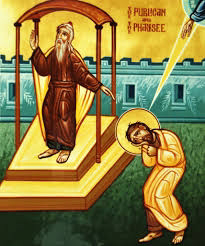
Justice in the making
You see the difference
very clearly.
The Pharisee
parades his deeds.
The Publican
admits his need
for forgiveness.
The Pharisee
is humbled
by the justification
of the Publican.
But what does this mean?
What does it mean
to be justified?
[PAUSE]
Too often
we think of things
in terms of Law:
guilt and innocence,
convicted and acquitted,
condemned and redeemed.
The trouble is,
with human justice,
it doesn't go very far.
If a man kills a little girl,
he goes to gaol,
but the consequences
of that act continue.
The law cannot free that man
from his crime.
Even if the girl's parents
forgive him
that death will always
be with him.
This is true,
even of St Paul
who, as Saul,
is complicit in
the murder of St Stephen
and the persecution
of the first Christians.
Yet, we are all very ready
to put St Paul's sins aside
in favour of recognising
his life's work
building up the Church
spreading the Gospel
and giving up his freedom
and his life
for the love of God.
But all this
does not change the fact
that St Stephen is dead
and the persecution has happened.
[PAUSE]
This is where we
begin to see what
"justified by faith" means.
If justification were
just God banging a gavel
and saying to St Paul
or to the man who killed
the little girl,
"I declare you innocent!"
we know something would be wrong.
Even if the killer
were honestly,
completely
and utterly sorry,
for God to say,
"you are now innocent"
seems a gross affront
to the girl
and those who nourn her.
And if God says,
"I declare that my Son
is guilty and not you"
is even worse.
For then God
punishes the innocent
for the sake of the guilty
even if the innocent
is God Himself.
To think of justification
only in terms
of law, crime, punishment
and acquittal
renders it empty
of any power
to deal with evil.
There is something more.
[PAUSE]
All a judge can do,
is say, "you're innocent."
With God,
things are different.
God can say,
"Let there be light!"
and there is light.
God can say,
"Be thou clean!"
and you are clean.
God's words
create things,
restore things,
make things real
give things substance.
God's words
can make a person innocent.
Don't ask how
because we can't
see that happening
except in glimpses.
We catch a glimpse
with St Paul
because,
somehow,
we can set aside St Paul's
persecution of the Church
in the light of his conversion.
Somehow,
beyond our understanding
and limitation
of human justice,
St Paul is made right
and those he harmed
are in glory with God
in exquisite joy,
missing nothing
filled with grace
and love.
What God gives
to justify a human being
is Himself,
for if to justify something
makes that thing good,
then God must be present
because God is what it means
to be good.
It is the presence of God
that heals the wounds of sin
because sin is separation
from God.
St Paul's faith
is the first point
of his justification
and through his works
he continues to grow
in justification
because he brings more
people to God.
Justification is about
growing a greater awareness
of God's goodness
in our lives
and bringing Him
into the injustices in the world.
[PAUSE]
The Pharisee
justifies himself
and keeps God out of the situation.
The Publican
acknowledges
the need for God
and invites Him in
by pleading for mercy.
He knows he has a need
for God.
And so God provides
the Publican
with righteousness
in order to live
a better life.
St James says that
we cannot have faith
without doing good works.
We need to work
at our faith
by exercising our choice
to do good things
and avoid sin.
To do good things is
how we repent
by turning away from the bad.
We see the Publican
begin his journey
of repentance anew
and receiving the healing
of his life that he needs
in order to grow closer
to God.
This is our faith, too,
and, by recognising the need
for God's healing
and asking for His mercy
we shall be made right with Him
and all the evil we do
will be undone by Him
for the salvation of all who love Him.
Monday, August 05, 2024
Saturday, August 03, 2024
Happy Weeping
Again,
It has been a week
that has challenged
any sense
of being positive
about being human.
We have seen the Christian faith
mocked at the Olympics
followed by people telling us
that it wasn't intended
to be
despite direct evidence
to the contrary
from those involved.
We have seen the blasphemy
of little girls being stabbed
while enjoying a dance class
followed by riots.
We are outraged
and we weep
and feel impotent.
All this just gets to you
once in a while,
doesn't it?
[PAUSE]
We see Our Lord
weeping over Jerusalem.
He keeps because
He knows what is going to happen
and cannot change it.
It is at this point
the voices cry:
"Then He cannot be God,
for God can do anything!"
They make a point.
How can God weep
if He is unaffected
by emotions?
How can He fail
to prevent the fall of Jerusalem
if He can see it coming?
[PAUSE]
What we see here is
another reason why Our Lord
became a human being.
Our Salvation
depends upon
the Our Lord
taking Human Nature
up into His Divine Nature.
The gap between
being human
and being Divine
is infinite.
So God bridges the gap
Himself
by taking what it is to be human
into the divine person
of Jesus.
In so doing,
Our Lord sanctifies
all aspects
of what it is to be human.
He weeps
because weep.
He is tempted
because we are tempted.
He is scared
because we get scared.
The person of
Our Lord Jesus Christ
is affected by what we do
because He has our nature.
But more than that.
[PAUSE]
We have free will.
We make our decisions freely
and God forces us to do nothing
because God is Love
and Love does not insist
on its own way.
But God makes His decisions
from Eternity.
This means
that He sees
past, present and future
all at once.
He responds to
our decisions
- even the ones
we haven't made yet -
from Eternity.
But God will not
change our decisions
in order to make
His will happen.
It means
we have a hand in
our own salvation
because we have a hand
in our creation
and, indeed,
all of Creation itself.
[PAUSE]
We cannot change
the decisions of others
even if those decisions lead
to blasphemy and to murder,
but we can still stand against them.
If we have a hand in Creation
then we have a duty
to play that hand well,
and to call out evil when we see it.
Our Lord calls out evil
when he sees it trying to block
the way to God in the temple
through manipulating
the money changers
and the animal sellers.
So we should call out evil
when we see it.
Not that we should call people evil
for we are all creatures of God
and this good in His eyes,
but that we should not
be complacent when we see
something wrong.
It means we have to pray
and learn how to confront evil
in a way that God would want us to.
But we should take comfort
from feeling outraged,
from feeling impotent,
from feeling devastated
because Our Lord
has sanctified these feelings for us.
It just remains for is
to acknowledge
and do that which
is Godly,
filled with grace
and pointing towards joy.
For if God is with us
at our darkest,
then, by loving Him,
we shall be with Him
in His joy.
Monday, July 29, 2024
Why Anglican Catholicism is not "cosmetic '
How Anglican Catholics understand what "Catholic" means.
Saturday, July 27, 2024
Welcoming Mammon
Our Lord sometimes says
things that sound
startling.
Are we really
to make friends
of worldly people
in order to cover
our own backs?
Are the people of the world
really wiser in their generation
than the children of light?
After all,
the children of light
know the way to Heaven.
Many of the people
of the world
reject the way to Heaven
which
to our ears
just doesn't seem wise.
And yet,
the Lord
the wisest of all
says that it will be
the people of this world
who will welcome us
into everlasting habitations.
It sounds like
the people of the world
get to Heaven.
before Christians do
It sounds
as if being a Christian
doesn't make much difference.
[PAUSE]
The Lord says that
prostitutes and tax collectors
will get into Heaven
before the Scribes
and Pharisees.
We should, therefore,
neither be surprised
nor upset
that people who
we don't expect to be entering Heaven
get there before we do.
But notice
they don't just get to Heaven
before us
they welcome us
into everlasting habitations.
They want us to be there.
They are please to see us.
So it's really worth
looking at the words of Jesus
carefully
to see how this unjust steward
is an example to us.
[PAUSE]
What do we see?
It's clear that
the Lord is comparing us
to the unjust steward.
As fallen human beings
our lives must fail
and we face the prospect of dying.
We will no longer be allowed
to be steward.
What can we do then?
Where will we go when we die?
Can we work our way into Heaven?
No. We know we cannot earn salvation
because there is nothing that we
can do of ourselves
to reach Heaven.
It's like trying to
walk to the Moon.
Do we beg others to let us into Heaven?
No, our sins will be laid bare
and we will be ashamed.
But what we do have
is the means
of helping others
to have their sins forgiven.
We have Christ the Word.
The people come to us
presenting their debts to God
and, as the Church,
we seek to absolve them of their sins.
The Christian
is called to forgive,
absolve,
mitigate,
cover the sins of others
by works of charity.
We know that we are saved
by grace through faith in Christ
not through adhering to rules
which are often called works of the law.
We are saved through faith in Christ
and by actively feeding that faith
allowing it to grow in us
by encouraging that faith in others.
Our Lord's parable
Is telling us
that the route to Heaven
is through love and charity
for other people.
God is love
and so our acts of charity
are always performed
alongside our faith in God
and in hope of the resurrection
that He promises us.
The more we love others
and seek to relieve
their burden of living,
the misery of their sin,
the wounds of the Devil's hatred
the more we shall receive
a welcome in Heaven
as more people get there
to rejoice in the presence
of the same Christ
Whom we have carried with us
in our lives and actions.
[PAUSE]
Mammon holds up
a mirror to our faces.
It shows us how
we will be received in Heaven
by how we show Christ
to those
for whom Mammon
is their master.
If they see Christ in us
then they have an opportunity
to turn and accept Him
as the Master.
[PAUSE]
Our Lord's words
about the unjust steward
show us our part
in the drama of
Salvation
for everyone,
that we can all participate
in the salvation of others
and thus in our own.
It shows
that Salvation
is not an individual affair,
it's about all of us together
the Body of Christ
His Church.
That's why Our Lord's words
about the unjust steward
are such a welcoming message.
Monday, July 22, 2024
Reconstructing an undemolished Christianity
How Tradition, Phronema and the Holy Ghost help us cut through the noise.
Saturday, July 20, 2024
Ravening Blackberries
The bramble bushes
are dropping their flowers
and from their buds
you can just make out
little green fruit
that you hope
will become a nice crop of blackberries.
The bramble bush
is quite a pest
it can choke a garden
and is very difficult to get rid of
especially when it can
inflict nasty scratches.
But it can bear good fruit,
lovely, juicy blackberries.
A good year can yield
blackberry jam,
blackberry juice
and blackberries and cream.
Perhaps it makes
the pestilential nature
of the bramble bush
worthwhile.
Of course,
if it doesn't bear fruit,
or the fruit is sour,
or if there is some
unpleasant substance in the soil
that the bramble soaks up
then the whole bush
is dug up and burnt.
By the bramble's fruit
shall ye know it.
[PAUSE]
Our Lord is very clear
about treating the prophets
who come in his name
the same way.
Clergy need to be prepared
to show their good fruit
to people in order
to assure their congregation
that they are truly in it
for God.
Too often
we see some smiling
man in a suit
proclaim the Lord Jesus
only to divert the donations
he receives
Into his comfortable lifestyle.
These folk get exposed
and found out.
And that is when
we must use our intelligence
to stay away from them.
[PAUSE]
Even this warning is proof
of Jesus' love for us.
He doesn't want us
to be mindless,
unthinking,
allowing ourselves
to be blown about
by any wind of doctrine.
A prophet worth the name
will remember this,
remember the entrusted duty
to preach the Word of God.
Prophets, preachers,
teachers and clergy
must be sincere.
Our Lord is clear
that our true motives
will always find a way
of revealing themselves.
The fruit that we bear
is the fruit of our sincerity
as we proclaim
the Word of God.
[PAUSE]
This Word of God
will not be predictions
of the End of the World
because Jesus told us
that we will not ever know
when the end is coming.
Prophets who declare
that they know when
the End is coming
are contradicting
Our Lord.
Their fruit is confusion
and comes from their
intellectual pride.
[PAUSE]
The Word of God is attractive
but not poisonous.
Sometimes it is hard
because it shows us things
to put right in ourselves
and we know that.
But the Word of God
will remind you
of the love of God
and help you
to stand on your own two feet.
A prophet who makes you
dependent on their approval
rather than on the approval of God
is trying to control you.
Their fruit is intoxication
and comes from their
desire to control others
rather than love them.
There is a reason why
intoxication
comes from the word toxic.
[PAUSE]
The Word of God
will not be showy or loud.
Prophets who perform miracles
and make their message
about the miracles
are craving your worship.
Our Lord preferrs
to do His miracles
quietly
in the company of His friends
behind closed doors.
His message
is more important
than His miracles
because He doesn't
crave your worship
but rather needs you to know
that worshipping Him
will bring you all the joy
that you could ever desire.
Prophets who crave your attention
are trying to be false gods.
Their fruits are idolatry and pride
and come from a deep insecurity
and lack of faith in God.
[PAUSE]
And the list goes on.
But we can take comfort
in that true prophets
work for the good
of the people
they are called to serve,
who recognise
the value God places in people
and seeks to bring to them
the best fruit from God Himself.
Their fruit is love.
Monday, July 15, 2024
Saturday, July 13, 2024
Ordering food
"So let me get this straight.
They come to Him,
listen to Him for hours
and they still get hungry?
Why go through the business
of multiplying loaves and fishes?
Why not just stop them
from being hungry
in the first place?"
[PAUSE]
It's an objection
we hear many give
as their reason for
why they do not believe
in God.
Indeed, David Attenborough
says that he can't believe
in a God that created parasites
that would infest small children.
It's all very well
that Our Lord
walks among us
and helps those
suffering from hunger,
illness and even death.
But why didn't he
stop hunger, illness and death
to begin with?
[PAUSE]
As Christians,
we have to accept
that any answer we give
will not address the whole
problem of our pain.
What we do have to accept
is the responsibility that we hear
for the way that things are.
For example,
if everyone looked after each other
and only consumed what they needed
and did not hoard things up,
there would be no need of money,
there would be no starving millions
there would be no people living in places
where they might get
infected by parasites.
If everyone loved each other
and trusted each other
and valued the trust
others have in them,
the world would be a better place.
[PAUSE]
God's order of creation works
but we suffer
when we corrupt it ourselves.
And we corrupted it
from the beginning
when we took the fruit
at the instigation
of the Wicked Serpent.
Once we add
the chaos of our own selfishness
into the order of God's Creation
then it is no wonder that
there is poverty, illness and death.
[PAUSE]
But then, God loves us
and He wants us to be free
so it is out of Love
that He allows us
to live in the consequences
of our freedom
and yet He Himself
enters in to the chaos
we have caused
to show us that
if we love Him
if we trust Him
if we follow and obey Him
we can find our way back
to a universe
that is ordered to joy
not just despite our free will
but because of our free will.
God gives grace to us all
to endure and learn from
the follies of this life.
He does not forget the hungry
but perhaps we should not
forget the hungry either
and feed them
because we love them.
He does not change
the habits of parasites
but perhaps
we need to find ways
if living our lives
so that no child lives
in places or conditions
where they can be infected
by parasites.
Perhaps we need to use
what God has given us
to treat all those who are ill.
Perhaps we need to live lives
so that we can prevent
painful sufferings and
painful deaths.
[PAUSE]
While this sounds
like we're the ones to blame
for the disorder in the world
we should remember that
we are affected by the disorder
we inherit from those
who came before.
This is not a blame game.
God isn't here to condemn us
for not giving enough to the poor
or to charities that care for the sick.
Guilt is not something
God wants for us.
So instead He feeds us
He shows us that His love
for us never stops
bur rather we should
learn to love each other
as best we can,
limited though we may be
in this fallen world.
We do what we can.
That's okay.
But we do it
with prayer
and pleading
for the bread of life
to help us
and to nourish those
who are hungry.
If we just keep praying
keep loving
keep serving God
to the best of our
abilities
then we will have done
what we can.
We will have given
our paltry loaves
and our scrawny little fish
into those pierced hands
and God will do the rest.
God will always
order good food
for His children.
Sometimes we just need
to go and collect it.
Monday, July 08, 2024
Saturday, July 06, 2024
The right sort of righteousness
Sermon for the sixth Sunday after Trinity
Does your righteousness
exceed that of
the scribes and Pharisees?
What does this mean?
Are we talking about
righteousness
in what we think,
or say,
or do?
Of is it something we are?
We think of Abraham
being a righteous man
whose faith in God
was accounted to him
as righteousness.
There are two understandings
of righteousness in the Bible.
One is a broad sense
which is related to perfection.
A righteous man is one
whom he is meant to be.
And already we see God
present in this understanding
of righteousness
because God is responsible
for giving us meaning
and showing us
who we are meant to be.
The other sense
is a narrow, legal sense
of passing the right judgement
on others.
And now we begin to see
how we must exceed
the righteousness
of the Scribes
and Pharisees.
[PAUSE]
The Scribes and Pharisees
adhere to the narrow form
of righteousness.
Things are righteous
because the Pharisees
say that they are righteous
according to the Law of Moses.
In many ways,
they are trying to ensure
that God's law is kept
in due order
so that God may be worshipped.
That's actually a fine thing.
The Pharisee regards
God's Law with respect
and seeks to apply it
as in compliance with God.
So what's gone wrong?
[PAUSE]
Our Lord Jesus
shows us
that this view of righteousness
is too narrow
and needs to be broadened.
It is against God's Law
to commit murder.
But Jesus broadens out
what the Law says.
It is not what God wants
for us to harbour anger
against our brother
in our hearts.
To be angry with your brother
without a good reason
(if there is such a reason)
is to damage
our righteousness
which puts us back into
narrow sense of righteousness
and puts us in danger of
judgement, council and hellfire.
To be angry with your brother
means that there is something wrong
which needs to be put right
before you can proceed.
[PAUSE]
Righteousness is related to being perfect
and this means that
the Law is not enough
to call us righteous.
We need to be made righteous.
This means cultivating
righteousness
in our lives
as something to grow.
God imparts righteousness
at our baptism
and when we confess our sins
and when we receive the Eucharist.
And then we must grow it
so that it exceeds
the narrow view of righteousness
that the Scribes and Pharisees
possess
Just as our justification
is not a one-off event
but something that we must
work at in faith
so our righteousness is
something that we must work at
and cultivate
in order to enter the kingdom of God.
We need the right sort of righteousness,
nice and broad
that grows beyond the confines
of the law court
and into our hearts and minds.
Monday, July 01, 2024
Saturday, June 29, 2024
Catch as catch can
Sermon for the fifth Sunday after Trinity
You notice two multitudes
gathering around Jesus.
The first multitude
are the crowds gathered
around Lake Gennesaret
eager to hear
the Word of God.
The second
is the multitude
of fish caught in the nets
of Simon and his crew
and which nearly sink the boat.
Two multitudes to be caught.
This rather raises the question
what is it like
to be caught
by a fisher of men?
[PAUSE]
You would hope
that Our Lord doesn't mean
that we suffer the same fate
as the fish when we are caught
by a fisher of men.
Indeed,
Our Lord doesn't mean
that we are to be prepared
for the fish mongers.
We are not going to be
killed or eaten
and Our Lord's words
in Greek really bring that out.
When Our Lord says "catch"
the Greek text really does say
"catch alive".
He is expecting
that men who have been fished
to remain alive.
Indeed St Paul uses the same word
in his second letter to St Timothy
to describe those servants of God
who have been caught
in the snare of the Devil.
He reminds Timothy
that they are still alive
and can recover themselves
out of the snare of the Devil
through repentance to the acknowledgement of the Truth.
This shows us
the power of our Baptism.
The snares of the Devil
catch us alive and we still have
the means of escape
through repentance
and seeking the Truth.
This is why the saints
are important
as fishers of men.
Our Lord means
for those caught
by Simon Peter and
the other disciples
to be caught up
to life.
The fish,
of course will die
when taken out
of the water.
But when we are caught up
we are drawn up
through the waters of Baptism
through Death
and into Life.
[PAUSE]
But we must beware.
We can still perish
in the snares of the Devil
who is seeking to devour us.
His capture leads to death
and Our Lord's to life.
St Paul tells us
that we will be caught up
to God
and that this is our salvation.
In being caught
we are rescued from the current
generated by sinful pleasures,
the wiles of Satan
and the ravages of Time.
This capture is a rescue
for us in the helplessnes
of our sins.
[PAUSE]
We are being saved
and we await being caught
with baited breath.
Friday, June 28, 2024
Reaching out
At our Diocesan Synod this year, we passed a resolution to reach out to all who consider themselves orthodox or traditional Christians of goodwill with the purposes of establishing the highest degree of fellowship that mutual theological positions would allow. We rejoice in our agreement and seek to show love and respect in those areas where we disagree.
I, personally, find myself on good terms with Orthodox and Roman Catholic Christians alike and that is truly wonderful and I hope that we will find common ground and mutual, prayerful support.
There are other groups, too. I do count Archbishop Jerome Lloyd as a friend from the Old Roman Catholic Church. He is one of the successors of Bishop Arnold Harris Mathew, and is doing great things not only in this country but in developing traditional Catholic ministry in the Philippines.
Sadly, there does not seem to be much contact with the Traditional Anglican Church in the UK despite the greater concord among the G3 Continuing Anglican Churches. My worry there is that often the people have moved from one of the TAC or ACC to the other out of soured relationships and so the impetus to establish contact is rather thwarted.
The Free Church of England and the Church of England (Continuing) exist, of course, but they not enamoured of our strictly Catholic interpretation of Anglican liturgy and our distance from the classical Anglican Formularies. Indeed, we have lost two parishes to the Free Church of England: these parishes preferred a more Protestant and less liturgically rigourous environment. Nonetheless, we wish them all well in their conversation with Our Lord.
What we have lost, we have gained in St Osmund's Dudley in which the new parish priest is ministering to adherents of the Sarum Use and those Roman Catholics who have been disenfranchised by recent developments in Roman Catholic order and practice.
My hope, then, is that despite our size, we might prove ourselves as prayerful friends to all who find themselves disenfranchised or forced out by elements that would seek to change the Church according to the winds of politics and poor conceptions of social justice.
Monday, June 24, 2024
St John the Baptist and the Centre of Catholic Liturgy
Why Anglican Catholics take their Liturgy seriously with the prayers of St John the Baptist.
Saturday, June 22, 2024
Terms and Conditions apply?
Sermon for the fourth Sunday after Trinity
Think about your average day.
How many transactions
take place.
How many times
do you say something like,
"if you do this
then I'll do that"
or
"I'll do this
on the condition
that this happens"?
We're very good
at entering into
contracts and covenants.
And when those
contracts and covenants
are broken
this is where
we bring in the Law
so that order and fairness
can be re-established.
You you think
things are like that
with God?
[PAUSE]
As Christians
we are part of
the New Covenant
on which the sacraments are based.
If we fulfill our side,
God fulfills His.
If a priest offers up
bread and wine
at the Mass
with the intention
of doing what the Church
has always done
for the means of Grace,
then God gives us His Grace
in His Real, True, Physical Presence
which we consume
In order to be more like Him.
We have God's promise
that if we do this in remembrance of Him
He is there.
So it seems that God
does enter into transactions
with us.
But what of our Salvation?
What of the business of Sin?
Does God not keep score
of our wrongdoing?
[PAUSE]
The typical Anglican answer
is "yes and no".
It depends on whether we keep score.
It depends on whether
our love for others
is conditional, legalistic
or transactional.
Jesus tells us that
this is so.
If our approach
is to judge our neighbour
to determine if He is worth loving,
whether he will return our investment,
if we judge our neighbour
and decide that he is too sinful
to love,
If we judge our neighbour
and decide
that his sins are
unforgivable
then that's how we will see
God's love for us.
If we judge others
by our own criteria
then we will expect
to be judged by that criteria
because that criteria
will be all that we know.
If we are unmerciful
then we will expect no mercy
because we cannot know
what mercy is.
If we are unforgiving
then we will not receive forgiveness
because we don't know
what forgiveness is.
If terms and conditions apply
to the way we see our relationship
with God and neighbour
then that's all we can expect.
We trap ourselves
in a cage of terms and conditions
even if we don't think
that those terms and conditions
apply to us.
This is not the relationship
that God wants with us,
His Church.
His love,
His mercy,
His forgiveness
are always give
in superabundance.
In the boxes He gives us
marked Love, Mercy, Forgiveness
there is no bubble wrap,
no foam blocks
no paper packing.
Each box is filled to the brim
with just what it says
on the box.
There is nothing
to quibble about,
there are no terms and conditions.
At the heart,
Christianity is about
this love of God
for us
without any limits on His love
except those limits
we put upon ourselves.
[PAUSE]
We sin, yes,
but forget about the law court;
forget about the idea
of God as judge, jury and gaolor.
See God as being on our side,
hating the sin
that separates us from Him,
and wanting us
to come back to Him,
giving us the Way back
through Our Lord Jesus Christ,
and asking only
for our love, trust and fidelity
which can only come
from our free will.
[PAUSE]
What we struggle with,
in life,
are the terms and conditions
which we insist upon
to protect ourselves
from being hurt.
Following Christ is painful,
but His painful death
upon the Cross shows us
that it is worth it
to embrace the truth
which sets us free.
Terms and conditions
need not apply.
Monday, June 17, 2024
Anglican Catholic Poetry?
Why the words of St Ephrem allow us access into the truth that lies beyond words
Saturday, June 15, 2024
A Compass for Heroes
Sermon for the third Sunday after Trinity
It sounds rather rough
on the ninety nine sheep who stay.
No one rejoices over them.
The lost sheep
is the subject of much joy
more than the others that stay.
The lost coin
is the subject of much joy
more than the others
that remain in the purse.
The Prodigal Son
is the subject of much joy
more than his elder brother
who stays and looks after the father.
There is more joy in Heaven
over the one who repents
than the ninety nine
who need no repentance.
That makes the ninety nine
seem undervalued
and forgotten.
It seems that
Our Lord values
sinners and tax collectors
more than those who try to
hold fast to the religion
that they have always received.
It seems that Our Lord's love
is not unconditional.
It seems that Our Lord
likes those who need help
as if to satisfy His own need
to be seen as their saviour,.
Our Lord has a hero-complex!
[PAUSE]
If that were true
then Our Lord would be
no better than
the Scribes and Pharisees.
His actions would be
all for show.
We know that this can't be the case.
The miracles
are signs that Our Lord
is not delusional.
His Resurrection is a sign
that His testimony is true.
His Ascension is proof
that He has no hero-complex:
he is greater than any hero.
If Our Lord loves
sinners more than Pharisees
then what's gone wrong?
[PAUSE]
Who said that Our Lord
loves sinners more than Pharisees?
That's an assumption
that we make when we think
that what our Lord says
means some people
are more valuable than others.
Listen to what He says.
"Joy shall be in Heaven
over one sinner that repenteth,
more than over
ninety and nine just persons,
which need no repentance."
The key is what
we understand by repentance.
[PAUSE]
We know this already.
Repentance means
to turn to the Lord.
Like the needle of a magnet
always points north,
so do we return to Christ
after our deviation into sin.
To repent means to realign ourselves
to Christ.
This means that
if we need no repentance,
then we must already be
aligned to Christ.
If we need no repentance
then what matters more
to us is not whether we are valued
but whether we value what
Jesus values.
If He rejoices
over a sinner's repentance
then the righteous
will also rejoice!
It is the hearts' joy
of the ninety and nine
to see the smile on the Lord's face
as He runs out to meet
the Prodigal Son,
as He carries back the lost sheep
on His shoulder,
as He brandishes aloft
the lost piece of silver.
It isn't that He values
the Scribes and Pharisees less
than a repentant sinner.
He loves them just as much
but He waits for them
to turn to Him
and believe in Him
and receive Him as He is.
[PAUSE]
We know ourselves
to be sinners.
We spend our lives
struggling against
the sins in our lives,
falling, repenting,
falling, repenting...
Yet our struggle
is always met with joy
because the very fact
that we struggle with sin
is a sign that we are struggling
to turn to Christ.
And Jesus sees that struggle
and knows that you are struggling
for Him
and that is a sign of your love
for Him
even if it is far from perfect.
And that makes Him rejoice.
And that makes the angels in Heaven
rejoice.
And that makes the ninety and nine
rejoice.
[PAUSE]
Of course there is more joy
in Heaven
when you repent of your sins.
It's because you are of more worth
than a universe filled
with silver pieces.
Because you are worth
the Cross.
Friday, June 14, 2024
Monday, June 10, 2024
Anglican Catholics and Ephesian Canon III
Why Anglican Catholics separated from the Anglican Communion.
Saturday, June 08, 2024
Refusing Dinner
Sermon for the second Sunday after Trinity
Why do they refuse?
Guests bidden to a fine dinner
make excuses
and refuse the invitation.
A sumptuous meal
gets passed over
for inspecting
a piece of land
a yoke of oxen,
a new wife.
Could these ever
be convincing excuses?
[PAUSE]
There are often good reasons
why we refuse an invitation
to dinner:
Ill-health,
unforseen circumstances,
urgent business.
These might be genuine
or they may be covering
the fact
that we simply
don't want to go to dinner.
Either way
in refusing the invitation
we are declaring
that there is something
more important to us
than this meal.
Making excuses
that aren't genuine
shows a desire
to conceal the truth
from the giver of the feast.
This rather shows
a desire to keep up
an appearance
rather than be honest
and state the real reason
to the one giving the feast.
Of course,
if the feast is Our Lord's
wedding banquet
then this is like Cain
denying the truth
before Almighty God.
This feast is unworthy
of the person
who makes false excuses.
[PAUSE]
"I have bought a piece of land.
I must inspect it.
I cannot come to the feast."
This excuse
shows that the land
is considered to be
more valuable than the feast.
Those who prefer
to control the land,
who lay claim to estates,
who seek kingdoms
and dominions
who enter into disputes
over territory to control
are not worthy of the feast.
They do not wish
to share the same space
with others
if it is not on their terms.
[PAUSE]
"I have bought some oxen.
I must inspect them.
I cannot come to the feast."
This excuse shows
that acquiring property
and wealth
is more important than the feast.
Those who prefer to hoard
their possessions
who see everything
in terms of asset and gain,
who reduce everything
to utility and fashion
are not worthy of the feast
They do not wish
to extend their bounty
with others
or to see others as
anything other
as means to their ends.
[PAUSE]
"I have married a wife.
I must spend time with her.
I cannot come to the feast."
This excuse shows
that personal pleasure
is more important than the feast.
Those who prefer
to enjoy themselves
on their terms,
who even base their identity
in terms of what they enjoy,
who lose their temper
when their pleasure is denied them
are unworthy of the feast.
They do not wish
to share their joy with others
nor share in the joy of others.
And what does the Lord of the Feast do?
[PAUSE]
He gives them what they want.
He allows their excuse.
They don't have to come
if they don't want to.
But their place will be taken
by those who are grateful
to be called worthy of the feast
because they will enjoy it
for what it is:
free, generous, nourishing
good
and not regarding
where they have come from.
Those who refuse the feast
will never partake of it
in respect of their own choices.
They made themselves unworthy
but God makes all who choose Him
worthy of His bounty
which He shares
liberally and joyfully with us
and bids us
share His bounty
liberally and joyfully with others.
Monday, June 03, 2024
Saturday, June 01, 2024
Worth a good meal?
Sermon for the Sunday in the octave of Corpus Christi
But we're all
unworthy of the Body
and Blood of Christ
are we not?
How can we
receive our Holy Communion
worthily?
It doesn't matter
if we've confessed our sins
and repented
does it?
We're still
not worthy of
such a wonderful
sacrament
- the Body and Blood
of Jesus Christ
our God.
So how can we ever
receive the Body and Blood
of Our Lord Jesus Christ
worthily?
[PAUSE]
When we read our Bible
we do have to take care
that we understand that
sometimes things get
a bit muddled in translation.
When St Paul
says that we must
not eat and drink
unworthily
he is referring specifically
to the rather raucous meals
that used to precede
the Eucharist.
People at these meals
get drunk
some go hungry
others overeat
- it doesn't bring our
minds to the last supper.
These folk aren't eating
and drinking in remembrance
of Him
They have forgotten.
It is not the people
who are unworthy
but they are treating the Eucharist
unworthily
- it is not worth their
undivided attention.
Indeed, St John reminds us
that there was someone
who did not treat the first Eucharist
at the Last Supper as being
worthy of his time.
Judas only sees the worth
of Christ too late,
for his treatment
of the Body of Christ
means that he knows
that he has eaten and drunk
damnation upon himself
as the thirty pieces of silver
rattle in his pocket.
St Paul is quite clear.
If we do not treat
the Eucharist with respect
then we eat and drink
damnation upon ourselves.
It is precisely because
of St Paul's words
that we Catholics
now receive the sacrament
in our Mass.
People may laugh
and poke fun
at the elaborate rituals
and ceremonies,
but for us
offering the sacrifice of the Mass
is the pinnacle of worship,
greater than singing pious songs
greater than listening
to long passages of Scripture,
greater than erudite and learned sermons
greater than confessing our sins.
It is the pinnacle of our worship
because we are doing what
we are told to do.
We do this in remembrance
of Our Lord.
This isn't a casual memory
like thinking back
to the last meal you had
with good friends.
This is a bringing to mind,
making presents
the Body and Blood of Christ
according to the ancient rites
of the Holy Church.
The Mass exists
precisely in order to make sure
that no-one brings
damnation upon themselves
by being reckless
like Nadab and Abihu
who were reckless with
the Ark of the Covenant
and were burnt up.
It is why we have a duty
to educate our layfolk
to ensure that we are prepared
to meet with Our Lord Himself
as we take Him into
the inmost part of our very selves,
not as bread and wine
but making sure
that we know the Body and Blood
of the One Who deems us worthy
of His love
and Who trusts that we believe
Him to be worthy
of our love.
Subscribe to:
Posts (Atom)