One thing that separates Anglicans from Anglican Catholics (and also our Oecumenical partners) is that we accept the doctrine of the Second Council of Nicaea being the Seventh Oecumenical Council. This is the council which demonstrates that there is a world of difference between ikons and idols.
We're actually more used to ikons than we think. I tend to use the Greek spelling with a k, but the majority of people use a c to produce icons. I certainly remember the first time I opened Windows 3 and saw the icons there. When you clicked on them, the programme opened up and (usually) worked. The presence of the icon spoke about the presence of the programme that it represented. The same is true in the Church: an ikon of Christ speaks of the presence of Christ. We bow before the ikon because we bow before Christ. It's the same principle with photographs - witness the lovesick boy kiss a cherished photograph of his new girlfriend.
It seems clear to me that ikonography is a natural part of human existence. From our troglodyte beginnings, we have always sought to represent what we see in our dwellings. These are representations of our physical reality and we use them to speak of our experience of the world. The pictures speak more of what they represent than we can describe. We always have to go beyond what we see in order to find the depth of reality.
For the Christian, it is God who determines reality and sustains it, thus to see the human Jesus is to see the Divine Person of the Trinity. This is not idolatry because it is not a created thing that we worship: we adore Him who is begotten, not created, His Father and the One who proceeds from the Father in Eternity and is breathed by the Son in Time.
However, Society is not Christian. Yet still it possesses this nature to create "ikons" to point to deeper realities which its materialist and secular attitudes can grasp better. This tends to hark back to good, old-fashioned Platonism. We have the idea of what it means to be male, female, rich, poor, strong, weak, old, young, et c. From these, we tend to construct the stereotypes. We have the stereotypical man based upon his physical attributes. He is the one who goes out to work, drinks beer, plays foot-ball, doesn't readily show his emotions, et c. We have the little girl in pink, the little boy in blue, dresses and flowers for Sally, trucks and toy guns for Jim.
The trouble is that often these stereotypes point to images of a man and a woman who aren't real. If a boy wants to wear pink and play with a doll, it is immediately assumed that there is something wrong with him. He doesn't fit Society's ikon of Man. He must therefore be Woman and Society will encourage him to transition into whatever stereotype suits him best. There is even the new ikon of Non-Sexed. Even Iconoclast has an ikon in the generations of stereotype. These stereotypes arise from Society's expectations of what we should be. Yet, these stereotypes exist only to diminish our humanity.
The moment we equate our actions with our being, we enter this diminution of ourselves and enslave ourselves to the two-dimensional nature that a secular humanity offers. The man who sleeps with another man is gay: action becomes essence. If this is true, then the man who kills another is a murderer and can never escape that identity. There can be no repentance or salvation if what we do becomes what we are. Thus, by accepting the stereotypes and forcing others to accept stereotypes, we find ourselves perpetuating nothingness and thus building the corridors of Hell itself.
The Catholic Faith takes things very differently. In the eyes of the Church, there is no such thing as "being gay" - it is not a thing that speaks to our reality, but to a feature that need not be permanent. We sin and are justly called "sinner" but God does not allow this to become what we are - only we allow it to become what we are. In this sense, we have the opportunity to participate in our own creation by detaching ourselves from the stereotypes that Society tries to impress upon us. Catholic Christians are the true ikonoclasts because we seek to break the fake ikons which point to non-being and find ourselves stripped of all but ourselves in our poor purity to which God then adds substance. In confessing our sins, we break the ikons of stereotype and are thus freed to gaze upon human beings who are themselves ikons of God. St Epiphanius of Salamis would have that while Man is the ikon of Christ, Woman is the ikon of the Holy Ghost and also the Church.
Ironically, this freedom is rejected by Society as enslavement and brainwashing. They see the desire to resist the temptations that beset us as not being true to ourselves. They see our sadness at being flawed and fallen as being unnecessary tears when we should be rejoicing. They see our urging to see the truth as being blasphemous because the truth is already visible. Yet, the more we allow this false ikonography into the Church, the more we will struggle to keep its unity together. As Christians, our duty is to seek God and His Righteousness first. We are to use the ikons in order to break down stereotypes. We must see our freedom as being ourselves in God not being free from constraint to pursue our own stereotype. It is submission to the Catholic Faith as revealed by God to the Church that is more freeing than this World will ever understand.
This World is flatter than the piece of paper on which its stereotypes are drawn: our reality in God is more real than a thousand new dimensions opening up at every point of our being.
Thursday, October 12, 2017


Tuesday, October 10, 2017
Concordat!
As I remain here on this little sceptred isle, I am overjoyed to know that I am now officially in communion with some of my dearest friends. I am glad also to have been represented by Bishop Damien and the newly vested Brother Juniper CGS who runs our Mission in Bristol who have passed on my greetings to those whom I met back in 2013.
While the four jurisdictions will probably remain separate organisations, we each retain and share the fact that we are hewn from the same rock and rejoice in that.
I can't really say more, but must leave it to our leaders who have signed our concordat of communio in sacris.
Te Deum Laudamus!
Sunday, October 08, 2017
Shameful weddings!
Sermon for the
Seventeenth Sunday after Trinity
Surely it doesn’t matter what other people think. If you’ve got the wrong room, you’ve got the wrong room – no big deal. Why should you feel shame because you’ve sat down in the high room and now the Groom has told you that you have to give place to another? You just made a mistake, that’s all.
However, Our Lord does say that if you get bumped from the high room, “thou begin with shame to take the lowest room.” Is Jesus saying that we ought to have a sense of social faux-pas? Are we going to be frowned upon in Heaven if we use the butter-knife to eat the fish course?
What if you’re not ashamed of trying to be in the high room at the wedding? It was worth a shot, wasn’t it?
But then, should you be ashamed? There is, of course, the other reaction –that feeling of shame you get when you get there only to find that your socks clash with the bridesmaids’ dresses or that your trousers have the same buttons as the Best Man –unthinkable! Oh the horror!
[PAUSE]
Does it really matter what other people think of us? We’re taught that it doesn’t, yet we live as if it really does. Many of our social interactions are governed by some form of social regulation. It’s interesting to note that much of our sense of the need to conform is imprinted on us as we begin to go to school.
At some level, we do worry what other people think of us. This might be quite acute: we might worry what everybody thinks of us, even the postman who sees us as we step outside the front door. Or we might only worry about our own opinion of ourselves and take nothing into account, yet we do this because we want to provoke a reaction in other people to show that we are in control, not their opinions.
This is not always fair. Indeed the Church is under great pressure from Society to conform to acceptable ways of thinking. There are many issues where we are told that the Church must get rid of out-dated morality and accept more tolerable points of view. We see parts of the Church adopt that view and we see others wrestle against it.
Clearly we want to be acceptable, but to whom? Well, at a wedding, who gets to tell people where to sit?
[PAUSE]
The whole point of a seating arrangement at a wedding is that the Bride and Groom get to choose who they spend the most time with. The high room is for family and close friends, and the bride and groom tend to spend most time there. Of course, they will try to make it around all the rooms but the lower rooms are for friends of the family, or work mates.
If we assume that we are a close friend of the Groom and we are not, then everyone will know this when we are told to make room for someone who is. It doesn’t matter how much we protest that we are a friend of the Groom – if he doesn’t think we are, then we are not.
Humility is about being real. We are to take the lowest room, not through some false modesty, nor because we should see ourselves as being in any way unacceptable. We take the lowest room so that we allow the Groom to make the decision where to put us – it is his opinion, not ours. We attend the wedding, not for ourselves, but to rejoice with the Newly-Married! We are there for them, because they want us to be there. It is not a public opportunity to show off, but an opportunity to share in others’ happiness.
[PAUSE]
It is those who say that they know God best who are shown up for not knowing Him at all. It is those who recognise that they don’t necessarily know what God is thinking who will be find themselves in the right place. They will just be happy to be at the wedding feast of the Lamb because the love Him honestly, and in that happiness they will move closer to Him.
Wednesday, October 04, 2017
What is the Continuum?
I had the great pleasure of meeting Bishop Chandler Jones of the Anglican Province of America back in 2013 when he spoke at the ACC Synod Mass in Newport Beach.
At this time when the Great Synod is taking place for Continuing Anglicans in Atlanta, this video serves as a really sound introduction to what Continuing Anglicanism is and why this Synod is of a great significance.
I needn't say more as Bishop Jones is more eloquent that I could be!
Sunday, October 01, 2017
More worry worries
Sermon for the Sixteenth Sunday after Trinity
“Oh now don’t you worry about me!” says the little old lady struggling onto the bus, “I’ll manage!”
George looks at her as she struggles with bags that seem to contain the combined contents of Tescos, Wilkos, and a city’s worth of other “o”s. “Now should I help her, or not,” he thinks to himself. However, reaching out for a bag which seems to contain more cat food than a malamute could ever eat is met with a savage, “I said, I’ll manage!” George steps back confused at what has just happened. She said she didn’t want anyone to worry about her, and yet George does – it’s only natural, isn’t it? What is the old lady trying to prove?
[PAUSE]
St Paul seems to be the same: “I desire that ye faint not at my tribulations for you” – “don’t you worry about me.”
Why do people say that? Might this be a sort of “look how strong I really am and admire me?” situation? It could be that strange sort of self-pity that doesn’t want the pity of others to intrude upon it. Human beings are very complex creatures desiring what they cannot usually have and then grousing because they are given that very thing. Again, we find ourselves back to Our Lord’s words that our hearts are to be found where we value things most. Ironically, we tend to value that which doesn’t even exist or cannot possibly be. It is perfectly possible that we want to want other people’s pity but not actually want to receive their pity.
[PAUSE]
So does St Paul want our pity?
Not at all! Nor does he want to want our pity. Listen carefully!
I desire that ye faint not at my tribulations for you, which is your glory.
The tribulations that he is going through: the imprisonment, being beaten, having rocks thrown at him, being shipwrecked, and ultimately being beheaded by the Roman State, all of this is for our benefit!
Is he trying to be like Jesus?
Yes, he is! Not that St Paul will save us, and he knows that, but that he realises that what he is going through can actually work against the Devil’s plans and give us encouragement. The fact that he suffers so much serves as an example, not of someone to be pitied but of someone who knows that there is something worth suffering for and that he will go to extreme lengths to share it with us.
St Paul has yielded himself up to this world’s contempt of him because He knows that God is trustworthy and “able to do exceeding abundantly above all that we ask or think.” He wants us not to worry about him because he doesn’t want us to worry about the future, but rather embrace the truth which is “the love of Christ, which passeth knowledge, that ye might be filled with all the fulness of God.”
[PAUSE]
This is what it means to be crucified with Christ that our sufferings can give encouragement to those who need it and bring them to the reality of Our Lord’s Passion and Death for us and through them to the glorious resurrection into His Eternal Life. This is the crucifixion that Our Lord offers us.
Do we accept that cross? Do we suffer so that others may find encouragement?
“Oh now don’t you worry about me!” says the little old lady struggling onto the bus, “I’ll manage!”
George looks at her as she struggles with bags that seem to contain the combined contents of Tescos, Wilkos, and a city’s worth of other “o”s. “Now should I help her, or not,” he thinks to himself. However, reaching out for a bag which seems to contain more cat food than a malamute could ever eat is met with a savage, “I said, I’ll manage!” George steps back confused at what has just happened. She said she didn’t want anyone to worry about her, and yet George does – it’s only natural, isn’t it? What is the old lady trying to prove?
[PAUSE]
St Paul seems to be the same: “I desire that ye faint not at my tribulations for you” – “don’t you worry about me.”
Why do people say that? Might this be a sort of “look how strong I really am and admire me?” situation? It could be that strange sort of self-pity that doesn’t want the pity of others to intrude upon it. Human beings are very complex creatures desiring what they cannot usually have and then grousing because they are given that very thing. Again, we find ourselves back to Our Lord’s words that our hearts are to be found where we value things most. Ironically, we tend to value that which doesn’t even exist or cannot possibly be. It is perfectly possible that we want to want other people’s pity but not actually want to receive their pity.
[PAUSE]
So does St Paul want our pity?
Not at all! Nor does he want to want our pity. Listen carefully!
I desire that ye faint not at my tribulations for you, which is your glory.
The tribulations that he is going through: the imprisonment, being beaten, having rocks thrown at him, being shipwrecked, and ultimately being beheaded by the Roman State, all of this is for our benefit!
Is he trying to be like Jesus?
Yes, he is! Not that St Paul will save us, and he knows that, but that he realises that what he is going through can actually work against the Devil’s plans and give us encouragement. The fact that he suffers so much serves as an example, not of someone to be pitied but of someone who knows that there is something worth suffering for and that he will go to extreme lengths to share it with us.
St Paul has yielded himself up to this world’s contempt of him because He knows that God is trustworthy and “able to do exceeding abundantly above all that we ask or think.” He wants us not to worry about him because he doesn’t want us to worry about the future, but rather embrace the truth which is “the love of Christ, which passeth knowledge, that ye might be filled with all the fulness of God.”
[PAUSE]
This is what it means to be crucified with Christ that our sufferings can give encouragement to those who need it and bring them to the reality of Our Lord’s Passion and Death for us and through them to the glorious resurrection into His Eternal Life. This is the crucifixion that Our Lord offers us.
Do we accept that cross? Do we suffer so that others may find encouragement?
Thursday, September 28, 2017
Vaccinations for Purple Fever
I am deeply grateful that my brother priest, Fr Anthony Chadwick has kindly put up some wonderful tales of Anglican Catholic history upon his blog in direct response to yesterday's post. I found it very interesting that, on the same day, the episcopal consecration of Dr Gavin Ashenden, former chaplain to Her Majesty was announced by the Christian Episcopal Church. Of course the "Thinking" Anglicans have gone potty over this with cries of "bogus bishop!" "schismatic church!" and "invalid orders!" They simply cannot handle the fact that a prominent dissenter to The Liberal Agenda has left the Church of England and been consecrated bishop in another church. It's not their problem! If anything, you would have thought that they would be glad that their Agenda has one less opponent to worry about - one less need to invoke the (logically wobbly) Five Guiding Principles.
It was a shame that Bishop Ashenden didn't become part of the ACC, but then he clearly had a higher calling. The Anglican Catholic Church in this country is tiny but has grown and transformed under our Bishop Damien Mead. It is his brilliant efforts that have seen us recover from the Hamlett affair and proceed to a stable basis with an eye on the future. Yet, if you are called to episcopacy as is obviously the case for Bishop Ashenden, we aren't the jurisdiction you are looking for. Our clergy are content to be priests and deacons under Bishop Damien because that way lies our stability.
One reason that I'm glad I left teaching is that I no longer face pressure to be ambitious. A good priest remembers what he is and for Whom he is and is thankful for the privilege to serve the laity. He honours his bishop as his father in God and thereby follows the principle of Catholicism laid down by St Ignatius of Antioch in his letter to the Smyrnaeans
The Anglican Catholic Church is what it is and we have now been agreed as to what it is for some forty years. This is where we have learned lessons from Bishop Hamlett and his ilk who were never satisfied but sought greater and tighter control but over what? Over the clergy? To what end? Purple Fever is worthless: the episcopate is meaningless if there isn't a diocese to oversee. There are too many bishops out there lying to people by saying that they are Catholic bishops and passing themselves off (for some unfathomable reason) as members (nay princes) of the Roman Catholic Church.
That being said I must beat my breast and say mea culpa as I am a priest without a congregation. Having to build one from scratch in amidst of the turmoil of my own life is going to be a huge challenge. I still have people to whom to minister in my area and hope that this will grow. However, I am part of an established Diocese and have my own little projects on the go. I am hoping that one will come to fruition very soon.
Alas for Bishop Ashenden, the CEC and the ACNA, they have all our old troubles to come. I am always puzzled by the attitude of The Liberal Agenda who try to squeeze out the traditional element in their midst and, when they succeed and these little groups of the traditional faith try to come together to form some fellowship, they cry "schismatic!" and invalidate them from their lives for the crime of "not bowing to The Liberal Agenda". Not only is The Liberal Agenda schismatic, it is profoundly hypocritical.
I wonder if the Devil uses guiding principles?
However, that being said, may God bless Bishop Gavin Ashenden and make his ministry fruitful!
It was a shame that Bishop Ashenden didn't become part of the ACC, but then he clearly had a higher calling. The Anglican Catholic Church in this country is tiny but has grown and transformed under our Bishop Damien Mead. It is his brilliant efforts that have seen us recover from the Hamlett affair and proceed to a stable basis with an eye on the future. Yet, if you are called to episcopacy as is obviously the case for Bishop Ashenden, we aren't the jurisdiction you are looking for. Our clergy are content to be priests and deacons under Bishop Damien because that way lies our stability.
One reason that I'm glad I left teaching is that I no longer face pressure to be ambitious. A good priest remembers what he is and for Whom he is and is thankful for the privilege to serve the laity. He honours his bishop as his father in God and thereby follows the principle of Catholicism laid down by St Ignatius of Antioch in his letter to the Smyrnaeans
See that you all follow the bishop, even as Jesus Christ does the Father, and the presbytery as you would the apostles; and reverence the deacons, as being the institution of God. Let no man do anything connected with the Church without the bishop. Let that be deemed a proper Eucharist, which is [administered] either by the bishop, or by one to whom he has entrusted it. Wherever the bishop shall appear, there let the multitude [of the people] also be; even as, wherever Jesus Christ is, there is the Catholic Church. It is not lawful without the bishop either to baptize or to celebrate a love-feast; but whatsoever he shall approve of, that is also pleasing to God, so that everything that is done may be secure and valid.There is only one focus for the priest and issues of whether he is called to the episcopate can only arise when there is an interregnum or there is a specific need. While the episcopate may be a good thing to desire, it is not the focus of our work.
The Anglican Catholic Church is what it is and we have now been agreed as to what it is for some forty years. This is where we have learned lessons from Bishop Hamlett and his ilk who were never satisfied but sought greater and tighter control but over what? Over the clergy? To what end? Purple Fever is worthless: the episcopate is meaningless if there isn't a diocese to oversee. There are too many bishops out there lying to people by saying that they are Catholic bishops and passing themselves off (for some unfathomable reason) as members (nay princes) of the Roman Catholic Church.
That being said I must beat my breast and say mea culpa as I am a priest without a congregation. Having to build one from scratch in amidst of the turmoil of my own life is going to be a huge challenge. I still have people to whom to minister in my area and hope that this will grow. However, I am part of an established Diocese and have my own little projects on the go. I am hoping that one will come to fruition very soon.
Alas for Bishop Ashenden, the CEC and the ACNA, they have all our old troubles to come. I am always puzzled by the attitude of The Liberal Agenda who try to squeeze out the traditional element in their midst and, when they succeed and these little groups of the traditional faith try to come together to form some fellowship, they cry "schismatic!" and invalidate them from their lives for the crime of "not bowing to The Liberal Agenda". Not only is The Liberal Agenda schismatic, it is profoundly hypocritical.
I wonder if the Devil uses guiding principles?
However, that being said, may God bless Bishop Gavin Ashenden and make his ministry fruitful!
Wednesday, September 27, 2017
Continuing Anglican History
One of the main troubles that I have is that my mind is not very linear and so sequential work is very difficult. For this reason, I sadly had to decline the writing of the history of the Anglican Catholic Diocese of the United Kingdom. As far as I am aware, there is only one published history on the Continuing Anglican movement and that is Divided We Stand by Douglas Bess. The trouble is that it is written from the perspective of an outsider and thus does not really do justice to the motivation behind the movement.
Of course, there have been some rather shameful moments in our history - the famous "Bishops' Brawl" being one of them but this is true of the whole Catholic Church. However, many of the original instigators of the movement are still with us. I had the privilege of meeting them four years ago during my trip to the Provincial Synod. I can't say that the Provincial Synod I attended was terribly interesting but then, as Bishop Damien always says, a dull Synod is a sign of stability.
This year is different: four Continuing Anglican jurisdictions are, God willing, signing a statement of full communion. This is highly significant because it will undo divisions that existed when our Diocese was coming into existence. Our Diocese also suffered loss when Bishop Hamlett and other Bishops broke away to form the Holy Catholic Church. I would love to be there as many of my friends across the Continuum will be there - friends whom I have never seen face to face! The fact that I have friends throughout the Anglican world is a testament that there are no barriers to true friendship.
But there are people whom I will never meet - at least not in temporality - having entered their rest in God. They have been instrumental in helping the Continuing Anglican movement get off the ground, especially in the face of disgust from the See of Canterbury. It is their strength of character given by the grace of God that has helped us make forty years of history. It will be forty years on 28th of January 2018 since the Denver Consecrations made that clear statement that our walk with the Episcopal Church of the United States was over.
I have a little plea for my readers, especially to those of a venerable age. Perhaps you would write your memoirs, detailing the history of the Continuing Anglican movement as you saw it. If we can collate as much material as we could, then we have a record of who we are in the past forty years and a record of our testimony to the work of Our Lord Jesus Christ during this time of moral relativism and cultural Marxism.
Of course, there have been some rather shameful moments in our history - the famous "Bishops' Brawl" being one of them but this is true of the whole Catholic Church. However, many of the original instigators of the movement are still with us. I had the privilege of meeting them four years ago during my trip to the Provincial Synod. I can't say that the Provincial Synod I attended was terribly interesting but then, as Bishop Damien always says, a dull Synod is a sign of stability.
This year is different: four Continuing Anglican jurisdictions are, God willing, signing a statement of full communion. This is highly significant because it will undo divisions that existed when our Diocese was coming into existence. Our Diocese also suffered loss when Bishop Hamlett and other Bishops broke away to form the Holy Catholic Church. I would love to be there as many of my friends across the Continuum will be there - friends whom I have never seen face to face! The fact that I have friends throughout the Anglican world is a testament that there are no barriers to true friendship.
But there are people whom I will never meet - at least not in temporality - having entered their rest in God. They have been instrumental in helping the Continuing Anglican movement get off the ground, especially in the face of disgust from the See of Canterbury. It is their strength of character given by the grace of God that has helped us make forty years of history. It will be forty years on 28th of January 2018 since the Denver Consecrations made that clear statement that our walk with the Episcopal Church of the United States was over.
I have a little plea for my readers, especially to those of a venerable age. Perhaps you would write your memoirs, detailing the history of the Continuing Anglican movement as you saw it. If we can collate as much material as we could, then we have a record of who we are in the past forty years and a record of our testimony to the work of Our Lord Jesus Christ during this time of moral relativism and cultural Marxism.
Tuesday, September 26, 2017
Is this a Continuing Anglican blog or not?
My life is about to get more splendidly complicated, but it gives me thought about just how far I have come over the eleven-and-a-bit years of blogging. It is remarkable that I have now been in the Anglican Catholic Church for more than half my bloglife. This can probably be considered a Continuing Anglican blogling now.
For the first half of my bloglife, I was developing as a progressively more ultramontane Anglican Papalist and defending the existence of the Anglican Papalism that, for me, came out of the logical progression of Anglo-Catholicism. While I was in this state, I could not consider the Continuing Anglican movement as being an option. To me, it was an American phenomenon of a fissiparous nature. However, as I reflect more on things, it was my engagement with these Continuing Anglicans that gave me great encouragement and support. It was precisely this support that enabled me to stand up to the Church of England and especially to Mrs Rural Dean who was the architect of my departure, and say "no more!"
Continuing Anglicanism is still a hotch-potch of little churches which can be swayed by larger-than-life characters. I have met some very passionate, eccentric, and caustic individuals - some who have at times been thoroughly unpleasant. I have also met some extraordinary Anglicans who have subsequently become Roman Catholics through the Ordinariate - indeed I have had some very pleasant discussion with one of the people involved whose kindness to me was of such great value. The one thing that I have consistently found in the people whom I have met is a deep seated authenticity and self-consistency. Those who were Ordinariate-bound I did question how they were capable of seeing their orders as null and void: they found their reasons with which I couldn't agree, but I could agree that this was something that was consistent within themselves. What I found with these Continuing Anglicans were people with the strength of character to leave that which is established, socially acceptable, and "nice" for the way that is true but out in the wilderness away from the approval of society.
That was the pull.
But I have received pushes. There were pushes from the CofE who saw me as an obstacle to getting their own way with the parish I left: once I was gone, they seem to have suddenly been able to "ordain" a woman in that church - a woman "deacon" whom I was told never wanted to be a priest.
I could have gone to Rome. I was pushed away from that too. I found myself repulsed by the smugness of the cradle Romans who looked down on converts. I found myself repulsed by the smugness of converts who looked down on the place whence they had came seeing nothing but the pig-sty from which they themselves had been seeking to eat the husks. I found this hierarchy of smugness quite intolerable. Indeed, my confrere, Fr Anthony Chadwick seems to be battling precisely the type of smug individual who actually drives people away from communion with the Holy See. Such individuals will say that I'm just being too precious. I wonder if they would say that to the others whom their attitude has pushed away, but then, it's not their problem is it? Evangelism is always someone else's problem.
"Ah!" they will say, "you're a recent convert. Look at the way that you've vilified the CofE! You push people away with your attitude, too!"
Perhaps I do - to my shame. I know that I have lost friends in trying to put my case across too strongly. My deep problem is that I don't actually hate the CofE: I hate the ideology that has infected her. I see her like some great oak dying of some horrible blight seeing still lush green branches with acorns, yet seeing others wither, moulder and drop off.
It is because I love her that I became a Continuing Anglican, though as my Archbishop will warn, by "Anglican" I mean an adjective describing my heritage and qualifying my approach to the Catholic Faith. If the See of Canterbury is the blighted oak, then the Continuing Anglican movement is a group of little cuttings seeking to grow hopefully having escaped the blight. Still other cuttings seem to be wanting to grow, but they are multiplying difficulties, cutting themselves of for the wrong reasons and are probably still infected with that blight. It is really better for disaffected Anglicans to find sanctuary within the original Continuing Anglican movement: our cutting seems to have taken and is established.
To all those who do want to make a change to traditional Anglican belief, I offer an invitation to check us out and look beyond our size to see our vision. We pray that it is part of the Vision Glorious!
For the first half of my bloglife, I was developing as a progressively more ultramontane Anglican Papalist and defending the existence of the Anglican Papalism that, for me, came out of the logical progression of Anglo-Catholicism. While I was in this state, I could not consider the Continuing Anglican movement as being an option. To me, it was an American phenomenon of a fissiparous nature. However, as I reflect more on things, it was my engagement with these Continuing Anglicans that gave me great encouragement and support. It was precisely this support that enabled me to stand up to the Church of England and especially to Mrs Rural Dean who was the architect of my departure, and say "no more!"
Continuing Anglicanism is still a hotch-potch of little churches which can be swayed by larger-than-life characters. I have met some very passionate, eccentric, and caustic individuals - some who have at times been thoroughly unpleasant. I have also met some extraordinary Anglicans who have subsequently become Roman Catholics through the Ordinariate - indeed I have had some very pleasant discussion with one of the people involved whose kindness to me was of such great value. The one thing that I have consistently found in the people whom I have met is a deep seated authenticity and self-consistency. Those who were Ordinariate-bound I did question how they were capable of seeing their orders as null and void: they found their reasons with which I couldn't agree, but I could agree that this was something that was consistent within themselves. What I found with these Continuing Anglicans were people with the strength of character to leave that which is established, socially acceptable, and "nice" for the way that is true but out in the wilderness away from the approval of society.
That was the pull.
But I have received pushes. There were pushes from the CofE who saw me as an obstacle to getting their own way with the parish I left: once I was gone, they seem to have suddenly been able to "ordain" a woman in that church - a woman "deacon" whom I was told never wanted to be a priest.
I could have gone to Rome. I was pushed away from that too. I found myself repulsed by the smugness of the cradle Romans who looked down on converts. I found myself repulsed by the smugness of converts who looked down on the place whence they had came seeing nothing but the pig-sty from which they themselves had been seeking to eat the husks. I found this hierarchy of smugness quite intolerable. Indeed, my confrere, Fr Anthony Chadwick seems to be battling precisely the type of smug individual who actually drives people away from communion with the Holy See. Such individuals will say that I'm just being too precious. I wonder if they would say that to the others whom their attitude has pushed away, but then, it's not their problem is it? Evangelism is always someone else's problem.
"Ah!" they will say, "you're a recent convert. Look at the way that you've vilified the CofE! You push people away with your attitude, too!"
Perhaps I do - to my shame. I know that I have lost friends in trying to put my case across too strongly. My deep problem is that I don't actually hate the CofE: I hate the ideology that has infected her. I see her like some great oak dying of some horrible blight seeing still lush green branches with acorns, yet seeing others wither, moulder and drop off.
It is because I love her that I became a Continuing Anglican, though as my Archbishop will warn, by "Anglican" I mean an adjective describing my heritage and qualifying my approach to the Catholic Faith. If the See of Canterbury is the blighted oak, then the Continuing Anglican movement is a group of little cuttings seeking to grow hopefully having escaped the blight. Still other cuttings seem to be wanting to grow, but they are multiplying difficulties, cutting themselves of for the wrong reasons and are probably still infected with that blight. It is really better for disaffected Anglicans to find sanctuary within the original Continuing Anglican movement: our cutting seems to have taken and is established.
To all those who do want to make a change to traditional Anglican belief, I offer an invitation to check us out and look beyond our size to see our vision. We pray that it is part of the Vision Glorious!
Sunday, September 24, 2017
Worry worries
Sermon for the fifteenth Sunday after Trinity
That Thing has happened again. You know very well - That Thing that happens that causes you a week of sleepless nights; That Thing that makes you not want to eat; That Thing that you dwell on constantly, worrying about it, giving you that cold feeling of dread.
After the eighth sleepless night, in which your bedclothes are just as knotted as your insides, you turn for comfort in the Holy Scriptures, hoping to hear some good news from the mouth of Our Lord. You open the Bible and read the words:
“Take no thought for your life, what ye shall eat, or what ye shall drink; nor yet for your body, what ye shall put on.”
Easier said than done, you might say. That Thing is important and can’t really be ignored. Indeed all kinds of horrible things will happen if we ignore That Thing. Yet, if we disregard Our Lord’s words, then surely we fall into sin. If Our Lord instructs us not to allow ourselves to be troubled, then is anxiety itself actually a form of sin?
[PAUSE]
We know that sin is any activity on our part by which we miss the mark. We aim for Our Lord and we miss because of our own failure. If we are anxious about something, then it distracts us from the business of worship and prayer that connects us with God. If our time of prayer is interrupted by thoughts of That Thing, then it is separating us from God. It certainly looks as if anxiety has the characteristics of being a sin, because giving into it stops our worship.
“But that’s not fair!” you cry. And you’re right!
Anxiety is a truly modern disease. More and more people are showing signs of it, and turning everywhere for a remedy. It is a recognised mental illness which is why seeing it as a sin is, in many ways, inappropriate and perhaps quite offensive because anxiety itself is not our fault. We often don’t have a choice how we feel about the situations in which we find ourselves, especially when That Thing crawls out of the grave to haunt us again. But do we have a choice about putting ourselves in that situation in the first place?
[PAUSE]
Our Lord sets anxiety in the context of the battle in the human heart between God and Mammon. He says that where our treasure is, there our heart will be also. That is practically the definition of what it means to worship. Our worship is our treasure, our heart’s delight, worth giving up anything else for. Anything that we prize more than God Himself is an idol and must be torn down. It is because we are fallen human beings that these idols are here in our hearts in the first place. In this case, the feelings of anxiety actually do us a massive favour – they point out what we truly value. That feeling of dread that That Thing inspires is a sign that we have to examine our hearts for an idol and work to tear it down.
When we start feeling anxious, then that is a sign for immediate prayer to bring the cause of anxiety to God and to pray that He would expose whatever idol is within us and help us work for its removal. Our Lord Himself gives us the key thing to help us with our anxiety.
“seek ye first the kingdom of God, and his righteousness; and all these things shall be added unto you.”
Once we understand that anxiety arises because of our relationship with the world around us, then we see that, by seeking God first and His righteousness, we are given the ability to cope with our anxieties.
This isn’t something that happens immediately, which is why we have to keep seeking God. We sin because we miss the mark. We can only ever hit the mark with God’s help but, in order to fire the arrow, we have to let it go and trust God to guide it.
[PAUSE]
There is one more key thing to remember. What we worship is something of the greatest value to us. And God Himself sees us as more valuable than sparrows and lilies. But how much more valuable? Perhaps we only need to look at the Cross to find out how much more He really does value us.
Does That Thing regard us the same way?
Does That Thing regard us the same way?
Sunday, September 17, 2017
Wholly leprosy!
Sermon for the Fourteenth Sunday after Trinity
Just what is wrong with the conduct of the other nine lepers?
They do exactly what Jesus tells them to do. They go and show themselves to the priests. They follow the example of Naaman who was told to wash himself seven times in the Jordan to be free of his leprosy and did so rather grudgingly. They have learned that if a great prophet tells you to do something in order to be rid of leprosy, you do it.
Jesus says, “Go, shew yourselves unto the priests” and that is what they do, and they are cleansed from their leprosy – all ten!
So why are the nine lepers given such a bad press?
[PAUSE]
Well, they aren’t given a bad press at all. They go their way and, like so many of us, disappear into the archives of History. It is the one leper that turns back who is remembered though, sadly, we never know his name.
We presume that, following the Jewish Law, the nine lepers go to the priests and make the appropriate sacrifices for them to become part of the community of God again. They have to make an atonement offering in order to be fully reconciled with society and with the system that allows them to worship God.
That’s what they are told to do, and they do it because they are indeed cleansed of their leprosy. And then they are allowed to worship God properly again.
So why the big deal about the one who turns back? The one who does not immediately go and show himself to the priests? The one whom we nearly remember?
[PAUSE]
In turning back, the tenth leper has realised something. Like the others, he is made clean, but he cannot function in Jewish society for he is a Samaritan. Nonetheless, he sees that his cleansing is to do with the very person who has told him to see the priests. He perceives the work of God, not at the hands of the Law or the old priesthood, but in the person to whom he has called out, “Jesus, Master, have mercy on us”. He realises that Jesus is not just a prophet, not just a priest, not just a wise teacher, but something greater.
This Samaritan realises what many others do not, that this Jesus is the true means of reconciliation with God and thus in a spirit of humble gratitude gives thanks to this man who is God Incarnate. At first, this man is cleansed from his leprosy, but his faith in Our Lord brings him back to God and thus he is made whole again.
What of the other nine? They get what they want: they are reintegrated into society and healed from their disease. Until they turn to Christ, they cannot receive from the Jewish Law the wholeness of life in God – a life which goes beyond this earthly life and into Eternity itself. The Law only says what is, God alone makes the difference.
[PAUSE]
Our lives on earth are cycles. We fall ill, we receive treatment, we heal, but we fall ill again. The same is true with our spiritual health. We sin, we confess, we receive forgiveness, but we sin again. Nonetheless, we always have the option of turning to Christ in order to find true wholeness. This is not a wholeness of our body, but a true wholeness that comes from reconciliation with God in Christ. Our bodies ail and age, our spirits rise and fall, yet wholeness comes with seeking Christ in all things. Then, when we are whole in Him, we bear the fruit of the Spirit of God.
Just what is wrong with the conduct of the other nine lepers?
They do exactly what Jesus tells them to do. They go and show themselves to the priests. They follow the example of Naaman who was told to wash himself seven times in the Jordan to be free of his leprosy and did so rather grudgingly. They have learned that if a great prophet tells you to do something in order to be rid of leprosy, you do it.
Jesus says, “Go, shew yourselves unto the priests” and that is what they do, and they are cleansed from their leprosy – all ten!
So why are the nine lepers given such a bad press?
[PAUSE]
Well, they aren’t given a bad press at all. They go their way and, like so many of us, disappear into the archives of History. It is the one leper that turns back who is remembered though, sadly, we never know his name.
We presume that, following the Jewish Law, the nine lepers go to the priests and make the appropriate sacrifices for them to become part of the community of God again. They have to make an atonement offering in order to be fully reconciled with society and with the system that allows them to worship God.
That’s what they are told to do, and they do it because they are indeed cleansed of their leprosy. And then they are allowed to worship God properly again.
So why the big deal about the one who turns back? The one who does not immediately go and show himself to the priests? The one whom we nearly remember?
[PAUSE]
In turning back, the tenth leper has realised something. Like the others, he is made clean, but he cannot function in Jewish society for he is a Samaritan. Nonetheless, he sees that his cleansing is to do with the very person who has told him to see the priests. He perceives the work of God, not at the hands of the Law or the old priesthood, but in the person to whom he has called out, “Jesus, Master, have mercy on us”. He realises that Jesus is not just a prophet, not just a priest, not just a wise teacher, but something greater.
This Samaritan realises what many others do not, that this Jesus is the true means of reconciliation with God and thus in a spirit of humble gratitude gives thanks to this man who is God Incarnate. At first, this man is cleansed from his leprosy, but his faith in Our Lord brings him back to God and thus he is made whole again.
What of the other nine? They get what they want: they are reintegrated into society and healed from their disease. Until they turn to Christ, they cannot receive from the Jewish Law the wholeness of life in God – a life which goes beyond this earthly life and into Eternity itself. The Law only says what is, God alone makes the difference.
[PAUSE]
Our lives on earth are cycles. We fall ill, we receive treatment, we heal, but we fall ill again. The same is true with our spiritual health. We sin, we confess, we receive forgiveness, but we sin again. Nonetheless, we always have the option of turning to Christ in order to find true wholeness. This is not a wholeness of our body, but a true wholeness that comes from reconciliation with God in Christ. Our bodies ail and age, our spirits rise and fall, yet wholeness comes with seeking Christ in all things. Then, when we are whole in Him, we bear the fruit of the Spirit of God.
Friday, September 15, 2017
Sorrow upon sorrow
Today, we remember the Seven Sorrows of Our Lady who had to witness the Crucifixion and Death of her beloved son, and Our beloved Lord.
Praying Lauds this morning, I held in my heart all those who are suffering loss at the moment and I rather feel overwhelmed by the sheer magnitude of sorrow that this world contains.
Grief is a terrible thing because it has its roots in the most precious love and yet, when the object of our love is hurt, damaged, or ripped from us, the pain is so unbearable that we feel we daren't love again because there is nothing left of us that we can afford. Like Our Lady, we are faced with a bleakness of a world without love, without joy, and without worth. Our purpose has gone and, often, we blame ourselves for its loss with a text book all of whose sentences begin, "If only I'd..."
There are the famous stages of grief but, to the one suffering, such psychobabble is not helpful - it's just words.
And it is appalling to watch your friends go through their grief: you end up with a grief of your own born of frustration and guilt that you can't reach out and help them, because the wounds lie within the most intimate part of their being: places to which only a very few have access, and maybe only the Divine touch. The fear for the friend is that any attempt to comfort will stab like a red-hot dagger into the cause of grief and cause more hurt at a time when healing is supposed to be occurring.
It might appear that Our Lady has it easy because at least her son rose on the third day. How can she possibly know the sorrows that we go through now - the ones that won't get solved by a miraculous resurrection as was hers?
Of course she can sympathise and empathise. It is all a question of time.
What we go through today in our grief, she went through. If we feel that we have no hope, then so did she. If we feel that our world is dark and without joy, then so did she as she witness the darkness over the Earth as if it were the end of Time itself. Every day of our grief, we stand with Our Lady at the foot of the cross. Every day of our grief takes us to good Friday when we see Life dead and mangled upon the cross. We participate in that Good Friday always in our sorrow and we will do so for the rest of our lives on Earth. Unlike Our Lady, we do have the benefit of hindsight. We know that the Resurrection is a fact, a fact that leads us to the resurrection of the dead at the end of Time's meaning. She has to live in the hope that her son's word's of His resurrection are true.
Our Lady's sorrows are but a few days, but she carries them into Eternity because Our Lord carries His wounds into Eternity with Him. These days of her sorrow are given to Eternity so that all who sorrow may sorrow with her and in her, even if this hurt and pain may last for the rest of our earthly lives. We may not feel it, but we have been deemed by the Divine Will of the Crucified God Himself to be worthy of His concern in our grief through those of His mother. As we offer our own sorrows in participation with hers, we also hope to participate in the joy of seeing her son, beholding His face and weeping tears of true happiness.
Praying Lauds this morning, I held in my heart all those who are suffering loss at the moment and I rather feel overwhelmed by the sheer magnitude of sorrow that this world contains.
Grief is a terrible thing because it has its roots in the most precious love and yet, when the object of our love is hurt, damaged, or ripped from us, the pain is so unbearable that we feel we daren't love again because there is nothing left of us that we can afford. Like Our Lady, we are faced with a bleakness of a world without love, without joy, and without worth. Our purpose has gone and, often, we blame ourselves for its loss with a text book all of whose sentences begin, "If only I'd..."
There are the famous stages of grief but, to the one suffering, such psychobabble is not helpful - it's just words.
And it is appalling to watch your friends go through their grief: you end up with a grief of your own born of frustration and guilt that you can't reach out and help them, because the wounds lie within the most intimate part of their being: places to which only a very few have access, and maybe only the Divine touch. The fear for the friend is that any attempt to comfort will stab like a red-hot dagger into the cause of grief and cause more hurt at a time when healing is supposed to be occurring.
It might appear that Our Lady has it easy because at least her son rose on the third day. How can she possibly know the sorrows that we go through now - the ones that won't get solved by a miraculous resurrection as was hers?
Of course she can sympathise and empathise. It is all a question of time.
What we go through today in our grief, she went through. If we feel that we have no hope, then so did she. If we feel that our world is dark and without joy, then so did she as she witness the darkness over the Earth as if it were the end of Time itself. Every day of our grief, we stand with Our Lady at the foot of the cross. Every day of our grief takes us to good Friday when we see Life dead and mangled upon the cross. We participate in that Good Friday always in our sorrow and we will do so for the rest of our lives on Earth. Unlike Our Lady, we do have the benefit of hindsight. We know that the Resurrection is a fact, a fact that leads us to the resurrection of the dead at the end of Time's meaning. She has to live in the hope that her son's word's of His resurrection are true.
Our Lady's sorrows are but a few days, but she carries them into Eternity because Our Lord carries His wounds into Eternity with Him. These days of her sorrow are given to Eternity so that all who sorrow may sorrow with her and in her, even if this hurt and pain may last for the rest of our earthly lives. We may not feel it, but we have been deemed by the Divine Will of the Crucified God Himself to be worthy of His concern in our grief through those of His mother. As we offer our own sorrows in participation with hers, we also hope to participate in the joy of seeing her son, beholding His face and weeping tears of true happiness.
Sunday, September 10, 2017
Legally helpless or helplessly legal?
Sermon for the Thirteenth Sunday after Trinity
Toddlers fall over – a lot! They have a knack of finding precisely the wrong moment, the wrong place, and the wrong situation to fall over, bump their heads and/or graze their knee. Lots of tears, lots of cuddles, lots of trying to kiss it better.
Do you expect the law of Gravity to help out and make the knee better? Well, why not?
[PAUSE]
The law of Gravity says that things fall down: apples, porcelain vases, jammy toast (jam side-down, of course) and toddlers. Yet, the law of Gravity is not Gravity itself. It isn’t the equations on a bit of paper that make things fall down – it’s Gravity. The laws of Gravity are just what we have written down to describe what Gravity does. By reading these laws, we can indeed predict the terrible demise of Aunt Hilda’s priceless Ming Vase, we can predict the tides, and we can even send a man to the moon using the laws that we have deduced from what we have seen. But the laws do nothing in themselves. The law of Gravity is powerless to help those who suffer from a fall.
The Law of Gravity walks by, utterly unable to help the one who has fallen and lies damaged.
[PAUSE]
The Law of the Land is based on the Moral Law which tells us what it right and wrong. It is constantly being reviewed and changed in its search for true and proportionate justice. When the murderer kills the child, he gets twenty years in prison without parole. Justice is done, but the law does not bring the child back to life.
The Moral Law walks by, utterly unable to help those parents in their loss.
[PAUSE]
In each case, the Law is good: it shows us how things should be, allows us to predict and seek what is right, but it cannot get off the paper on which it is written to save us from the effects it describes. It shows us right from wrong: it does not make right that which is wrong.
How can right come from wrong?
It takes someone who is law abiding, and yet sees how to go beyond it, to reach out and pour wine and oil into the wounds: the oil of the Holy Ghost to cleanse and purify; the Blood of Christ to heal and make firm.
It is the call of the Church to be the Good Samaritan while the Law walks helplessly by. It is the call of the Church, well-versed in the Law, who must reach out to those whom life in this fallen world has cast to the ground. It is a Church, vilified by a self-righteous and law-obsessed Society, that is called to pour her Holy Sacraments into the wounds of those who would receive them.
[PAUSE]
We are the Church. We have our call. We must obey the Law of Love, for Love’s sake.
Toddlers fall over – a lot! They have a knack of finding precisely the wrong moment, the wrong place, and the wrong situation to fall over, bump their heads and/or graze their knee. Lots of tears, lots of cuddles, lots of trying to kiss it better.
Do you expect the law of Gravity to help out and make the knee better? Well, why not?
[PAUSE]
The law of Gravity says that things fall down: apples, porcelain vases, jammy toast (jam side-down, of course) and toddlers. Yet, the law of Gravity is not Gravity itself. It isn’t the equations on a bit of paper that make things fall down – it’s Gravity. The laws of Gravity are just what we have written down to describe what Gravity does. By reading these laws, we can indeed predict the terrible demise of Aunt Hilda’s priceless Ming Vase, we can predict the tides, and we can even send a man to the moon using the laws that we have deduced from what we have seen. But the laws do nothing in themselves. The law of Gravity is powerless to help those who suffer from a fall.
The Law of Gravity walks by, utterly unable to help the one who has fallen and lies damaged.
[PAUSE]
The Law of the Land is based on the Moral Law which tells us what it right and wrong. It is constantly being reviewed and changed in its search for true and proportionate justice. When the murderer kills the child, he gets twenty years in prison without parole. Justice is done, but the law does not bring the child back to life.
The Moral Law walks by, utterly unable to help those parents in their loss.
[PAUSE]
In each case, the Law is good: it shows us how things should be, allows us to predict and seek what is right, but it cannot get off the paper on which it is written to save us from the effects it describes. It shows us right from wrong: it does not make right that which is wrong.
How can right come from wrong?
It takes someone who is law abiding, and yet sees how to go beyond it, to reach out and pour wine and oil into the wounds: the oil of the Holy Ghost to cleanse and purify; the Blood of Christ to heal and make firm.
It is the call of the Church to be the Good Samaritan while the Law walks helplessly by. It is the call of the Church, well-versed in the Law, who must reach out to those whom life in this fallen world has cast to the ground. It is a Church, vilified by a self-righteous and law-obsessed Society, that is called to pour her Holy Sacraments into the wounds of those who would receive them.
[PAUSE]
We are the Church. We have our call. We must obey the Law of Love, for Love’s sake.
Monday, September 04, 2017
Faith comes by hearing?
Horror of horrors! For those of you who are content with just reading this little blogling, please do not visit the ACC Mission of Our Lady of Glastonbury's podcast page where my voice may be heard on several sermons that I provide for them! This could severely damage your hearing!
Do visit the page to hear our Lay Reader Mr James Tuite podcast instead!
Do visit the page to hear our Lay Reader Mr James Tuite podcast instead!
Sunday, September 03, 2017
Trust in the Scriptures
Sermon for the Twelfth Sunday after Trinity
According to some historians, St Paul didn’t write the letter to the Hebrews. They will also say that the Gospels of St Matthew and St Luke are a rehash of St Mark’s Gospel and a mysterious collection of Our Lord’s saying called Q. They will say that, although the Gospels contain much historical data, they are too inconsistent on the facts of Our Lord’s life to be historically accurate.
How do you feel about that?
Surely we should trust our historians, after all that’s how we know what happened in the past.
Yet, if we trust in historians, then we simply cannot trust in the reliability of Holy Scripture. That looks as if it could cause Christians lots of problems. If Holy Scripture is not reliable, then the whole Christian Faith could be a sham.
[PAUSE]
Some people will try and get around this problem by saying that the Bible doesn’t have to be historically true, or scientifically true, but it is completely theologically true.
That’s fine to an extent, but think now! Perhaps you remember Bishop David Jenkins who didn’t believe that Our Lord was born of a virgin, or Bishop John Shelby Spong who did not believe that the Resurrection of Our Lord really happened, but was rather a spiritual resurrection, not a physical one.
Saying that the Bible is theologically true allows people to say silly things like that. Why? Because these people have their own personal theology based on their own idea of what God is saying to them.
What do we do? Our Faith is in jeopardy!
[PAUSE]
No. No it isn’t. Hear St Paul!
Such trust have we through Christ to Godward: not that we are sufficient of ourselves to think any thing as of ourselves; but our sufficiency is of God.
Our trust isn’t in the Bible.
Again, our trust is NOT in the Bible.
Our trust is in God through Our Lord Jesus Christ. One thing the Gospels are very consistent on are those things we hear in our Creed. Our Lord was born of the Virgin Mary, He was crucified under Pontius Pilate, He did suffer death, and He was buried. AND on the Third Day He did rise again according to the Scriptures and ascended into Heaven. All this the Church has believed even before the Creed was written down, even before the New Testament was written down. Our trust is in God through Our Lord Jesus Christ.
The Church consists of each one of us, and St Paul describes who we are as members of the Church. We are indeed “able ministers of the new testament; not of the letter, but of the spirit: for the letter killeth, but the spirit giveth life.” The Church has carried the New Testament with her since her foundation in Christ and through all her faithful members.
Too many people treat the Bible as a collection of written words. This is where the historians and scientists make their great mistake and, in so doing, can kill the faith of many who are trying to worship God. Within every single word of the Bible is written our salvation, the inerrant truth about God. Those who begin with the assumption that there is no God may indeed be unconvinced by inconsistencies in the narrative. St Matthew says that on the day of Resurrection an angel rolls the stone away before the eyes of two Marys, whereas St Luke says that the stone has already been rolled away before the women get there. The inconsistencies are there because they tell us something both as individual Gospels, but also collectively, they say that the stone was indeed rolled away and that angels were seen.
If this breaks someone’s faith in Our Lord, then they have held too much to the letter and not tapped into the Holy Ghost with Whom the Church has been infused. If St Paul is to be believed, there are five hundred witnesses to Our Lord walking with them after His resurrection. It causes him to stop persecuting the Church and embrace that Faith. He has met the original disciples and perhaps in his youth, he has seen this Jesus preaching in the temple. Perhaps he was one of the Pharisees against whom Jesus speaks! He, like thousands, perhaps even millions, of Christians have died because of this Faith, not in the Bible, but in God through Christ.
[PAUSE]
The Church chooses the Gospels of St Matthew, St Mark, St Luke, and St John to be in the Bible because she recognises the Spirit of God walking among the written letters. If the historians reject them because of their methods of separation and reduction, then they will never find the truth. The Church has the Truth and we can believe it, and we can believe the Bible because the Church throughout the World believes it, always has believed it and always will.
If the Lord can make a deaf man with a speech impediment speak clearly, then He can certainly make the Holy Scriptures speak as clearly as well. We just need ears to hear.
According to some historians, St Paul didn’t write the letter to the Hebrews. They will also say that the Gospels of St Matthew and St Luke are a rehash of St Mark’s Gospel and a mysterious collection of Our Lord’s saying called Q. They will say that, although the Gospels contain much historical data, they are too inconsistent on the facts of Our Lord’s life to be historically accurate.
How do you feel about that?
Surely we should trust our historians, after all that’s how we know what happened in the past.
Yet, if we trust in historians, then we simply cannot trust in the reliability of Holy Scripture. That looks as if it could cause Christians lots of problems. If Holy Scripture is not reliable, then the whole Christian Faith could be a sham.
[PAUSE]
Some people will try and get around this problem by saying that the Bible doesn’t have to be historically true, or scientifically true, but it is completely theologically true.
That’s fine to an extent, but think now! Perhaps you remember Bishop David Jenkins who didn’t believe that Our Lord was born of a virgin, or Bishop John Shelby Spong who did not believe that the Resurrection of Our Lord really happened, but was rather a spiritual resurrection, not a physical one.
Saying that the Bible is theologically true allows people to say silly things like that. Why? Because these people have their own personal theology based on their own idea of what God is saying to them.
What do we do? Our Faith is in jeopardy!
[PAUSE]
No. No it isn’t. Hear St Paul!
Such trust have we through Christ to Godward: not that we are sufficient of ourselves to think any thing as of ourselves; but our sufficiency is of God.
Our trust isn’t in the Bible.
Again, our trust is NOT in the Bible.
Our trust is in God through Our Lord Jesus Christ. One thing the Gospels are very consistent on are those things we hear in our Creed. Our Lord was born of the Virgin Mary, He was crucified under Pontius Pilate, He did suffer death, and He was buried. AND on the Third Day He did rise again according to the Scriptures and ascended into Heaven. All this the Church has believed even before the Creed was written down, even before the New Testament was written down. Our trust is in God through Our Lord Jesus Christ.
The Church consists of each one of us, and St Paul describes who we are as members of the Church. We are indeed “able ministers of the new testament; not of the letter, but of the spirit: for the letter killeth, but the spirit giveth life.” The Church has carried the New Testament with her since her foundation in Christ and through all her faithful members.
Too many people treat the Bible as a collection of written words. This is where the historians and scientists make their great mistake and, in so doing, can kill the faith of many who are trying to worship God. Within every single word of the Bible is written our salvation, the inerrant truth about God. Those who begin with the assumption that there is no God may indeed be unconvinced by inconsistencies in the narrative. St Matthew says that on the day of Resurrection an angel rolls the stone away before the eyes of two Marys, whereas St Luke says that the stone has already been rolled away before the women get there. The inconsistencies are there because they tell us something both as individual Gospels, but also collectively, they say that the stone was indeed rolled away and that angels were seen.
If this breaks someone’s faith in Our Lord, then they have held too much to the letter and not tapped into the Holy Ghost with Whom the Church has been infused. If St Paul is to be believed, there are five hundred witnesses to Our Lord walking with them after His resurrection. It causes him to stop persecuting the Church and embrace that Faith. He has met the original disciples and perhaps in his youth, he has seen this Jesus preaching in the temple. Perhaps he was one of the Pharisees against whom Jesus speaks! He, like thousands, perhaps even millions, of Christians have died because of this Faith, not in the Bible, but in God through Christ.
[PAUSE]
The Church chooses the Gospels of St Matthew, St Mark, St Luke, and St John to be in the Bible because she recognises the Spirit of God walking among the written letters. If the historians reject them because of their methods of separation and reduction, then they will never find the truth. The Church has the Truth and we can believe it, and we can believe the Bible because the Church throughout the World believes it, always has believed it and always will.
If the Lord can make a deaf man with a speech impediment speak clearly, then He can certainly make the Holy Scriptures speak as clearly as well. We just need ears to hear.
Tuesday, August 29, 2017
Robbed of one's head or robbed of one's martyrdom
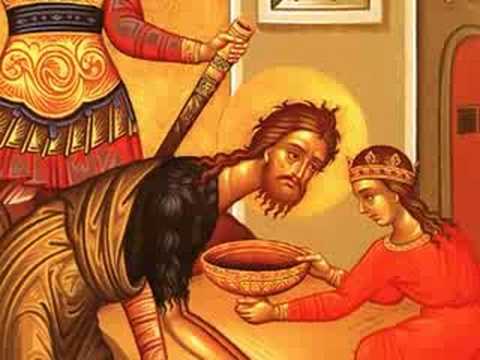
It's always a bit of a shock to us when we realise that people die horribly for the Christian Faith. Apparently, the Christian Faith is one of today's most persecuted religions. That seems rather glib compared with the Holocaust and because of the suffering of our Jewish brothers and sisters. We Christians have had genocides of our own certainly in the Middle East today, but also in such times as the Armenian Genocide of the last century. This is not a point-scoring exercise: it should make us all more compassionate for each other and not allow one more person to suffer for their faith.
Today, we watch aghast as the Last Prophet is beheaded just like our brothers at the hands of ISIS for no other reason than that his Faith is offensive. He is beheaded during a feast, a time of celebration, and thus kills the ability of those present to celebrate without his blood staining their festivities. St John is no fool: he knows that this day is coming. He knows that his words that he must decrease for Christ's sake bear a revolting irony. And yet he embraces it, just as St Bartholomew, in some narratives, embraces being skinned alive, as St Lawrence embraces the grid-iron and St John Intercisus embraces being dismembered slowly.
How do they do it? How could we ever hope to go through the same thing for the love of Christ?
However, in the West we are being robbed of the opportunity for martyrdom.
If we just step back a bit, as soon as someone becomes a martyr, their belief becomes apparent to all around them. That's not exactly something that the Devil will want to encourage, so what obstacles can this wretch put in our way to prevent us from embracing martyrdom?
First, he can present it as something too much for us to endure. This is true. Not one of us really wants to think about the awful ways that we could be put to death and culture seems to take a morbid fascination with the details of death. We worry about whether we could hold on and thus despair of our own ability to be faithful. In our comfortable Western lives, the idea of suffering is contrary to anything that we could imagine. The key thing to remember is that we trust in Christ and, if ever we are called to suffer like this, that He would be there somehow to help us. We don't have to imagine it now, but rely on Him. Satan wants to undermine our trust in God's fidelity.
Second, the Devil can present us with an easy escape from martyrdom. Not all martyrdom involves death, though that is the popular usage of the word. Martyrdom is about the testimony that we bear and for which we are prepared to suffer by bearing it. The issues of Abortion, Euthanasia, Divorce, and physically expressed Same-Sex relations are all related to the issue of taking away the necessity for someone to suffer. Because it is not necessary to suffer, it becomes morally acceptable to take the easy way out. This is not the way out of Temptation that St Paul mentions in I Corinthians x.13. Again, there is a temptation of a lack of faith in God, but further, there is a temptation to see Sin as preferable to suffering for love of God.
For example, we can look at the suicide of Razis in II Maccabees xiv. He commits suicide rather than being taken by the wicked Nicanor. This cannot be a moral act, for wilful and intended suicide is still a form of murder. Samson fell to the Philistines who shamed and humiliated him: his death was incidental to his intended destruction of the enemies of God. Razis' situation is not. However it may be a sin, we can see that it cannot have the gravity of the suicide of one who is bored with living. His death forces us to be compassionate on all who are tempted to suicide such as those dying of painful, debilitating disease.
The same is true of each of the other temptations. It becomes the duty of the Church to reach out to those in this form of temptation lest they fall into sin. Indeed, it is the failure of members of the Church to provide mechanisms to prevent the spiritual damage that makes these issues all the more distressing. There are those who dispassionately cite chapter and verse and do nothing else save "pray," and there are those who capitulate and legislate that sin become morally acceptable for compassion's sake. Neither are acceptable.
Third, the Devil seeks to use the problem of Evil to discredit the love of God. The problem of suffering is horrible and yet inescapable. It is the reason why so many clever and respectable intellects have turned their back on the The Creator and, thus, on the One Who can give any form of suffering a worth greater than can be imagined. The answer to this is the Cross: an answer that the Atheist cannot accept, and yet the only answer the Christian can give. Yet it is the Cross that we must bear if we are to be martyrs to the Gospel of Christ of the reality of Salvation, of the remission of Sin, of the purification, justification, and sanctification of the soul and of the sure hope that we can and will be reconciled with God in Eternity.
At every stage, our opportunities for martyrdom in the West are being robbed by the politically correct. Ironically, it provides those who seek to be faithful to God, His Creation and Rule, with the opportunity for a different form of martyrdom - that of social death! This is what we see now. To oppose the Transgender Agenda, Same-Sex Marriage and the cry "Abortions for all, at any time, for any reason" is now seen as social suicide and estrangement often results. No longer are Traditional Christians allowed to voice their dissent without being seen as personae non gratae. Yes, we have the freedom of speech and we must accept the consequences for what we say. That's exactly what St John the Baptist did,
Yet, before we accept the world's punishment and embrace "Martyrdom," we ought to ensure that our witness truly is of the Love of God for the world, especially for every single individual human being. There's no way that the "God hates Fags" theology of the Westboro Baptist Church is Christian. Their suffering for this "creed" will be shown up on the Last Judgement for what it is.
Saying that, so will my suffering for the creed I profess.
And yours.
Sunday, August 27, 2017
Focussing on Sin
Sermon for the Eleventh Sunday after Trinity
Which sin do you like to confess most?
That’s a silly question! As Christians, we should hate Sin more than Death; after all, Death simply separates our souls from our bodies: they will be reunited at the Resurrection. Sin separates us from God. How can we therefore have a favourite sin to confess?
Well then. Do you have sins that you’re glad you haven’t committed? You have only to gaze into the eyes of your spouse to be glad that you haven’t committed adultery. Looking at the state of those in our prisons, you’re glad that you haven’t murdered or stolen anything. That’s good. You haven’t sinned there, have you?
And then Jesus comes along and says things like:
“whosoever shall say , Thou fool, shall be in danger of hell fire.”
“whosoever looketh on a woman to lust after her hath committed adultery with her already in his heart.”
And worse still:
“Whosoever therefore shall break one of these least commandments, and shall teach men so, he shall be called the least in the kingdom of heaven: but whosoever shall do and teach them, the same shall be called great in the kingdom of heaven.”
Do you think that you’re a murderer now? Do you think you’re an adulterer?
[PAUSE]
We know that sin is a desperately uncomfortable thing to live with. The way that the world deals with it is either to forget that it exists entirely or to translate it to something rather vague like “not being open-minded” or “not being true to yourself”. Yet, Jesus is quite clear on what sin is and where it comes from. Sin occurs every time we fail to love God and love our neighbour. Sin occurs every time we try to change the meaning of the word “love” to suit ourselves.
This means that, potentially, we have, each one of us, committed an uncountable number of sins. Yet we’re only ever aware of a few.
Listen to what the Pharisee says:
Yet, he’s only aware of a few sins. He’s focussed on six sins that he hasn’t committed and has been blinded to the rest.
This is a very clever trick of the Devil. He gets us to focus on a few sins so that we forget that there are others that we might commit and then forget. Even when we do confess our sins, we always remember the big ones – or rather the ones that seem big to us – and forget to confess the little ones. Yet, all sin separates us in some way from God!
Ouch! Who then can be saved?
[PAUSE]
All the Publican can say is
Even with this simple little prayer, “God be merciful to me a sinner,” the Publican goes home justified. Remember that “justified” means “made righteous”, “put right” – his sins are washed away. Why? Well, St John says,
This is why we have to be so ready to forgive others: we’re all in the same boat, we’ve all sinned and sometimes in ways that we become ignorant of, though perhaps others can see. The Psalmist asks, “Who can tell how oft he offendeth?” In response, we have to be ready to pray to Our Lord Jesus Christ saying,
Which sin do you like to confess most?
That’s a silly question! As Christians, we should hate Sin more than Death; after all, Death simply separates our souls from our bodies: they will be reunited at the Resurrection. Sin separates us from God. How can we therefore have a favourite sin to confess?
Well then. Do you have sins that you’re glad you haven’t committed? You have only to gaze into the eyes of your spouse to be glad that you haven’t committed adultery. Looking at the state of those in our prisons, you’re glad that you haven’t murdered or stolen anything. That’s good. You haven’t sinned there, have you?
And then Jesus comes along and says things like:
“whosoever shall say , Thou fool, shall be in danger of hell fire.”
“whosoever looketh on a woman to lust after her hath committed adultery with her already in his heart.”
And worse still:
“Whosoever therefore shall break one of these least commandments, and shall teach men so, he shall be called the least in the kingdom of heaven: but whosoever shall do and teach them, the same shall be called great in the kingdom of heaven.”
Do you think that you’re a murderer now? Do you think you’re an adulterer?
[PAUSE]
We know that sin is a desperately uncomfortable thing to live with. The way that the world deals with it is either to forget that it exists entirely or to translate it to something rather vague like “not being open-minded” or “not being true to yourself”. Yet, Jesus is quite clear on what sin is and where it comes from. Sin occurs every time we fail to love God and love our neighbour. Sin occurs every time we try to change the meaning of the word “love” to suit ourselves.
This means that, potentially, we have, each one of us, committed an uncountable number of sins. Yet we’re only ever aware of a few.
Listen to what the Pharisee says:
“God, I thank thee that I am not as other men are, extortioners, unjust, adulterers, or even as this Publican: I fast twice in the week, I give tithes of all that I possess.”This is fine! He’s generous, and pious, and fair, and faithful to his wife, and he’s proud of it! Why is that such a bad thing? But then if we think, not many of us go to bed at night thinking, “hooray! I didn’t commit adultery today!” This man is content with himself as he is. He doesn’t feel the need to be transformed.
Yet, he’s only aware of a few sins. He’s focussed on six sins that he hasn’t committed and has been blinded to the rest.
This is a very clever trick of the Devil. He gets us to focus on a few sins so that we forget that there are others that we might commit and then forget. Even when we do confess our sins, we always remember the big ones – or rather the ones that seem big to us – and forget to confess the little ones. Yet, all sin separates us in some way from God!
Ouch! Who then can be saved?
[PAUSE]
All the Publican can say is
“God be merciful to me a sinner.”We have to remember that we cannot save ourselves. This is why the Cross of Christ is vitally, vitally important. Our salvation from sin, our reconciliation with God only comes about through the Death of Our Lord. The more we live in Him, the more we pray, the more we seek first His Kingdom, the more adept we become at spotting all the sins in our lives. We have no need to despair of being sinners, though we must learn to prefer to die than to sin.
Even with this simple little prayer, “God be merciful to me a sinner,” the Publican goes home justified. Remember that “justified” means “made righteous”, “put right” – his sins are washed away. Why? Well, St John says,
“If any man sin, we have an Advocate with the Father, Jesus Christ the righteous; and he is the propitiation for our sins.”
This is why we have to be so ready to forgive others: we’re all in the same boat, we’ve all sinned and sometimes in ways that we become ignorant of, though perhaps others can see. The Psalmist asks, “Who can tell how oft he offendeth?” In response, we have to be ready to pray to Our Lord Jesus Christ saying,
O cleanse thou me from my secret faults. Keep thy servant also from presumptuous sins, lest they get the dominion over me: so shall I be undefiled, and innocent from the great offence. Let the words of my mouth, and the meditation of my heart: be alway acceptable in thy sight, O Lord : my strength, and my redeemer.Then we really can relax with Him knowing that all our sins, even the ones we’ve forgotten, can and will be destroyed by His blood.
Sunday, August 20, 2017
Why bother with this sermon?
Sermon for the Tenth Sunday after Trinity
It was a late night and it’s still dark and cold when the alarm goes off. The warmth of the duvet and the fact that you’ve got yourself into a nice comfortable position mean that the alarm is not the most welcome guest, as a well-aimed slipper proves.
But you’re supposed to be keeping fit. It’s time to go for a jog, get the blood pumping, the muscles working.
In the snugness of the bed, it all seems rather disagreeable. Is there any point to exercise? After all, the one thing it doesn’t stop is old age. It might stave that off for a while, but eventually, those biceps will become bingo wings, the six pack will turn into a large Capri-Sun, and the hair will fall out of your head and start sprouting through your nose. Your body is not going to last forever, is it? So why bother? Why not just enjoy life?
If it’s going to fall apart anyway, why bother?
[PAUSE]
We live in a disposable society – disposable razors, disposable nappies, disposable cameras, disposable relationships. If it breaks or doesn’t do what we want it to do – in fact, if it’s any trouble at all – we throw it away and get a new one. It’s true even of our bodies. If we don’t like the way our body looks, we can get surgery. It’s almost as if our own selves have become disposable. If we don’t like our government, or the result of a referendum, we seek to dispose of them and get a new one. We leave behind us things that are broken or unmanageable, and why? Because we do not believe that they are worth the hassle of trying to sort them out. There’s a quick fix – bin it and then get another one at the supermarket.
If we think things are disposable because they aren’t worth the hassle, then what is worth the hassle? What do the people around us think is worth taking pains to work at?
[PAUSE]
We see Our Lord in tears. He weeps bitterly over Jerusalem. In His mind’s eye, He can see it desolate, fallen down, destroyed; its people gone, its temple gone, its glory gone. All because they will not recognise Him as their Saviour and Messiah. All because they won’t let Him in to make His repairs in their lives. They can’t be bothered to recognise Him. Indeed, their leaders say that, even though He is completely innocent, it is better for Him to die than upset the status quo. Our Lord Himself becomes disposable.
Yet, Our Lord does not weep for Himself. He weeps for Jerusalem. And then He goes down to teach in the temple. But why bother? If it’s all going to be laid waste by the Romans in forty years’ time, there’s no point in going down into the city to teach.
[PAUSE]
Surely, this says something about our system of worth. If the Lord will still teach in a temple that will be destroyed, to people who will reject Him, knowing that it will result in His great pain and suffering, then this is either an act of great waste – in which case the Lord Himself becomes the Prodigal Son – or it is an act which demonstrates the supreme worth of that which is broken, the worth of that which does not work properly, the worth of that which is doomed for destruction.
Again, in our Lord’s ministry, our system of values is rocked to its core. Nothing in the eyes of God is disposable, for He made it and knows it from the tiniest piece of matter to galactic superclusters roaming the infinity of Space. No sparrow can escape His gaze; no human being is unobserved; no sin goes unnoticed.
He reaches out to those broken in sin because He sees them despite their sin. All they need to do is grasp His saving hand. Yet, it seems that they do not see the worth in turning back to him, and so dispose of Him, only to find themselves disposable in the hands of the Evil One who values only His miserable Godless pleasure.
[PAUSE]
Our Lord seeks to transform our lives. He loves us so much that He wants us to see our worth beyond those things we value more than we should. And if we do not seek Him, He will weep for us, and die for us. He comes to repair the broken, and yet we prefer us as we are, rather than be transformed into what He intends us to be.
Sometimes, we dispose of so much that we throw ourselves into the dustbin as well.
It was a late night and it’s still dark and cold when the alarm goes off. The warmth of the duvet and the fact that you’ve got yourself into a nice comfortable position mean that the alarm is not the most welcome guest, as a well-aimed slipper proves.
But you’re supposed to be keeping fit. It’s time to go for a jog, get the blood pumping, the muscles working.
In the snugness of the bed, it all seems rather disagreeable. Is there any point to exercise? After all, the one thing it doesn’t stop is old age. It might stave that off for a while, but eventually, those biceps will become bingo wings, the six pack will turn into a large Capri-Sun, and the hair will fall out of your head and start sprouting through your nose. Your body is not going to last forever, is it? So why bother? Why not just enjoy life?
If it’s going to fall apart anyway, why bother?
[PAUSE]
We live in a disposable society – disposable razors, disposable nappies, disposable cameras, disposable relationships. If it breaks or doesn’t do what we want it to do – in fact, if it’s any trouble at all – we throw it away and get a new one. It’s true even of our bodies. If we don’t like the way our body looks, we can get surgery. It’s almost as if our own selves have become disposable. If we don’t like our government, or the result of a referendum, we seek to dispose of them and get a new one. We leave behind us things that are broken or unmanageable, and why? Because we do not believe that they are worth the hassle of trying to sort them out. There’s a quick fix – bin it and then get another one at the supermarket.
If we think things are disposable because they aren’t worth the hassle, then what is worth the hassle? What do the people around us think is worth taking pains to work at?
[PAUSE]
We see Our Lord in tears. He weeps bitterly over Jerusalem. In His mind’s eye, He can see it desolate, fallen down, destroyed; its people gone, its temple gone, its glory gone. All because they will not recognise Him as their Saviour and Messiah. All because they won’t let Him in to make His repairs in their lives. They can’t be bothered to recognise Him. Indeed, their leaders say that, even though He is completely innocent, it is better for Him to die than upset the status quo. Our Lord Himself becomes disposable.
Yet, Our Lord does not weep for Himself. He weeps for Jerusalem. And then He goes down to teach in the temple. But why bother? If it’s all going to be laid waste by the Romans in forty years’ time, there’s no point in going down into the city to teach.
[PAUSE]
Surely, this says something about our system of worth. If the Lord will still teach in a temple that will be destroyed, to people who will reject Him, knowing that it will result in His great pain and suffering, then this is either an act of great waste – in which case the Lord Himself becomes the Prodigal Son – or it is an act which demonstrates the supreme worth of that which is broken, the worth of that which does not work properly, the worth of that which is doomed for destruction.
Again, in our Lord’s ministry, our system of values is rocked to its core. Nothing in the eyes of God is disposable, for He made it and knows it from the tiniest piece of matter to galactic superclusters roaming the infinity of Space. No sparrow can escape His gaze; no human being is unobserved; no sin goes unnoticed.
He reaches out to those broken in sin because He sees them despite their sin. All they need to do is grasp His saving hand. Yet, it seems that they do not see the worth in turning back to him, and so dispose of Him, only to find themselves disposable in the hands of the Evil One who values only His miserable Godless pleasure.
[PAUSE]
Our Lord seeks to transform our lives. He loves us so much that He wants us to see our worth beyond those things we value more than we should. And if we do not seek Him, He will weep for us, and die for us. He comes to repair the broken, and yet we prefer us as we are, rather than be transformed into what He intends us to be.
Sometimes, we dispose of so much that we throw ourselves into the dustbin as well.
Thursday, August 17, 2017
Agreeing to sin and sinning to agree
Of course, the hoo-hah about same-sex marriage continues to contort the Established Church to the point of breaking. The common statement from the Liberal Agenda is, "what's wrong with leaving it up to the priest's conscience whether to marry people of the same sex?"
Of course, if this were an issue of sacramental theology, one might be tempted to take a two integrities approach and allow it to conscience. Yet the reason that this threatens to split the Church is because there can be no agreeing to disagree about sin.
Is same sex marriage a sin? Yes. It is the condoning and indeed an attempt to bless the sin of fornication because same sex marriages are not marriages. While we may not be clear on the severity of that sin in individual cases, it is still very much sin.
Whether or not they agree with this, the Liberal Agenda cannot accept this argument because it is rooted in moral relativism: "just because it isn't right for you, doesn't mean it isn't right for me." Thus it enshrines that in the "integrities" approach and cannot understand why conservatives still refuse to put up and shut up.
It is precisely because the Church loves all human beings that she will simply not put up with any sin that separates mankind from its Creator. The Law is there for us to see sin and seek to root it out by repentance and struggle through the Cross of Christ. The issue of same sex marriage is a first order issue precisely because it is earthly thinking being elevated to a divine mandate. It is Man telling God what is good.
I can see fully why the Evangelical wing of the CofE will not agree to disagree, for to do so would be to fall into the same mire of confusion: as soon as sin is accepted, the glory of the Lord departs.
The trouble is that there can be no middle ground. There is simply no way of accommodating two diametrically opposed views. God is light and in Him there is no darkness at all. Thus, on the matter of the Liberal Agenda which says that God can support "conflicting opinions" St John proves otherwise.
I wish, if the Liberal Agenda wants to peddle these ideas, that it would leave the Church and stop pretending to be Christian. If it were Christian, then the Divine Will would be paramount in its thinking, not the will of Man masquerading as the will of God. If they want to support same sex marriage then they must do so outside of the Church and play their part in the secular society, rather than secularise what is sacred.
The Evangelicals would do well to distance themselves completely from the Established Church. I might suggest, rather than try and set up new ecclesial bodies, they might consider supporting a more experienced church. Might I recommend UECNA?
Of course, if this were an issue of sacramental theology, one might be tempted to take a two integrities approach and allow it to conscience. Yet the reason that this threatens to split the Church is because there can be no agreeing to disagree about sin.
Is same sex marriage a sin? Yes. It is the condoning and indeed an attempt to bless the sin of fornication because same sex marriages are not marriages. While we may not be clear on the severity of that sin in individual cases, it is still very much sin.
Whether or not they agree with this, the Liberal Agenda cannot accept this argument because it is rooted in moral relativism: "just because it isn't right for you, doesn't mean it isn't right for me." Thus it enshrines that in the "integrities" approach and cannot understand why conservatives still refuse to put up and shut up.
It is precisely because the Church loves all human beings that she will simply not put up with any sin that separates mankind from its Creator. The Law is there for us to see sin and seek to root it out by repentance and struggle through the Cross of Christ. The issue of same sex marriage is a first order issue precisely because it is earthly thinking being elevated to a divine mandate. It is Man telling God what is good.
I can see fully why the Evangelical wing of the CofE will not agree to disagree, for to do so would be to fall into the same mire of confusion: as soon as sin is accepted, the glory of the Lord departs.
The trouble is that there can be no middle ground. There is simply no way of accommodating two diametrically opposed views. God is light and in Him there is no darkness at all. Thus, on the matter of the Liberal Agenda which says that God can support "conflicting opinions" St John proves otherwise.
I wish, if the Liberal Agenda wants to peddle these ideas, that it would leave the Church and stop pretending to be Christian. If it were Christian, then the Divine Will would be paramount in its thinking, not the will of Man masquerading as the will of God. If they want to support same sex marriage then they must do so outside of the Church and play their part in the secular society, rather than secularise what is sacred.
The Evangelicals would do well to distance themselves completely from the Established Church. I might suggest, rather than try and set up new ecclesial bodies, they might consider supporting a more experienced church. Might I recommend UECNA?
Tuesday, August 15, 2017
Assuming the Assumption
Apparently, we should never make assumptions for fear of appearing foolish.
Yet, today, we celebrate assumption, the translation of the body of Our Lady into Heaven. The differences between East and West in their regard for the end of the Blessed Virgin's life on earth are not enough to render the Assumption questionable. They rest on one solid fact: there are no relics of Our Lady's body in existence.
Unlike the apostles and disciples where there are sufficient relics to populate a cemetery, there are none to do with Our Lady. Our little cathedral in Canterbury boasts a fragment of her veil which is fully certified. That's about all really.
We can conclude with a happy degree of certainty that there is some truth in the Assumption of Our Lady.
St John Damascene speaks of the joy in heaven at her reception.
This day the holy and animated Ark of the living God, which had held within it its own Maker, is borne to rest in that Temple of the Lord, which is not made with hands. David, whence it sprang, leapeth before it, and in company with him the Angels dance, the Archangels sing aloud, the Virtues ascribe glory, the Princedoms shout for joy, the Powers make merry, the Lordships rejoice, the Thrones keep holiday, the Cherubim utter praise, and the Seraphim proclaim its glory. This day the Eden of the new Adam receiveth the living garden of delight, wherein the condemnation was annulled, wherein the Tree of Life was planted, wherein our nakedness was covered.
It is an irony that the fact that our nakedness is covered is revealed by the other fact that Our Lady leaves nothing behind. Her relic is a vacuum that is filled either by a modern cynicism at a complete absurdity, or filled by the joyful hope of those who believe in the perfect fidelity of God who demonstrates that He will remember the commandment to honour His Mother. If He will remember the commandment He gave to us, then He will remember the promises that He makes to His Church.
As Adam and Eve pulled the keystone of Creation out of alignment through their sin and thus brought about the reality of death into Creation, so the New Eve provides the scaffold on which Christ makes realignment in His Holy Incarnation. This scaffold is of her human flesh with which Our Lord draws His humanity. And, with His perfection complete, He ascends and, in due time, draws up into Heaven the same flesh from which He took form.
And this truly is our joyful hope! Just as the Lord sanctifies the waters of Baptism by being baptised; just as He sanctifies unction by being anointed; just as He sanctifies marriage by participating and blessing the wedding in Cana so He sanctifies our Humanity by being born and participating in the business of being human. And why? To develop the words of St Athanasius, He participates in our Humanity so that we may participate in His Divinity.
This is what we see in the Assumption: a rare dignity for a rare lady. Her Assumption is what ours will be as we pass through our own deaths, when we receive our bodies again after their corruption, with her and the whole Bride of Christ, we shall receive an Eternal Participation with God Himself. This is why we rejoice; this why we observe this strange feast for this is a realisation of God's love for us.
Our Lady assumed into Heaven, pray for us!
Sunday, August 13, 2017
Dreadfully awful or awfully dreadful?
Sermon for the Ninth Sunday after Trinity
Are you afraid of God?
There are two sorts of fear that human beings can have; one is called awe, and the other is called dread.
Awe is that sensation we have when we are confronted with something so immense that we cannot fully comprehend it. Have you ever tried looking deep into the sky and felt your legs tremble beneath you? Or have you walked into a magnificent cathedral and caught the shivers? That is awe. It is a strange feeling, not wholly unpleasant, but perhaps giving us a sense that we really are smaller than we think we are.
And then there’s dread – the feeling that something unpleasant is going to happen to you.
We do tend to confuse the two types of fear. We see this confusion in the fact that “awful” now means “dreadful” instead of its original meaning of a situation that fills you with awe. We now say awe-inspiring rather than awe-ful, don’t we?
Are you afraid of God? Are you in awe of God, or in dread?
[PAUSE]
It would appear from what St Paul says, that we should dread God. He seems to be reminding us of the God that many people today find very difficult to worship, for this is a God who punishes the wicked.
Those who fornicate fall in their thousands. Those who tempt God are destroyed of serpents. Those who murmur – who conspire against Moses – are destroyed of the destroyer.
Then St Paul warns us: “Now all these things happened unto them for ensamples: and they are written for our admonition, upon whom the ends of the world are come. Wherefore let him that thinketh he standeth take heed lest he fall.”
[PAUSE]
The argument often goes out that people like the God of the New Testament more than the God of the Old Testament as if the two were in some way separate. The “Old Testament God” is supposedly vengeful, and punishes people with death for simple transgressions. The “New Testament God” is loving and wants people to return to Him which is why He sends His Son to tell us how much we are loved. People have difficulty trying to bring the two ideas together.
Admittedly, there are some very hard parts of the Bible, places where it seems that God is not behaving like a loving Father. If He loves the Canaanites, then why does He order their destruction?
[PAUSE]
As human beings, we have inherited God’s sense of justice – it’s part of us. The fact that everyone believes that there is such thing as Good and Evil in the first place must surely point to God standing alongside His Creation and instilling this sense of Good and Evil into His Creation.
However, we know also that we are fallen human beings. We inherit the moral weaknesses that our ancestors have and these weaknesses lead us into sin. Our sense of justice is also broken by these weaknesses that we inherit.
We also have to remember that we live in a Universe of cause and effect. Everything happens for a reason. Actions have consequences and, for as long as we are free to choose, our actions will have consequences we did not intend. When we choose to sin against God, there are consequences. There have to be. If we do something wrong, we must take the consequences of our wrong-doing. If God warns us not to commit fornication and we do, then we must accept the outcome will not be pleasant. We must also remember that God did not intend those unpleasant consequences: He intended us not to sin in the first place. The consequences are not God’s fault, they are ours alone.
The Psalmist says that with God, we can expect God’s justice and His mercy at the same time, even for the greatest Biblical figures.
“Moses and Aaron among his priests, and Samuel among such as call upon his Name : these called upon the Lord, and he heard them. He spake unto them out of the cloudy pillar : for they kept his testimonies, and the law that he gave them. Thou heardest them, O Lord our God : thou forgavest them, O God, and punishedst their own inventions.”
We can easily be forgiven by God, but we must take the punishment for our sins. The fact that we are forgiven means that our sins will not be allowed to separate us from the presence of God. Sins that are forgiven die with our bodies and will not rise with us at our resurrection. Remember that God’s mercy is precisely His desire to be in fellowship with sinners. Remember also that sin separates from God until it is forgiven.
[PAUSE]
The main problem with those who don’t know God is that they focus on the punishment itself rather than see the injustice. They believe God’s punishment to be unwarranted or disproportionate. What they cannot see is the deep abiding consequences of sin and how that affects people more harmfully than they know. Nor can they see how God has to deal with the situation with fairness and mercy. Nor can they understand the Love of God which burns for justice for all who are victims of Evil.
We, too, do not know the scale of our sins and the ripples that they send out into the world, or how they will affect generations to come. That’s frightening. It’s even more frightening if we are left in those sins forever without any recourse from them.
Yet, God gives us that way out. It was a way out prophesied in the Old Testament and seen first-hand by the eyewitnesses of the New Testament. The way out is Our Lord Jesus Christ.
[PAUSE]
It’s not God whom we should dread. It is sin and its consequences. God is faithful: we are not.
What about the Cross of Christ? Is that to be an object of dread, or awe?
Are you afraid of God?
Are you afraid of God?
There are two sorts of fear that human beings can have; one is called awe, and the other is called dread.
Awe is that sensation we have when we are confronted with something so immense that we cannot fully comprehend it. Have you ever tried looking deep into the sky and felt your legs tremble beneath you? Or have you walked into a magnificent cathedral and caught the shivers? That is awe. It is a strange feeling, not wholly unpleasant, but perhaps giving us a sense that we really are smaller than we think we are.
And then there’s dread – the feeling that something unpleasant is going to happen to you.
We do tend to confuse the two types of fear. We see this confusion in the fact that “awful” now means “dreadful” instead of its original meaning of a situation that fills you with awe. We now say awe-inspiring rather than awe-ful, don’t we?
Are you afraid of God? Are you in awe of God, or in dread?
[PAUSE]
It would appear from what St Paul says, that we should dread God. He seems to be reminding us of the God that many people today find very difficult to worship, for this is a God who punishes the wicked.
Those who fornicate fall in their thousands. Those who tempt God are destroyed of serpents. Those who murmur – who conspire against Moses – are destroyed of the destroyer.
Then St Paul warns us: “Now all these things happened unto them for ensamples: and they are written for our admonition, upon whom the ends of the world are come. Wherefore let him that thinketh he standeth take heed lest he fall.”
[PAUSE]
The argument often goes out that people like the God of the New Testament more than the God of the Old Testament as if the two were in some way separate. The “Old Testament God” is supposedly vengeful, and punishes people with death for simple transgressions. The “New Testament God” is loving and wants people to return to Him which is why He sends His Son to tell us how much we are loved. People have difficulty trying to bring the two ideas together.
Admittedly, there are some very hard parts of the Bible, places where it seems that God is not behaving like a loving Father. If He loves the Canaanites, then why does He order their destruction?
[PAUSE]
As human beings, we have inherited God’s sense of justice – it’s part of us. The fact that everyone believes that there is such thing as Good and Evil in the first place must surely point to God standing alongside His Creation and instilling this sense of Good and Evil into His Creation.
However, we know also that we are fallen human beings. We inherit the moral weaknesses that our ancestors have and these weaknesses lead us into sin. Our sense of justice is also broken by these weaknesses that we inherit.
We also have to remember that we live in a Universe of cause and effect. Everything happens for a reason. Actions have consequences and, for as long as we are free to choose, our actions will have consequences we did not intend. When we choose to sin against God, there are consequences. There have to be. If we do something wrong, we must take the consequences of our wrong-doing. If God warns us not to commit fornication and we do, then we must accept the outcome will not be pleasant. We must also remember that God did not intend those unpleasant consequences: He intended us not to sin in the first place. The consequences are not God’s fault, they are ours alone.
The Psalmist says that with God, we can expect God’s justice and His mercy at the same time, even for the greatest Biblical figures.
“Moses and Aaron among his priests, and Samuel among such as call upon his Name : these called upon the Lord, and he heard them. He spake unto them out of the cloudy pillar : for they kept his testimonies, and the law that he gave them. Thou heardest them, O Lord our God : thou forgavest them, O God, and punishedst their own inventions.”
We can easily be forgiven by God, but we must take the punishment for our sins. The fact that we are forgiven means that our sins will not be allowed to separate us from the presence of God. Sins that are forgiven die with our bodies and will not rise with us at our resurrection. Remember that God’s mercy is precisely His desire to be in fellowship with sinners. Remember also that sin separates from God until it is forgiven.
[PAUSE]
The main problem with those who don’t know God is that they focus on the punishment itself rather than see the injustice. They believe God’s punishment to be unwarranted or disproportionate. What they cannot see is the deep abiding consequences of sin and how that affects people more harmfully than they know. Nor can they see how God has to deal with the situation with fairness and mercy. Nor can they understand the Love of God which burns for justice for all who are victims of Evil.
We, too, do not know the scale of our sins and the ripples that they send out into the world, or how they will affect generations to come. That’s frightening. It’s even more frightening if we are left in those sins forever without any recourse from them.
Yet, God gives us that way out. It was a way out prophesied in the Old Testament and seen first-hand by the eyewitnesses of the New Testament. The way out is Our Lord Jesus Christ.
[PAUSE]
It’s not God whom we should dread. It is sin and its consequences. God is faithful: we are not.
What about the Cross of Christ? Is that to be an object of dread, or awe?
Are you afraid of God?
Tuesday, August 08, 2017
When Jesus gets it wrong
It seems that I am rapidly becoming one of those people who tune in to Thinking Anglicans for my daily despair at what the world is coming to. I really ought to stop for the sake of my health. Yet, as a priest, I do have a duty to try and combat heresy whenever it is proclaimed. Yesterday, I saw this comment posted on a thread about Archbishop Ntagali's boycotting of Lambeth Conferences on the grounds that same-sex marriage is now rife within the Western Churches. The discussion makes a very logical turn, namely the fact that neither same-sex marriage nor remarriage after divorce can be described as fulfilling the terms of the Sacrament of Holy Matrimony. They both fail in the matter of the sacrament.
My Church (i.e. the Church to which I belong) states clearly that:
Fact 1. The "Hebrew Gospel" or "Aramaic Gospel" Hypotheses have been shown to be somewhat implausible. One might look at the work of Helumt Köster and the like for ratification of this. It is very likely that the Gospels were written in Greek originally.
Fact 2. The oral tradition is, in the case of Christianity, very likely to be accurate. The Gospels were written while many of the Disciples and other eye-witnesses were still alive and able to verify what they contain. These aren't collections of sayings - they are true and the Church has received them to be true.
Fact 3 (and this is supposed to be the main point of my essay, though, as usual, I've rambled on and got distracted) Jesus was indeed fully human. HE WAS ALSO FULLY DIVINE. On a matter of teaching He will not have got things wrong for the very simple reason that, since He was like us in every way but without sin, His sinlessness means He will not have committed heresy by teaching an erroneous opinion.
I am consistently amazed at proponents of the Liberal Agenda to think that they have got the moral law so correct that they are able to criticise the persons of the Holy Trinity and make them abide by that moral law.
Of course, the principle of reflexivity works here. Such a proponent could indeed turn round to me and say, "you think you have the moral law so correct that you are telling the Holy Trinity what it is." I argue that I am not. I am arguing from what I have been given. I have been given the Holy Scriptures and Holy Tradition. I have been given membership of the Church through the sacraments. I have been given so much grace of which I am not worthy in one tiny iota. I have been given all this through Divine providence and yet I have not been given the slightest little bit of authority to change one tittle or one dagesh forte of the teaching that I have received.
If I had the authority, how could I change anything? This would mean one rule for me and one rule for everybody else. Circumstances may change, but God does not change and what separates from God simply does not change. My duty and desire is to be a faithful witness and carry that tradition on. It is the people like the commentator above who will be responsible for distorting the message because they distort it from their own moral law.
I am deeply disturbed by this comment and saddened that this is typical of the intellectual arrogance and Modernist superiority complex which is infecting the Church at the moment. Sometimes I wonder whether I have got it wrong. Yes, there is always a possibility that I have. Perhaps I am the heretic and making things unpleasant for those who truly have it right. I frequently pray to God to show me where I'm going wrong. I get answers but I am still waiting for Him to show me that my clinging to what I have received from Him in the Church is wrong. But then again, perhaps Jesus has got it wrong in the first place (!)
As my former students would say, "yeah! Right!"
My Church (i.e. the Church to which I belong) states clearly that:
This Church affirms, according to our Lord’s teaching, that marriage is in its nature a union permanent and life-long, for better for worse, till death them do part, of one man with one woman, to the exclusion of all others on either side, for the procreation and nurture of children, for the hallowing and right direction of the natural instincts and affections, and for the mutual society, help and comfort which the one ought to have of the other, both in prosperity and adversity, and to that end couples entering into that union shall make and subscribe before the Solemnisation of Matrimony the following Declaration of Intention and Commitment to Holy Matrimony in the presence of the Officiating Clergyman and two (2) witnesses (Canon 15.3.01)This all comes down to an interpretation of Our Lord's teaching on the nature of divorce. However, should anyone try and promulgate Our Lord's teaching in certain circles of the Anglican Church, then you might get a comment like this:
[T]he Gospels aren't verbatim reports, they're collections of sayings, passed down, edited, and sometimes invented by the early church. Even if they were verbatim, they're translated into Greek from Aramaic, and translation's interpretation.There are just so many things to pick out here. Is the commentator a Christian? There is reason to doubt that given that what we read here reads just like one of the followers of New Atheism. That's the trouble with the publishing of the Liberal Agenda: that too is virtually indistinguishable in its writing from Secular SJWs.
But let's say, for sake of argument, that we possessed Aramaic originals of Jesus' own words. Even the orthodox position holds that, whatever else he was, Jesus of Nazareth was fully human: meaning that he was a man of his time, shaped by his own culture, and as capable as error as any of us. If Jesus did ban divorce in all circumstances, then Jesus was wrong.
Fact 1. The "Hebrew Gospel" or "Aramaic Gospel" Hypotheses have been shown to be somewhat implausible. One might look at the work of Helumt Köster and the like for ratification of this. It is very likely that the Gospels were written in Greek originally.
Fact 2. The oral tradition is, in the case of Christianity, very likely to be accurate. The Gospels were written while many of the Disciples and other eye-witnesses were still alive and able to verify what they contain. These aren't collections of sayings - they are true and the Church has received them to be true.
Fact 3 (and this is supposed to be the main point of my essay, though, as usual, I've rambled on and got distracted) Jesus was indeed fully human. HE WAS ALSO FULLY DIVINE. On a matter of teaching He will not have got things wrong for the very simple reason that, since He was like us in every way but without sin, His sinlessness means He will not have committed heresy by teaching an erroneous opinion.
I am consistently amazed at proponents of the Liberal Agenda to think that they have got the moral law so correct that they are able to criticise the persons of the Holy Trinity and make them abide by that moral law.
Of course, the principle of reflexivity works here. Such a proponent could indeed turn round to me and say, "you think you have the moral law so correct that you are telling the Holy Trinity what it is." I argue that I am not. I am arguing from what I have been given. I have been given the Holy Scriptures and Holy Tradition. I have been given membership of the Church through the sacraments. I have been given so much grace of which I am not worthy in one tiny iota. I have been given all this through Divine providence and yet I have not been given the slightest little bit of authority to change one tittle or one dagesh forte of the teaching that I have received.
If I had the authority, how could I change anything? This would mean one rule for me and one rule for everybody else. Circumstances may change, but God does not change and what separates from God simply does not change. My duty and desire is to be a faithful witness and carry that tradition on. It is the people like the commentator above who will be responsible for distorting the message because they distort it from their own moral law.
I am deeply disturbed by this comment and saddened that this is typical of the intellectual arrogance and Modernist superiority complex which is infecting the Church at the moment. Sometimes I wonder whether I have got it wrong. Yes, there is always a possibility that I have. Perhaps I am the heretic and making things unpleasant for those who truly have it right. I frequently pray to God to show me where I'm going wrong. I get answers but I am still waiting for Him to show me that my clinging to what I have received from Him in the Church is wrong. But then again, perhaps Jesus has got it wrong in the first place (!)
As my former students would say, "yeah! Right!"
Sunday, August 06, 2017
Five-a-day: is it really good for you?
Sermon for the Eighth Sunday after Trinity
“Eat five pieces of fruit a day because they’re good for you!”
Well that’s the theory anyway. It’s supported by good evidence. Eat more fruit and veg, and you’ll have better health. There has been a bit of a problem with this though. Think of the smoothie company who advertise their product as being two of your five-a-day and yet fill their cartons with more sugar than Willy Wonka has ever seen in his life. It tastes nice AND contains your five-a-day so it must be good for you, right?
By their fruits ye shall know them!
[PAUSE]
Our Lord seems to give us a bit of a problem here. The fruit of a tree is its end product. It appears when it has finished doing all the growing, so we pick it. Then we ask the question, “is it good fruit or bad fruit?” If it looks mouldy and has a worm wiggling in it, then we know the answer. The trouble comes when it looks perfectly okay. Then, the only way you can tell is to bite into it. If it’s nice and sweet and juicy, it’s good fruit. If it’s horrible, or you find half a worm in it, you know that it isn’t. You can’t tell until you’ve taken the plunge and sampled it.
We have to remember that it’s not the tree’s fault if the fruit is mouldy, nor if it has a worm in it. It is the tree’s fault if the fruit is always bitter, or sour. The Lord says that such a tree needs to be cut down and cast into the fire. The reason is clear. Mould and worms come from outside the plant, but the substance of the fruit itself come from the tree. If the tree is bad, so will the fruit be, but we won’t know until we’ve tried it.
[PAUSE]
And this is what awaits us. When we come face to face with Our Lord on the day of His coming, everyone will be crying “Lord, Lord!” The fact of the matter will be that not everyone will have been worshipping Him – they will have been worshipping some different person whom they call, “Lord”. For many people, this will be a “Jesus” of their own invention, one that will approve everything that they do and ignore every sin that they commit. How can we recognise their fruit?
St Paul tells us:
St Paul tells us the fruit that we need to bear.
[PAUSE]
Bearing fruit takes time, which is why we need to weigh our actions up against the fruit that we want to produce AND against the fruit that we don’t want to produce. We uproot our tendency to bear bad fruit by confessing and repenting our sins. We cultivate good fruit by plugging ourselves into the vine that is Our Lord Jesus Christ through worshipping Him and receiving His grace in the sacraments that He gives us to bear His good fruit.
That’s the key thing: we want to bear the fruit of the Spirit, not of ourselves.
[PAUSE]
We might need a five-a-day to keep our bodies healthy, but what are the five-a-day that you need to keep yourself bearing the fruit that shall last in God’s Kingdom?
“Eat five pieces of fruit a day because they’re good for you!”
Well that’s the theory anyway. It’s supported by good evidence. Eat more fruit and veg, and you’ll have better health. There has been a bit of a problem with this though. Think of the smoothie company who advertise their product as being two of your five-a-day and yet fill their cartons with more sugar than Willy Wonka has ever seen in his life. It tastes nice AND contains your five-a-day so it must be good for you, right?
By their fruits ye shall know them!
[PAUSE]
Our Lord seems to give us a bit of a problem here. The fruit of a tree is its end product. It appears when it has finished doing all the growing, so we pick it. Then we ask the question, “is it good fruit or bad fruit?” If it looks mouldy and has a worm wiggling in it, then we know the answer. The trouble comes when it looks perfectly okay. Then, the only way you can tell is to bite into it. If it’s nice and sweet and juicy, it’s good fruit. If it’s horrible, or you find half a worm in it, you know that it isn’t. You can’t tell until you’ve taken the plunge and sampled it.
We have to remember that it’s not the tree’s fault if the fruit is mouldy, nor if it has a worm in it. It is the tree’s fault if the fruit is always bitter, or sour. The Lord says that such a tree needs to be cut down and cast into the fire. The reason is clear. Mould and worms come from outside the plant, but the substance of the fruit itself come from the tree. If the tree is bad, so will the fruit be, but we won’t know until we’ve tried it.
[PAUSE]
And this is what awaits us. When we come face to face with Our Lord on the day of His coming, everyone will be crying “Lord, Lord!” The fact of the matter will be that not everyone will have been worshipping Him – they will have been worshipping some different person whom they call, “Lord”. For many people, this will be a “Jesus” of their own invention, one that will approve everything that they do and ignore every sin that they commit. How can we recognise their fruit?
St Paul tells us:
Now the works of the flesh are manifest, which are these; Adultery, fornication, uncleanness, lasciviousness, Idolatry, witchcraft, hatred, variance, emulations, wrath, strife, seditions, heresies, Envyings, murders, drunkenness, revellings, and such like: of the which I tell you before, as I have also told you in time past, that they which do such things shall not inherit the kingdom of God.All of these are the results of not worshipping God. As soon as we see any of these things in our lives, we know that we have to do something to uproot the evil that is bringing these things into being. We cannot inherit the Kingdom of God from these, because each of them is a refusal to recognise God as king. Each of them has its roots in our selfishness.
St Paul tells us the fruit that we need to bear.
But the fruit of the Spirit is love, joy, peace, longsuffering, gentleness, goodness, faith, Meekness, temperance: against such there is no law. And they that are Christ's have crucified the flesh with the affections and lusts.
[PAUSE]
Bearing fruit takes time, which is why we need to weigh our actions up against the fruit that we want to produce AND against the fruit that we don’t want to produce. We uproot our tendency to bear bad fruit by confessing and repenting our sins. We cultivate good fruit by plugging ourselves into the vine that is Our Lord Jesus Christ through worshipping Him and receiving His grace in the sacraments that He gives us to bear His good fruit.
That’s the key thing: we want to bear the fruit of the Spirit, not of ourselves.
[PAUSE]
We might need a five-a-day to keep our bodies healthy, but what are the five-a-day that you need to keep yourself bearing the fruit that shall last in God’s Kingdom?
Troublesome Tabernacles
Sermon for the Transfiguration of the Lord
Do you really know what a tabernacle is?
If you’re familiar with church furnishings and fittings, you’ll recognise this as the safe-like construction on the Altar which houses the Blessed Sacrament. While we may call this a tabernacle, it has much older origins than this.
Originally, a tabernacle is a tent, a mobile dwelling place for wandering famers and also much like the tents that the Israelites lived in during their time in the wilderness. You may remember that the Lord commands them to observe the “feast of booths” or “feast of tabernacles” in which everyone would leave their houses to spend some time in a tent to remind them of their long journey in the wilderness.
You may also remember that the Lord travels with the Israelites on their journey. For this reason they make a mobile temple also called a tabernacle and which houses the presence of the Lord.
Perhaps you begin to see why the safe containing the Blessed Sacrament is called a tabernacle.
So then what does St Peter mean when he says, “Knowing that shortly I must put off this my tabernacle, even as our Lord Jesus Christ hath shewed me”?
Is He talking about death? Is His tabernacle His body?
[PAUSE]
It’s tempting to think that especially in an age thinks that when we die we lose our body and become disembodied spirits forevermore. However, Christians believe in the resurrection of the body and this is because when Our Lord appears after His resurrection, it is clear that He is not a ghost – He has a body. Granted that this body can do interesting things such as appearing in locked rooms, it is still a physical body which can do normal things such as eat, breathe and touch.
St Peter isn’t referring to this tabernacle.
[PAUSE]
Old St Peter is remembering a time when he sees Our Lord transfigured – shining white in true glory, accompanied by the Writer of the Law and the Great Prophet. He remembers that, in his confusion, he asks whether he, James and John should build three tabernacles for these three great revelations of God: His Law, His Prophecy, and His Word which is their source. He also remembers how foolish he was.
Why? The last thing that Elijah, Moses and Our Lord needed are tabernacles: they are demonstrating our existence without tabernacles.
[PAUSE]
The tabernacle is only the outward appearance of what we see. It is only the skin of our reality. For once, Peter, James and John are witnesses to what lies beneath our superficial understanding of what really is. They are shown that there really is more to each human being than they would know.
This is our trouble, we are so entrenched in believing that all we can see is all that there is that we forget that we are deeper than that. This is like Peter is at first, seeking to contain God so that He can see Him, handle Him, understand Him. But God cannot be contained, but rather bursts through any tabernacle that we build Him. Our Science can never know God: its abilities are far too small, and God is not a thing to study in a laboratory. We get to know Him by shaking off the tabernacle that confines our faith and seek to know Him as One who wants be known as He really is.
The fact that we can know God shows that we have senses that are not physical but spiritual. It is these senses that we need to exercise in order to see Our Lord at work in the world. We wander the world blind to these deeper things, so we should pray like Blind Bartimaeus, “Jesus, thou Son of David, have mercy on me that I might receive my sight!”
[PAUSE]
St Peter is an eyewitness to the Majesty of God and now beholds Him outside his tabernacle. If we have faith, we will not make a tabernacle for God with our limited thinking, but rather become eyewitnesses to God’s work in this world. Then, like St Peter, we shall behold God’s majesty now and forever.
Do you really know what a tabernacle is?
If you’re familiar with church furnishings and fittings, you’ll recognise this as the safe-like construction on the Altar which houses the Blessed Sacrament. While we may call this a tabernacle, it has much older origins than this.
Originally, a tabernacle is a tent, a mobile dwelling place for wandering famers and also much like the tents that the Israelites lived in during their time in the wilderness. You may remember that the Lord commands them to observe the “feast of booths” or “feast of tabernacles” in which everyone would leave their houses to spend some time in a tent to remind them of their long journey in the wilderness.
You may also remember that the Lord travels with the Israelites on their journey. For this reason they make a mobile temple also called a tabernacle and which houses the presence of the Lord.
Perhaps you begin to see why the safe containing the Blessed Sacrament is called a tabernacle.
So then what does St Peter mean when he says, “Knowing that shortly I must put off this my tabernacle, even as our Lord Jesus Christ hath shewed me”?
Is He talking about death? Is His tabernacle His body?
[PAUSE]
It’s tempting to think that especially in an age thinks that when we die we lose our body and become disembodied spirits forevermore. However, Christians believe in the resurrection of the body and this is because when Our Lord appears after His resurrection, it is clear that He is not a ghost – He has a body. Granted that this body can do interesting things such as appearing in locked rooms, it is still a physical body which can do normal things such as eat, breathe and touch.
St Peter isn’t referring to this tabernacle.
[PAUSE]
Old St Peter is remembering a time when he sees Our Lord transfigured – shining white in true glory, accompanied by the Writer of the Law and the Great Prophet. He remembers that, in his confusion, he asks whether he, James and John should build three tabernacles for these three great revelations of God: His Law, His Prophecy, and His Word which is their source. He also remembers how foolish he was.
Why? The last thing that Elijah, Moses and Our Lord needed are tabernacles: they are demonstrating our existence without tabernacles.
[PAUSE]
The tabernacle is only the outward appearance of what we see. It is only the skin of our reality. For once, Peter, James and John are witnesses to what lies beneath our superficial understanding of what really is. They are shown that there really is more to each human being than they would know.
This is our trouble, we are so entrenched in believing that all we can see is all that there is that we forget that we are deeper than that. This is like Peter is at first, seeking to contain God so that He can see Him, handle Him, understand Him. But God cannot be contained, but rather bursts through any tabernacle that we build Him. Our Science can never know God: its abilities are far too small, and God is not a thing to study in a laboratory. We get to know Him by shaking off the tabernacle that confines our faith and seek to know Him as One who wants be known as He really is.
The fact that we can know God shows that we have senses that are not physical but spiritual. It is these senses that we need to exercise in order to see Our Lord at work in the world. We wander the world blind to these deeper things, so we should pray like Blind Bartimaeus, “Jesus, thou Son of David, have mercy on me that I might receive my sight!”
[PAUSE]
St Peter is an eyewitness to the Majesty of God and now beholds Him outside his tabernacle. If we have faith, we will not make a tabernacle for God with our limited thinking, but rather become eyewitnesses to God’s work in this world. Then, like St Peter, we shall behold God’s majesty now and forever.
Wednesday, August 02, 2017
Fleshly fruit
Again, thinking about my sermon for this Sunday has caused me to look at the fruits of the flesh, the end products of the seeds of sin and thus the way we know that sin has been growing in the heart. It's really worth taking this apart to see really what's growing in and around us.
Let's do some Greek:
1) μοιχεῖαι (moicheiai)
Adultery. This is not in some manuscripts of Galatians. Since this is already one of the Ten Commandments, the fact that we see adultery means that there is a complete disregard for God's commandments. In order to commit adultery, there must not only be a contempt for God's law, but also for one's spouse. Somehow there must be a shifting idea of what it means to be faithful or even a complete rejection of fidelity.
2) πορνεία (porneia)
Fornication. It's interesting that under the evolution of language ps slowly become fs. Thus porneia is rather tautologically translated as fornication - pornication - whence pornography and the like. It stands for all manner of deviations from the purpose of sexual intercourse. This does include homosexual sex - it is one of the meanings of the term. There are those who say that, in this instance, St Paul is talking about prostitution or pederasty, but then again, he might be talking about homosexual sex. The fact of the matuter is that there is no translation of porneia that is morally acceptable otherwise there would be some clarification in Holy Scripture and Tradition. Where does porneia come from? To believe that fornication is acceptable arises from putting one's attractions and biological urges ahead of the good of others and the good of oneself. Crudely put, it is thinking with one's genitals. Fornication is also the result of denying the obvious biological facts, and preferring sterility to the creation of new life. There is a disregard for children and for the society in which they are to grow up. There is a lack of desire to commit or an unwillingness to accept what God has set in place. Pornography is the direct opposite of ikonography, for in ikonography we look through Creation to see God Himself: in pornography, we focus on the object without any reference to it being a beautiful creation of God. Fornication requires the dehumanisation of the other, a reduction to animal urges, even a forgetting of one's own dignity as a human being.
3) ἀκαθαρσία (akatharsia)
Uncleanness. You might recognise the root of the word catharsis here. Impurity is, perhaps in this instance, a good translation: if something is unclean or impure, then there is some foreign matter introduced that spoils the intended effect. Accepting impurity in our lives means that our judgement is clouded because we accept in our lives that which should not be there. This arises from the belief that one can augment one's life for the better without God. To accept an impurity means that we have seen something with which we perceive has a greater value than it should possess and thus reducing the value of one's life. The impure eye always has a beam in it blocking true beauty.
4) ἀσέλγεια (aselgeia)
Lasciviousness or Wantonness. The fruit that we see here is Gluttony and we may even perceive addiction as its effect. This arises from a selfishness which grabs all that it can, refusing to recognise one's limitations. It is the search for one's entitlements with scant regard for the needs of others. It develops perhaps from an insecurity arising from distrust in providence and a contentment in things of the earth.
5) εἰδωλολατρία (eidololatria)
Idolatry. What grows idolatry? Every sin has an element of idolatry within it for, in committing a sin, we are preferring something created to the Creator. In idolatry, we make a god of our own - a god who will accept us for who we are, yes, but who demands nothing of us save living the way that we want to live life. Idolatry arises from seeing God as an obstacle to our happiness. and thus as an enemy of our own identity.
6) φαρμακεία (pharmakeia)
Witchcraft, i.e. Sorcery in connection with idolatry. It would seem odd that we get the word "pharmacy" from this same word as witchcraft. However, is pharmacy not a control of our environment using drugs? Our Lord does not despise the physician since she is used in the context of healing the sick. However, what is witchcraft but to bend creation to one's will? This arises from the belief that we are the complete masters of all that we survey. The medieval witch uses potions and spells to command nature, to enchant human beings, to control the spirits of the dead, and even Time itself in discerning the future. Witchcraft sees everything as a means to an end apart from the human will. The Occultist Aleister Crowley invented his own religion based on "Do what thou wilt shall be the whole of the law." It seems that many of us have been practising that for a long time!
7) ἔχθραι (echthrai)
Hatred. What causes hatred? To lose love so completely must take time and effort. The object of one's hatred has to be stripped of every ability to do something good in one's eyes. Every action has to be interpreted negatively or as a direct assault against us. There can be nothing admirable in the person we truly hate so that wishing them dead, or in Hell becomes easy to us.
8) ἔρις (eris)
Variance. Classical scholars will note the name of the Greek goddess of discord. Here we have quarrelling and dissent. While every family has times of argument, this sort of discord holds the threat of tearing the family apart. It breaks the bonds of familiarity because we have opinions which grow to such importance within us that they become more compelling to us than staying together. The inability to let go of matters which "offend" us stems from our disregard of the fact that other people are different from us, so that the rules that bind us become irrelevant.
9) ζῆλος (zelos)
Emulations. While this is the root of the word "zeal", an innocent enthusiasm easily turns nasty. We can see this when we look at the negative impact of the word "zealot" in our language. These emulations are an envious, contentious rivalry. This is the competition that we see in classical literature of two rivals competing for the hand of a beautiful woman only to end up destroying each other and the woman. We see this in evidence in Medieval history as men compete to become Pope. Emulations are the cause of the Wars of the Roses. At the root is envy, pure and simple: wanting what the other does not. Notice, again, how it is a flagrant disregard for God's commandments of "thou shalt not covet". Envy drives the wilful ignorance of God here.
10) θυμοί
Wrath. We get the idea of one fuming and boiling with anger. This is a loss of control of one's temper and we do have to see what causes us to lose that control. While there is much that we have to be angry about, compounding the problem with more sin is clearly not the way. For the flame of anger to live, there has to be oxygen, heat and fuel. We fuel wrath by not seeing its cause for what it is in the grand scheme of things. We give it heat by focussing all our emotional energy on the cause and allow it. We give it oxygen by justifying it and defending it against all reason.
11) ἐριθείαι (eritheiai)
Strife. Essentially this this best described as electioneering, a desire to put oneself forward for government. This looks like modern democracy - surely that's a virtue. However, the politician that strife engenders is the scheming Francis Urquhart in House of Cards or Shakespeare's version of Richard III. This is the one who will stop at nothing to be in control, though not obviously in control, manipulating people and delighting in seeing them fight among themselves. Where can this come from? Again, this is the fruit of seeing people as pawns in a game and taking no delight in sharing their common humanity. It comes from allowing oneself to be emptied of compassion and fellowship for the prize of being so in control of the situation that one feels secure.
12) διχοστασίαι (dichostasiai)
Seditions. Why do people cause dissension and division? We find the root in wanting one's own way to the extent that one is prepared to shred the establishment to get it. It comes from seeing the authority as being worth toppling in order to force the issue through with scant regard for those who cannot support it. It is a failure to see the bigger picture and having disrespect for the authority that God sets up for our benefit.
13) αἱρέσεις (haireseis)
Heresies. Ah! How the Church has seen these time and again, and the same heresies every time. Again, these have their root in opinions which contradict the Faith that God has given us. Heresies are the cause of schism, and heresies are caused by those who do not accept the consensus of the Church, but trust their own private revelation over and above the Catholic Faith.
14) φθόνοι, (phthonoi)
Envyings. Envy is a truly devastating sin. It has its origins in self-hatred and dissatisfaction with one's lot to the extent that one is prepared to deprive another of something in order to feel better. It is an insecurity in one's condition. Ir prefers one's misery to the transformation needed and will seek to bring others down rather than pull oneself up. It refuses to see God's light as anything other than punitive and, to make one feel better, would rather accuse than repent.
15) φόνοι (phonoi)
Murders. Again, this is not present in some manuscripts. There are many reasons why we murder, but this is born of hatred in the heart, dehumanisation and disdain of charity. Here we find many of the other fruit of the flesh all condensed and, whether we murder in actuality or not, we think of Our Lord's words that hatred of our brother is quite equivalent to murder.
16) μέθαι, (methai)
Drunkenness. Why do people get drunk? Again many reasons, and each of them terrible in many ways. People now drink in order to get drunk. This can be seen so much in our young folk. Drunkenness distorts reality so that it looks better. It numbs pain and drowns sorrows. It comes from an unwillingness to face sadness or the trivialities of living.
17) κῶμοι, (komoi)
Revellings. In much the same way as drunkenness distorts reality to something palatable. The object is to enjoy one's life so much that it masks the emptiness of one's being, to hide one's loss of hope and faith.
18) καὶ τὰ ὅμοια τούτοις (kai ta homoia toutois)
And such like.
Can there be others? If we look at the seventeen fruits of the flesh above, we see the seeds that have been sown and each of them has its roots in humanities failure to do two simply stated things: love God, love neighbour. Each comes from that first temptation:
"God's given you free-will, why don't you use it?"
"God won't care."
"God's not so big."
"God's not real."
"Do what you want to do!"
"Why don't you become God instead?"
Here's the thing. We see these fruits being grown in our society and, worse still, in the Church itself. We see churches tearing themselves apart which does seem to point to this fruit being born even in the sanctuary. It is where this fruit is seen for what it is and cut down that there is hope. When churches find themselves embracing the same faith come together, we find that the Evil One can be resisted.
If we want to cut down this fruit, then we need to sow the seed of the fruit of the Spirit.
Let's work at being observant of what fruit is growing around us and pray for the grace to do something about it.
Let's do some Greek:
Now the works of the flesh are manifest, which are these; adultery, fornication, uncleanness, lasciviousness, idolatry, witchcraft, hatred, variance, emulations, wrath, strife, seditions, heresies, envyings, murders, drunkenness, revellings, and such like: of the which I tell you before , as I have also told you in time past , that they which do such things shall not inherit the kingdom of God.
φανερὰ δέ ἐστιν τὰ ἔργα τῆς σαρκός, ἅτινά ἐστιν [μοιχεῖαι,] πορνεία, ἀκαθαρσία, ἀσέλγεια, εἰδωλολατρία, φαρμακεία, ἔχθραι, ἔρις, ζῆλος, θυμοί, ἐριθείαι, διχοστασίαι, αἱρέσεις, φθόνοι, [φόνοι,] μέθαι, κῶμοι, καὶ τὰ ὅμοια τούτοις, ἃ προλέγω ὑμῖν καθὼς προεῖπον ὅτι οἱ τὰ τοιαῦτα πράσσοντες βασιλείανθεοῦ οὐ κληρονομήσουσιν. (Galatians v.19-21)
1) μοιχεῖαι (moicheiai)
Adultery. This is not in some manuscripts of Galatians. Since this is already one of the Ten Commandments, the fact that we see adultery means that there is a complete disregard for God's commandments. In order to commit adultery, there must not only be a contempt for God's law, but also for one's spouse. Somehow there must be a shifting idea of what it means to be faithful or even a complete rejection of fidelity.
2) πορνεία (porneia)
Fornication. It's interesting that under the evolution of language ps slowly become fs. Thus porneia is rather tautologically translated as fornication - pornication - whence pornography and the like. It stands for all manner of deviations from the purpose of sexual intercourse. This does include homosexual sex - it is one of the meanings of the term. There are those who say that, in this instance, St Paul is talking about prostitution or pederasty, but then again, he might be talking about homosexual sex. The fact of the matuter is that there is no translation of porneia that is morally acceptable otherwise there would be some clarification in Holy Scripture and Tradition. Where does porneia come from? To believe that fornication is acceptable arises from putting one's attractions and biological urges ahead of the good of others and the good of oneself. Crudely put, it is thinking with one's genitals. Fornication is also the result of denying the obvious biological facts, and preferring sterility to the creation of new life. There is a disregard for children and for the society in which they are to grow up. There is a lack of desire to commit or an unwillingness to accept what God has set in place. Pornography is the direct opposite of ikonography, for in ikonography we look through Creation to see God Himself: in pornography, we focus on the object without any reference to it being a beautiful creation of God. Fornication requires the dehumanisation of the other, a reduction to animal urges, even a forgetting of one's own dignity as a human being.
3) ἀκαθαρσία (akatharsia)
Uncleanness. You might recognise the root of the word catharsis here. Impurity is, perhaps in this instance, a good translation: if something is unclean or impure, then there is some foreign matter introduced that spoils the intended effect. Accepting impurity in our lives means that our judgement is clouded because we accept in our lives that which should not be there. This arises from the belief that one can augment one's life for the better without God. To accept an impurity means that we have seen something with which we perceive has a greater value than it should possess and thus reducing the value of one's life. The impure eye always has a beam in it blocking true beauty.
4) ἀσέλγεια (aselgeia)
Lasciviousness or Wantonness. The fruit that we see here is Gluttony and we may even perceive addiction as its effect. This arises from a selfishness which grabs all that it can, refusing to recognise one's limitations. It is the search for one's entitlements with scant regard for the needs of others. It develops perhaps from an insecurity arising from distrust in providence and a contentment in things of the earth.
5) εἰδωλολατρία (eidololatria)
Idolatry. What grows idolatry? Every sin has an element of idolatry within it for, in committing a sin, we are preferring something created to the Creator. In idolatry, we make a god of our own - a god who will accept us for who we are, yes, but who demands nothing of us save living the way that we want to live life. Idolatry arises from seeing God as an obstacle to our happiness. and thus as an enemy of our own identity.
6) φαρμακεία (pharmakeia)
Witchcraft, i.e. Sorcery in connection with idolatry. It would seem odd that we get the word "pharmacy" from this same word as witchcraft. However, is pharmacy not a control of our environment using drugs? Our Lord does not despise the physician since she is used in the context of healing the sick. However, what is witchcraft but to bend creation to one's will? This arises from the belief that we are the complete masters of all that we survey. The medieval witch uses potions and spells to command nature, to enchant human beings, to control the spirits of the dead, and even Time itself in discerning the future. Witchcraft sees everything as a means to an end apart from the human will. The Occultist Aleister Crowley invented his own religion based on "Do what thou wilt shall be the whole of the law." It seems that many of us have been practising that for a long time!
7) ἔχθραι (echthrai)
Hatred. What causes hatred? To lose love so completely must take time and effort. The object of one's hatred has to be stripped of every ability to do something good in one's eyes. Every action has to be interpreted negatively or as a direct assault against us. There can be nothing admirable in the person we truly hate so that wishing them dead, or in Hell becomes easy to us.
8) ἔρις (eris)
Variance. Classical scholars will note the name of the Greek goddess of discord. Here we have quarrelling and dissent. While every family has times of argument, this sort of discord holds the threat of tearing the family apart. It breaks the bonds of familiarity because we have opinions which grow to such importance within us that they become more compelling to us than staying together. The inability to let go of matters which "offend" us stems from our disregard of the fact that other people are different from us, so that the rules that bind us become irrelevant.
9) ζῆλος (zelos)
Emulations. While this is the root of the word "zeal", an innocent enthusiasm easily turns nasty. We can see this when we look at the negative impact of the word "zealot" in our language. These emulations are an envious, contentious rivalry. This is the competition that we see in classical literature of two rivals competing for the hand of a beautiful woman only to end up destroying each other and the woman. We see this in evidence in Medieval history as men compete to become Pope. Emulations are the cause of the Wars of the Roses. At the root is envy, pure and simple: wanting what the other does not. Notice, again, how it is a flagrant disregard for God's commandments of "thou shalt not covet". Envy drives the wilful ignorance of God here.
10) θυμοί
Wrath. We get the idea of one fuming and boiling with anger. This is a loss of control of one's temper and we do have to see what causes us to lose that control. While there is much that we have to be angry about, compounding the problem with more sin is clearly not the way. For the flame of anger to live, there has to be oxygen, heat and fuel. We fuel wrath by not seeing its cause for what it is in the grand scheme of things. We give it heat by focussing all our emotional energy on the cause and allow it. We give it oxygen by justifying it and defending it against all reason.
11) ἐριθείαι (eritheiai)
Strife. Essentially this this best described as electioneering, a desire to put oneself forward for government. This looks like modern democracy - surely that's a virtue. However, the politician that strife engenders is the scheming Francis Urquhart in House of Cards or Shakespeare's version of Richard III. This is the one who will stop at nothing to be in control, though not obviously in control, manipulating people and delighting in seeing them fight among themselves. Where can this come from? Again, this is the fruit of seeing people as pawns in a game and taking no delight in sharing their common humanity. It comes from allowing oneself to be emptied of compassion and fellowship for the prize of being so in control of the situation that one feels secure.
12) διχοστασίαι (dichostasiai)
Seditions. Why do people cause dissension and division? We find the root in wanting one's own way to the extent that one is prepared to shred the establishment to get it. It comes from seeing the authority as being worth toppling in order to force the issue through with scant regard for those who cannot support it. It is a failure to see the bigger picture and having disrespect for the authority that God sets up for our benefit.
13) αἱρέσεις (haireseis)
Heresies. Ah! How the Church has seen these time and again, and the same heresies every time. Again, these have their root in opinions which contradict the Faith that God has given us. Heresies are the cause of schism, and heresies are caused by those who do not accept the consensus of the Church, but trust their own private revelation over and above the Catholic Faith.
14) φθόνοι, (phthonoi)
Envyings. Envy is a truly devastating sin. It has its origins in self-hatred and dissatisfaction with one's lot to the extent that one is prepared to deprive another of something in order to feel better. It is an insecurity in one's condition. Ir prefers one's misery to the transformation needed and will seek to bring others down rather than pull oneself up. It refuses to see God's light as anything other than punitive and, to make one feel better, would rather accuse than repent.
15) φόνοι (phonoi)
Murders. Again, this is not present in some manuscripts. There are many reasons why we murder, but this is born of hatred in the heart, dehumanisation and disdain of charity. Here we find many of the other fruit of the flesh all condensed and, whether we murder in actuality or not, we think of Our Lord's words that hatred of our brother is quite equivalent to murder.
16) μέθαι, (methai)
Drunkenness. Why do people get drunk? Again many reasons, and each of them terrible in many ways. People now drink in order to get drunk. This can be seen so much in our young folk. Drunkenness distorts reality so that it looks better. It numbs pain and drowns sorrows. It comes from an unwillingness to face sadness or the trivialities of living.
17) κῶμοι, (komoi)
Revellings. In much the same way as drunkenness distorts reality to something palatable. The object is to enjoy one's life so much that it masks the emptiness of one's being, to hide one's loss of hope and faith.
18) καὶ τὰ ὅμοια τούτοις (kai ta homoia toutois)
And such like.
Can there be others? If we look at the seventeen fruits of the flesh above, we see the seeds that have been sown and each of them has its roots in humanities failure to do two simply stated things: love God, love neighbour. Each comes from that first temptation:
Now the serpent was more subtil than any beast of the field which the LORD God had made . And he said unto the woman, Yea, hath God said , Ye shall not eat of every tree of the garden? And the woman said unto the serpent, We may eat of the fruit of the trees of the garden: But of the fruit of the tree which is in the midst of the garden, God hath said, Ye shall not eat of it, neither shall ye touch it, lest ye die. And the serpent said unto the woman, Ye shall not surely die: For God doth know that in the day ye eat thereof, then your eyes shall be opened, and ye shall be as gods, knowing good and evil.
"God's given you free-will, why don't you use it?"
"God won't care."
"God's not so big."
"God's not real."
"Do what you want to do!"
"Why don't you become God instead?"
Here's the thing. We see these fruits being grown in our society and, worse still, in the Church itself. We see churches tearing themselves apart which does seem to point to this fruit being born even in the sanctuary. It is where this fruit is seen for what it is and cut down that there is hope. When churches find themselves embracing the same faith come together, we find that the Evil One can be resisted.
If we want to cut down this fruit, then we need to sow the seed of the fruit of the Spirit.
Ὁ δὲ καρπὸς τοῦ πνεύματός ἐστιν ἀγάπη, χαρά, εἰρήνη, μακροθυμία, χρηστότης, ἀγαθωσύνη, πίστις, πραΰτης, ἐγκράτεια: κατὰ τῶν τοιούτων οὐκ ἔστιν νόμος.
Galatians v.22
But the fruit of the Spirit is (Unconditional) Love, Joy, Peace (in the Jewish sense this can mean prosperity, health and welfare), Patience (literally the opposite of being quick tempered), Goodness (or Usefulness), Goodness (in the senses of personal integrity and, towards others, beneficence), Faith, Meekness (or forbearance) and Self Control (i.e. continence and temperance): against these things there is no law.It is also important to stop the culture of blame. The central tenet of Christianity is this, that though we are sinners God loves us - no strings - we just have to turn to Him and leave our sins behind nailed to the Cross of Christ. Each of us is responsible for the fruit we bear. We start by repenting and asking God for Faith which will uproot the fruit of the flesh and plant the fruit of the Spirit.
(My Translation)
Let's work at being observant of what fruit is growing around us and pray for the grace to do something about it.
Tuesday, August 01, 2017
Fresh fruit?
Sorry. While preparing my sermon for this coming Sunday, this wonderful little clip from Spike Milligan popped into my head. Wonderfully silly and, for me, a wonderful antidote to the humour which seeks to destroy humanity by glorifying that which is base and demonising that which dear to people. This is joy!
Subscribe to:
Posts (Atom)

